








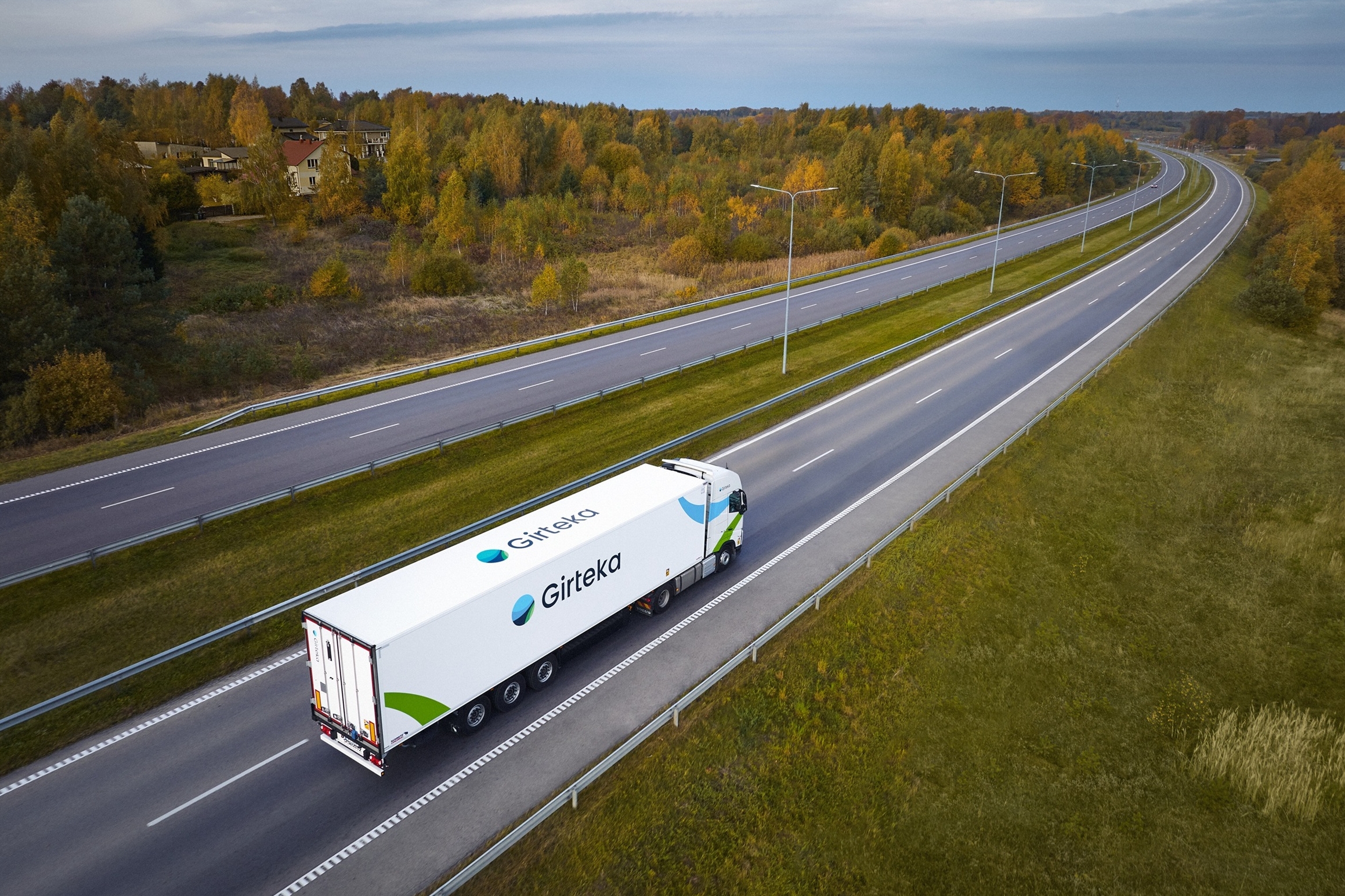
Road transport, which accounted for 61.3% of total freight transport in the European Union in 2023[1], is considered one of the largest emitters of greenhouse gases among all transport sectors. This is why, in the context of intensifying EU environmental protection efforts, increasing attention is being paid not only to ways of decarbonizing road transport, but above all to implementing projects that combine various initiatives to strengthen their impact and reach. These include green corridors. What role do they play and what is the biggest challenge in creating them today? The question is answered by Girteka, the largest European road carrier, which builds its services based on digitalization and sustainable transport solutions.
What are green corridors?
In logistics, a green corridor refers to a specifically designated route connecting key ports or transport hubs where low- or zero-emission solutions are implemented. As part of the European Union’s strategy to develop coherent, efficient, and high-quality transport infrastructure in member states, green corridors currently serve as testing grounds for sustainable transport and logistics solutions[2].
The Green Deal set the direction
The European Green Deal, approved in 2020, set an ambitious goal of reducing greenhouse gas emissions from transport by 90% by 2050 and CO2 emissions by 55% by 2030 compared to 1990 levels. A key element of this is the Fit for 55 package, introduced in December 2021. Of the proposals adopted within it, 9 concern transport, and 7 are of great importance to it[3]. Key guidelines include[4] the introduction of more demanding CO2 emission standards for heavy-duty vehicles, the implementation of an Emissions Trading System (ETS) – which incorporates the taxation of CO2 emissions into the operating costs of transport companies, the revision of the Renewable Energy Directive (RED II) to promote a greater share of renewable fuels, as well as the update of the Energy Taxation Directive (ETD), encouraging the use of greener energy sources by introducing minimum tax rates dependent on the environmental impact of fuels.
Achieving the goals set by the Green Deal and related initiatives requires cooperation from government administrations, manufacturers, carriers, customers, and stakeholders. Regulations impose new obligations on transport companies[5], including, among others, fleet modernization and the replacement of vehicles with low-emission ones, the use of alternative fuels, and digital tools for route optimization and emission reduction. However, there are still many other problems that effectively limit development in this direction.
Problem No. 1 in road transport: infrastructure
The lack of adequate infrastructure, i.e., charging and refueling networks, is a major obstacle to the implementation of sustainable solutions, especially based on BEVs and alternative HVO fuels, in international and long-haul deliveries. And it is precisely the resolution of these problems, as Girteka experts point out, that will be crucial for the development of green corridors and the achievement of the goals set by the Green Deal.
The problem of access to infrastructure primarily limits fleet electrification. Although the network of charging stations is still developing, it still does not meet actual demand. In the first quarter of 2024, there were nearly 600,000 public AC charging points and over 90,000 DC points operating in the EU-27 countries[6], most of which are in Western Europe. The leader is the Netherlands with over 150,000 charging points, followed by Germany and France. According to EU estimates, 3.4 million public charging points will be needed by 2030, including 100,000 intended for trucks and buses. This requires accelerating the installation pace from 1,600 points per week in 2021 to 10,000 in 2030[7].
The lack of an extensive HVO charging station network in Europe is also a major challenge for transport companies that want to use this fuel in daily operations. Here, the best way may be, among others, dedicated logistics solutions designed with infrastructure availability in mind. A good example is Girteka’s latest initiative – the Alternative Fuel Program, under which customers, by reducing the carbon footprint of their supply chains, choose transport services based on HVO (emission reduction of up to 90% compared to traditional diesel). Girteka carries out deliveries with biofuel-powered trucks on all routes where refueling is possible. Additionally, reports on the amount of fuel consumed and the level of emission reduction are prepared for customers in accordance with the GLEC Framework methodology. This allows them to assess environmental impacts and report Scope 3 emission reductions.
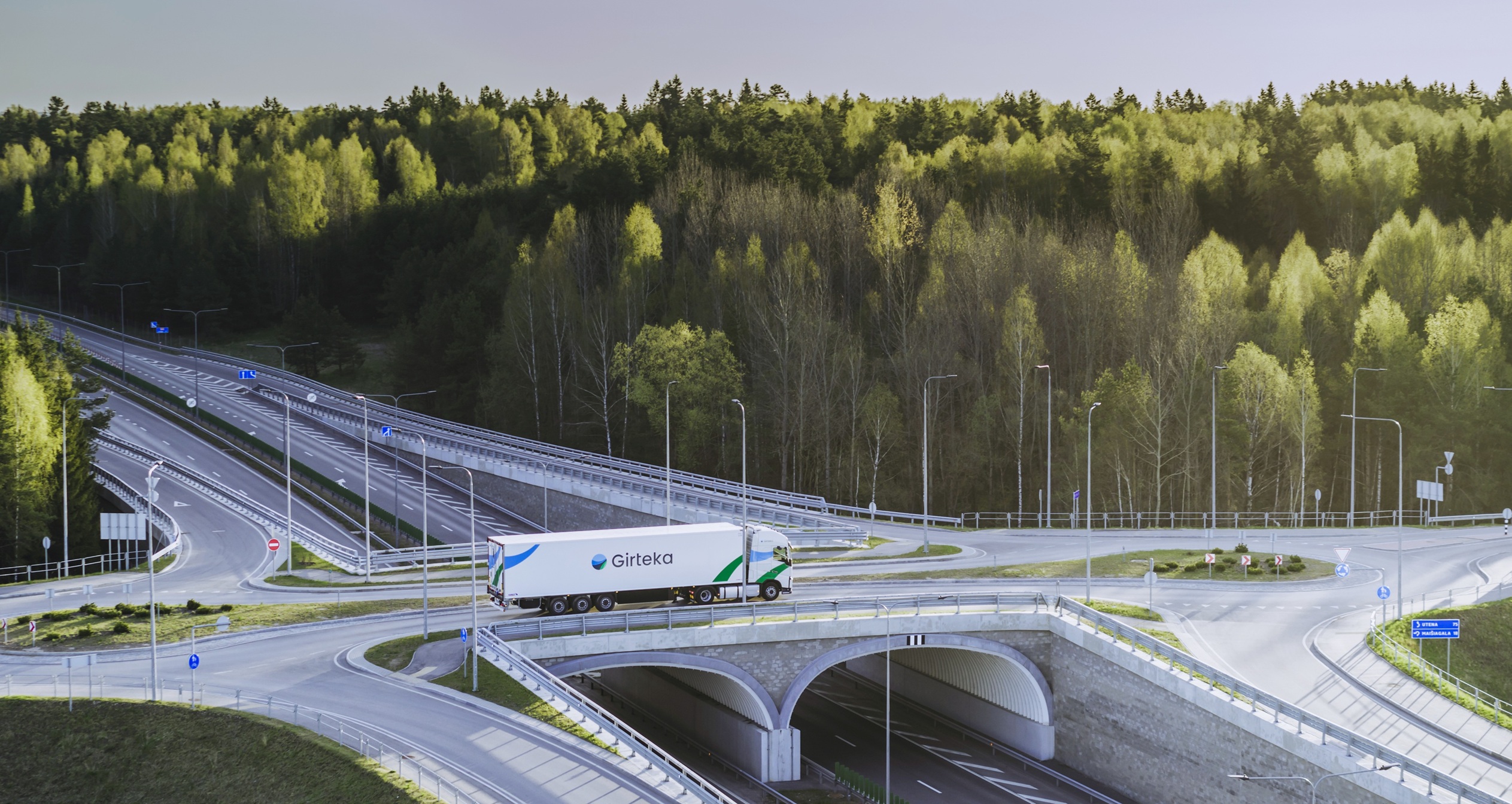
Infrastructure is also a challenge for intermodal transport
The problem of infrastructure availability is also a limitation in the development of intermodal solutions. In practice, it not only translates into difficulties when changing modes of transport but also generates higher costs and reduces efficiency.
In cross-border transport, the situation is to be improved by the Main Line for Europe – a high-speed railway line connecting Paris with Bratislava (1,592 km), with a branch to Budapest[8]. Great hopes are also placed on the planned modernization of seaports and inland ports as well as railway terminals. For example, seaports such as Antwerp (Belgium), Gdańsk, and Ravenna (Italy) are well-connected but require further investment in intermodal infrastructure, as do inland ports along the Albert Canal in Belgium, the Meuse River, as well as in Germany and Italy[9].
Efficiency in sustainable development: the role of digitalization
Growing sustainability standards show the importance of challenges such as infrastructure shortages and high investment costs. On the other hand, as Girteka emphasizes, digitalization will play a key role here. In the context of transport management within green corridors, advanced solutions for fleet management, route optimization, supply chain integration, and real-time monitoring are of significant importance[10], as well as the collection, processing, and use of data necessary for CO2 emission reporting.
Cooperation is important for the future
Faced with numerous challenges, the responsibility for low-emission and transport decarbonization cannot be limited only to tasks assigned to carriers and logistics companies. Success in creating and developing green corridors, and thus achieving the EU’s climate goals, requires an integrated approach and the cooperation of all supply chain participants. As Girteka experts emphasize, the commitment of carriers, customers, manufacturers, regulators, charging station operators, energy companies, and other partners, as well as working together on an efficient and sustainable transport transformation, should play a key role in this process.
[1] https://ec.europa.eu/eurostat/statistics-explained/index.php?title=Road_freight_transport_statistics
[2] https://www.weforum.org/stories/2022/01/green-corridors-zero-emission-shipping/
[3] https://epthinktank.eu/2024/08/01/fit-for-55-package/
[4] https://www.fuelseurope.eu/fit-for-55-package
[5] https://www.deloitte.com/global/en/issues/climate/pathways-to-decarbonization-heavy-road-transport.html
[6] https://www.girteka.eu/electric-truck-charging-stations/
[7] https://www.mckinsey.com/industries/automotive-and-assembly/our-insights/europes-ev-opportunity-and-the-charging-infrastructure-needed-to-meet-it
[8] https://en.wikipedia.org/wiki/Main_Line_for_Europe
[9] https://en.wikipedia.org/wiki/Main_Line_for_Europe
[10] https://www.movinonconnect.com/en/coi/marchandises-corridors-verts-multimodaux-europeens/
Source: Girteka Group