








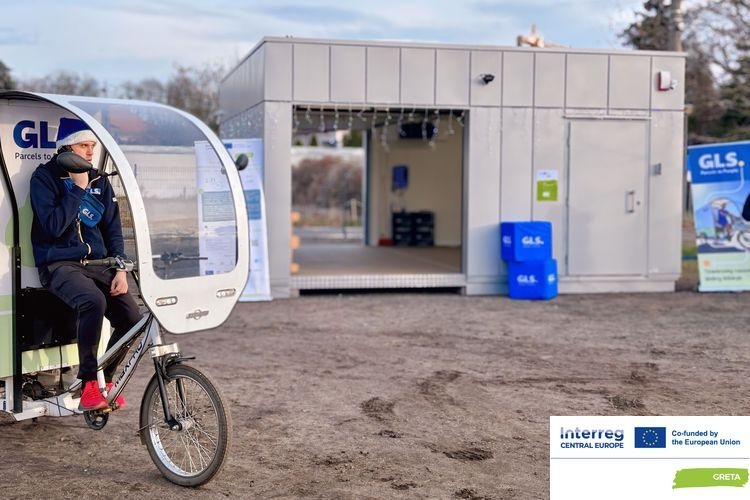
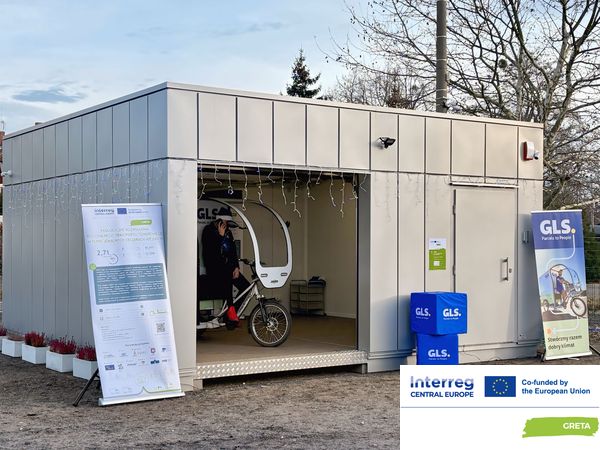
Poznań has become the first city in Poland to launch a standalone transshipment hub dedicated to bicycle couriers. This pioneering solution, implemented as part of the international research project GRETA (co-funded by the European Commission under the Interreg Central Europe program), could significantly influence the future of last-mile logistics in the centers of Polish cities.
An innovative solution for urban logistics
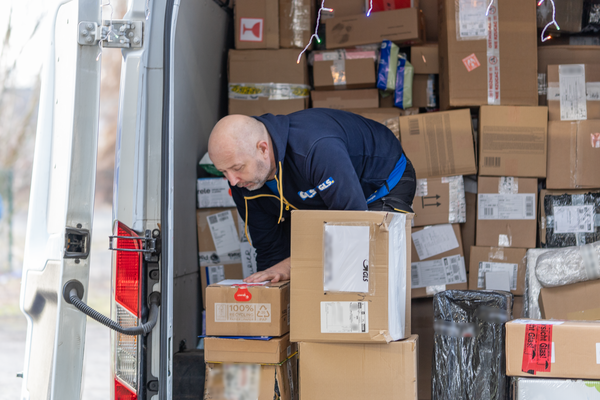
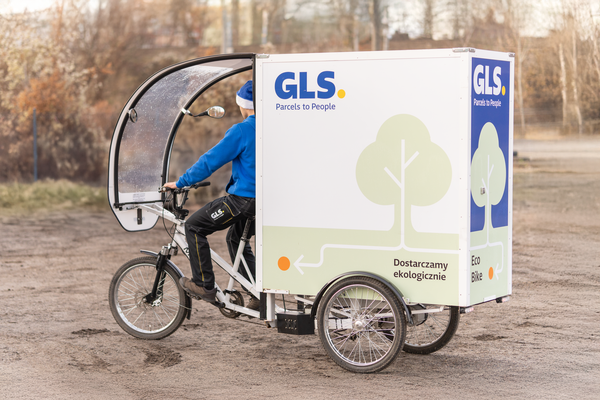
The transshipment hub, implemented by the Łukasiewicz – Poznań Institute of Technology in cooperation with the City of Poznań and the courier company GLS, aims to significantly reduce car traffic in the city center. The system involves daily morning deliveries of parcels from the main logistics center to the hub, where they are transshipped onto cargo bikes in sheltered, comfortable conditions. Bicycle couriers then carry out deliveries in the city center using zero-emission vehicles. This solution is a response to the growing challenges of congestion in city centers and the need to reduce CO2 emissions in urban transport.
– We all see how many cars are in the city, how heavy the traffic is, and how much transport in the center burdens the environment. We have a lot of vehicles, mainly combustion-powered, which emit harmful substances and often park in unauthorized places. That is why we want to change this process – explains Marta Cudziło, Deputy Director of the Center for Modern Mobility at the Łukasiewicz – Poznań Institute of Technology, project coordinator in Poland.
Extensive experience of the business partner
GLS Poland, the project’s business partner, sees significant development potential in this solution.
– As GLS, we are happy to be able to participate in this project. We were invited to join it due to our experience in electric bicycle deliveries. The entire project fits into our climate protect strategy and is part of the values we uphold – emphasizes Małgorzata Knajdek-Zomrowska, Branch Manager of GLS in Poznań. – Our company has been using delivery bikes in the centers of various Polish cities since 2020, currently operating a fleet of 15 cargo bikes nationwide, four of which operate in Poznań.
The pilot project, which will run until the spring of 2025, will be subject to a detailed evaluation in terms of economic, environmental, and social efficiency. Among other things, the study will examine: emission levels of deliveries compared to conventional transport, operating costs, and delivery punctuality. A particularly important aspect of the tests will be verifying the system’s operation in winter conditions during periods of increased parcel traffic.
Another advantage: scalability
It is worth noting that the system has been designed with the possibility of replication in other locations in mind.
– The solution based on a transshipment hub and cargo bikes is highly scalable and can be successfully applied by various operators – explains M. Cudziło.
The transshipment hub offers couriers comfortable working conditions, allowing for the transshipment of parcels under a roof, regardless of weather conditions. After finishing their daily delivery routes, the bikes return to the hub, where batteries are charged and preparations are made for the next operational day.
The City of Poznań views the project as an important element in implementing its climate policy.
– This is an action that fits perfectly into our strategies. We are waiting for positive results that will allow for further implementation of similar projects as part of the city’s current activities – comments Jan Kosmecki, Head of the Mobility and Transport Policy Department at the City Coordination and Revitalization Office of the Poznań City Hall.
After the pilot phase is completed, the organizers will present a detailed analysis of the system’s operation, which may become the basis for implementing similar solutions in other Polish cities.
You can hear more about the transshipment microhub in Poznań in the “Sustainable Deliveries” episode of the “O technologii na głos” podcast: