








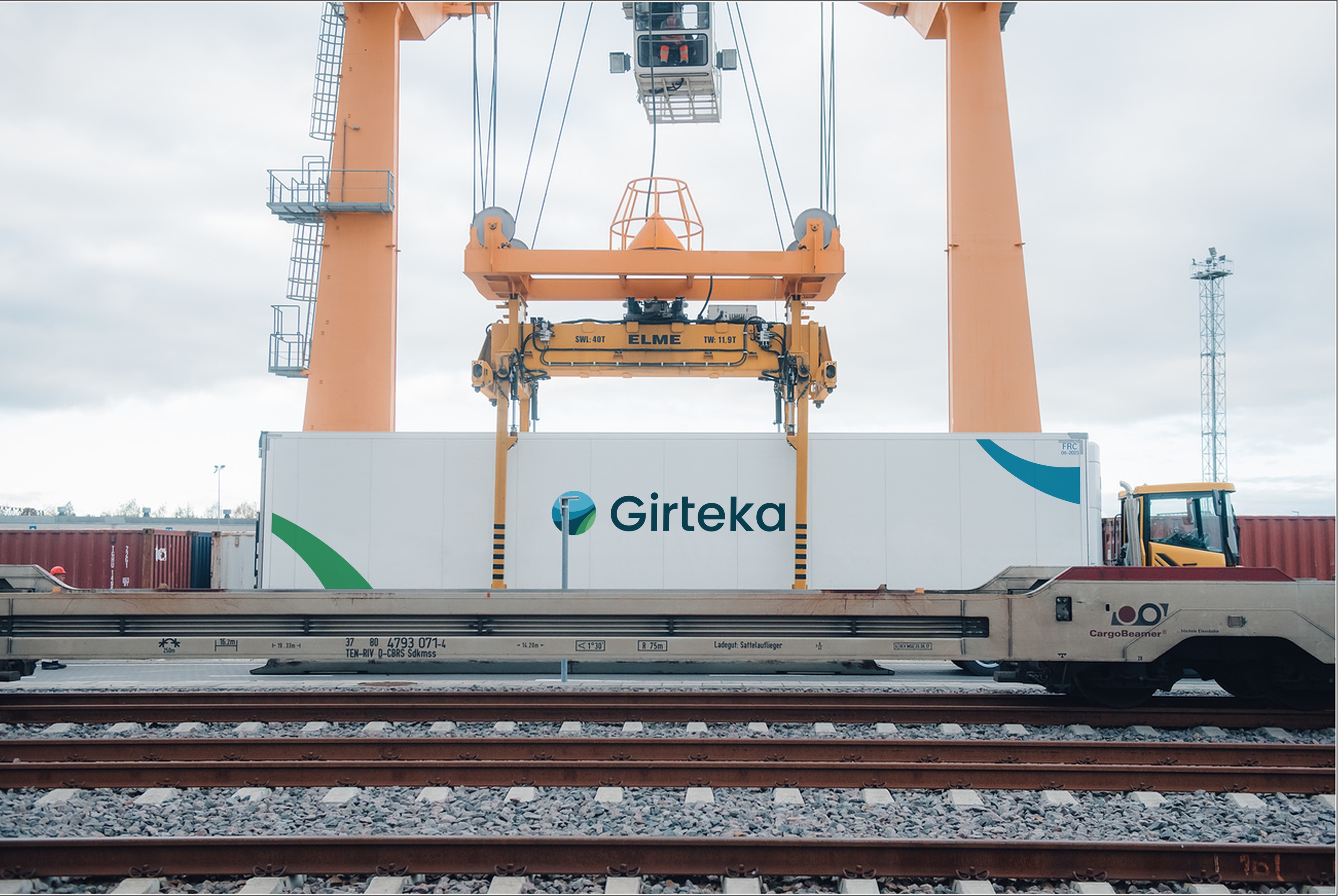
Rail transport is considered a reliable mode of transport, although in recent years it has been displaced by more flexible and faster road deliveries. Now, in the face of the drive towards decarbonization, it is regaining importance as an effective method of reducing CO2 emissions. Thanks to intermodal solutions – shifting cargo from road to rail, using energy from renewable sources, rail can reduce emissions by up to 65%[1]. Moreover, one train replaces 35–40 trucks, which increases its efficiency in transporting large volumes over long distances.
Intermodal transport can support the decarbonization of the supply chain for various groups of goods, especially those that are sensitive and high-value, e.g., in the cosmetics and food industries. This requires appropriate resources, an innovative approach, and digitalization. Examples include projects implemented by Girteka, a leading European transport company that builds its services based on digitalization and sustainable transport solutions.
Intermodal for high-value cargo
A simple way to reduce the carbon footprint and achieve environmental goals is to shift some road transport to rail. A good example here is one of Girteka’s clients – a large cosmetics corporation that decided to redirect 80% of its high-value goods deliveries to rail. In 2022 alone, approximately 1,500 fully loaded trailers were transported this way for them, which reduced emissions by 80% compared to road transport[2].
– We knew the company wanted to significantly reduce emissions, so together we explored various solutions, analyzing available alternatives. Thanks to an extensive network and minimal changes in operations, we effectively utilized rail transport. Combined with our road network for deliveries to/from terminals, we transported a large volume of goods in the most convenient and sustainable way – explains Larisa Senkevičienė, Intermodal Business Development Manager at Girteka.
Transporting cargo by rail required precise coordination and planning of loading and unloading with the client. Schedules were adjusted to production and delivery plans, taking into account rail-road transshipments. At every stage, Girteka’s planning teams worked with the client, adjusting resources to the requirements of rail transport. This approach optimized logistics processes, ensuring timely deliveries while minimizing delays.
Sustainable options in food delivery
Another way to reduce CO2 emissions, by up to 100% while using clean green energy, is the use of alternative fuels, i.e., HVO 100 or electric vehicles (BEV). Here, examples include companies in the food and beverage industry that want to decisively optimize transport. They choose combined transport based on rail and vehicles powered by HVO. This possibility is also offered by Girteka’s new project – the Alternative Fuel Program.
– We had to approach this in a slightly different way, as the entire supply chain could not rely solely on intermodal transport. Thanks to the fact that we use alternative fuels such as HVO in our trucks, we used this option for transport to/from rail terminals. The result? A 90% reduction in emissions[3], which can be easily reported – explains Larisa Senkevičienė.
By rail at controlled temperature
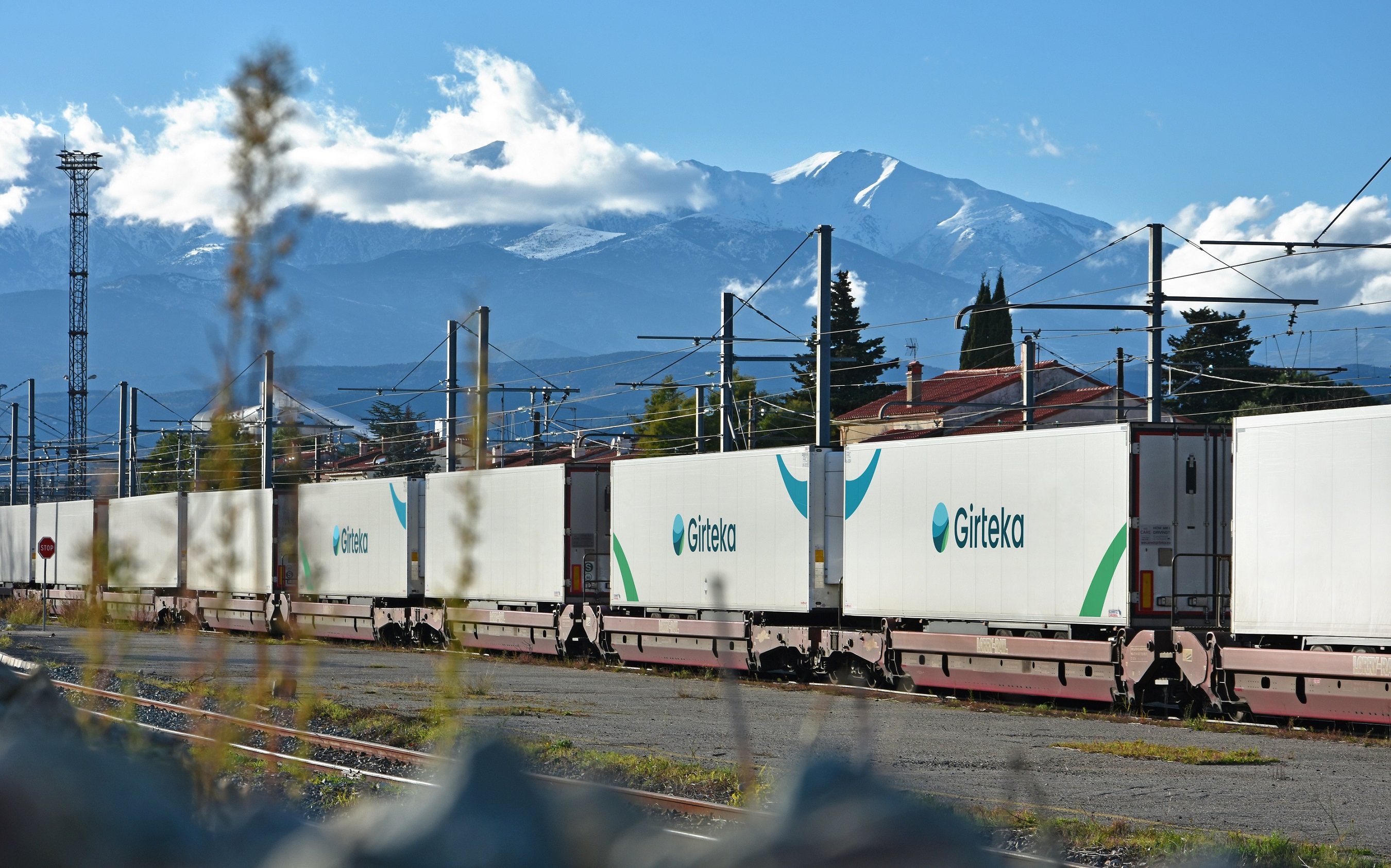
Girteka is primarily about temperature-controlled transport. To deliver products requiring temperature control, the company uses modern refrigerated trailers equipped with telematics systems and sensors that maintain the appropriate temperature throughout the delivery process. This does not prevent combining road and rail.
– For one of the largest ice cream manufacturers, a leader in this industry, we organize rail transports from Germany and the Netherlands to Spain. A critical aspect of this operation is guaranteeing the appropriate transport conditions for cargo that belongs to the most sensitive of all those requiring controlled temperature. Thanks to digital monitoring tools and a dedicated team, we track the cargo in real-time, and we can also remotely turn on/off or set the temperature individually for each trailer if necessary – explains Dainius Augutis, Transport Function Support Manager at Girteka.
Therefore, precise management of operations is key, including constant monitoring of factors such as the temperature inside the trailer, the condition of the refrigeration system, or adherence to train departure and arrival schedules. The involvement of a dedicated team and an action plan, supported by digital tools, allow for quick reactions to delays or unexpected changes, which ensures reliability, control, and effective management of all parameters at every stage of transport.
Measurement and reporting are always important
As Girteka emphasizes, reporting and data collection are of great importance for assessing the effectiveness and impact of sustainable intermodal solutions, especially in the transport of sensitive cargo.
– Monitoring and data are extremely important to us, which is why we provide the ability to track the entire route of the cargo. Thanks to our calculation of emissions from the chosen sustainable transport solution, the client can receive a comprehensive report on the exact number of kilograms of CO2 reduced. This data-driven approach, which is consistent with the upcoming ESG reporting obligation, becomes an additional benefit for clients – explains Larisa Senkevičienė.
The future of intermodal
Although intermodal and its advantages are constantly at the top of public debate topics, only about 18% of goods are still transported by rail[4]. The European Union does not give up and continues to focus on the development and promotion of this mode of transport. Various initiatives are being undertaken, such as the Greening Freight Package, intended to help increase the share of rail transport. Improving infrastructure, simplifying legal regulations, and streamlining intermodal connections are also expected to help. Logistics companies that, like Girteka, actively participate in the decarbonization of transport, striving for increasingly sustainable supply chains, will certainly play an important role.
[1] https://cer.be/images/publications/positions/The_Economic_Footprint_-_web_-_final_final_30_Sept_0.pdf
[2] Calculation based on Girteka’s own data and intermodal service provider data
[3] Calculation based on Girteka’s own data and intermodal service provider data
[4] https://eur-lex.europa.eu/resource.html?uri=cellar:5e601657-3b06-11eb-b27b-01aa75ed71a1.0001.02/DOC_1&format=PDF
Source: Girteka Group