








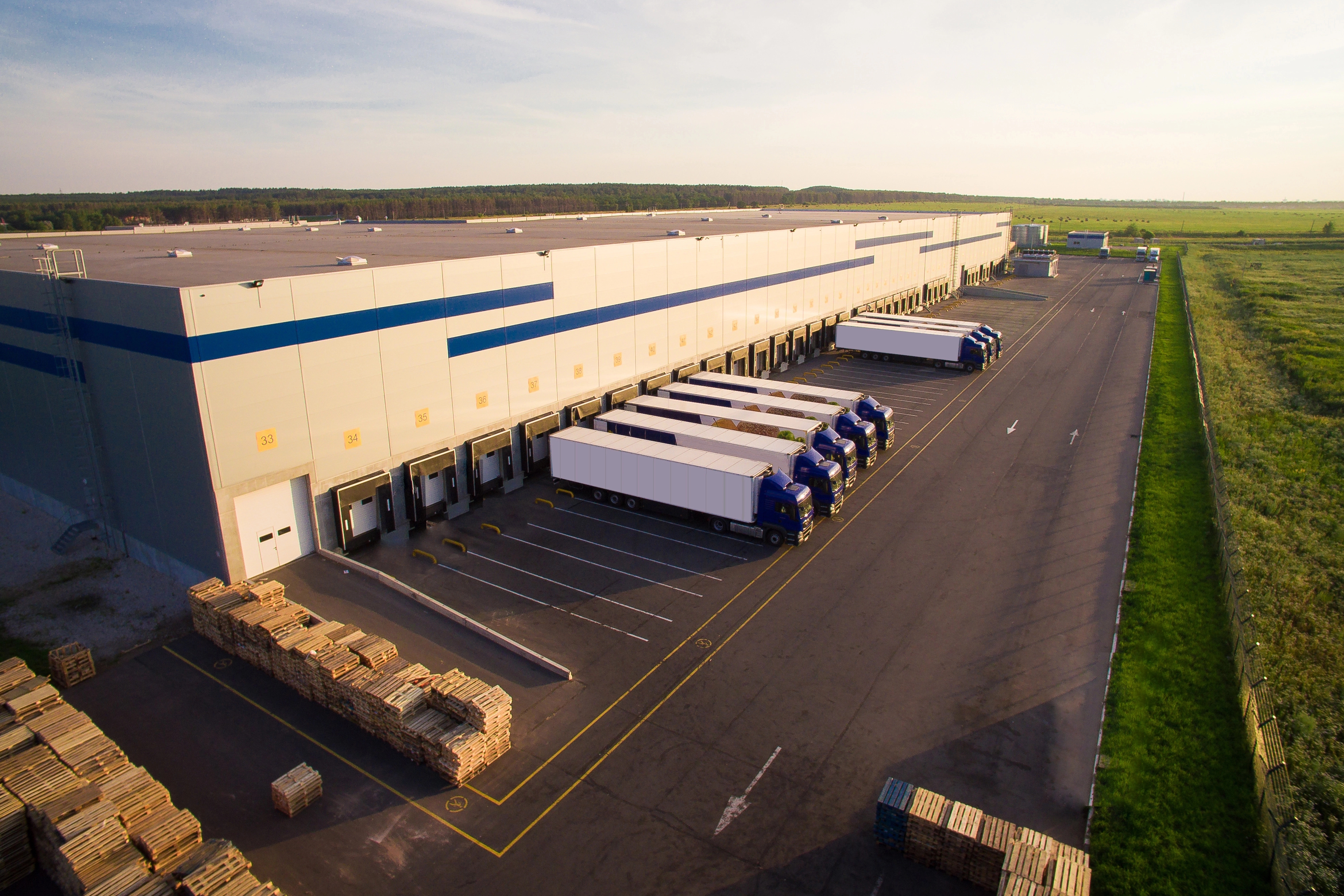
Thanks to its strategic location and strong industrial base, Poland is strengthening its position as a leader in manufacturing and supply chain, responding to international staffing and investment needs. However, rising labor, energy, and raw material costs are becoming a challenge. In the face of these changes, companies are intensively searching for new technologies that can increase production efficiency, reduce manufacturing costs, and streamline processes. Organizations are also focusing on retaining a permanent workforce, which allows them to optimize onboarding costs. Salaries in both sectors are rising, although their growth is less dynamic.
Poland’s strategic location
Poland, strategically located in the center of Europe, stands out with a strong industrial base and a dynamically developing manufacturing and supply chain sector, adapting to global trends and the growing demand for specialists. However, the country’s high competitiveness faces challenges related to rising labor, energy, and raw material costs, which prompts some enterprises to move less advanced production processes to countries with lower costs. Poland still wins against the region due to its high quality and efficiency. It thus becomes an attractive investment location, despite competition from other Central European countries.
Polish companies are, however, cautious in recruitment. Faced with market uncertainty resulting from high order volatility, they focus on retaining their current staff, treating stable employment as a key element of their strategy. Reducing employee turnover allows for the optimization of onboarding costs, and today’s approach to human resources management is based primarily on a pragmatic analysis of costs and profits.
– Today, it is difficult to talk about a universal strategy that will effectively keep employees in companies. Everything depends on the sector and the individual condition of specific companies. A company from the automotive sector, which is struggling due to component production costs, competition from China, and growing ecological requirements—which ultimately translates into higher car prices and lower sales—must take completely different actions. Companies from the FMCG industry, which for the most part do not face such major problems, will make different decisions. However, regardless of the industry, the rule on the market is simple: often current employees earn less than the people the company would have to hire in their place. As a result, organizations prefer to make a counteroffer and raise an employee’s salary than to engage in the process of onboarding a new person – says Krzysztof Tuszyński, Head of Business Development at Michael Page.
Among the five most sought-after roles in the manufacturing and supply chain industry are Plant Manager/Operations Manager, who can earn from 25,000 to 65,000 PLN gross depending on the location and size of the company, as well as Automation Engineer, whose salary reaches up to 16,000 PLN gross. Other positions include: Commodity Manager/Procurement Manager, Technical Manager, and Logistics Manager/Supply Chain Manager. In both sectors, the level of remuneration is rising, which correlates with the inflation rate. However, this growth is becoming less dynamic. For candidates, flexibility is important, preferred by 40% of employees. The importance of training programs that bridge competence gaps and attract new candidates looking for development opportunities is also growing.
Modern technologies in the manufacturing and supply chain sector
As indicated by the Deloitte report “2024 Manufacturing Industry Outlook” [1], implementing smart technological solutions can significantly increase productivity in the manufacturing sector by up to 12%. Currently, there is a growing demand for specialists in the field of automation, robotics, and risk management, especially in response to global supply chain disruptions, as highlighted by the COVID-19 pandemic.
– We are witnessing a certain technological and mental revolution both on the European and global market. In the face of rising employment costs, enterprises are intensively looking for new solutions that can increase production efficiency, reduce manufacturing costs, and streamline processes. Consequently, automation, robotization, and digitalization of production will develop dynamically. It is difficult to predict what role artificial intelligence will play over the next ten years, but it will certainly influence changes in the labor market. Some positions may be replaced by AI, e.g., freight forwarder or production planner, and in their place, new ones will emerge, responsible for, for example, human-AI collaboration or human-robot collaboration – adds the Michael Page expert.
Moreover, numerous green technologies are being implemented in Europe, which are shaping the manufacturing and supply chain sector and are a response to growing environmental requirements. Companies are increasingly investing in renewable energy sources, energy-efficient machines, and solutions that reduce CO₂ emissions and minimize waste.
– Growing environmental requirements lead to an increase in production costs because they require investments and process adjustments, which may affect the final price of products. Nevertheless, they are becoming increasingly attractive in the face of growing demand for eco-friendly products and tightening emission penalties. On one hand, these actions can strengthen Europe’s competitiveness in the green goods segment; on the other, in the current global economic climate, price becomes the main purchasing determinant. Environmental requirements pose significant challenges for companies, especially smaller ones, which have to deal with higher costs – concludes Krzysztof Tuszyński.
The Salary and Labor Market Trends Review 2025 is available at the link.
[1] Deloitte Research Center for Energy & Industrials, ,,2024 Manufacturing Industry Outlook”, https://www2.deloitte.com/us/en/insights/industry/manufacturing/manufacturing-industry-outlook.html
Source: Michael Page/OneMulti/Brain Embassy