








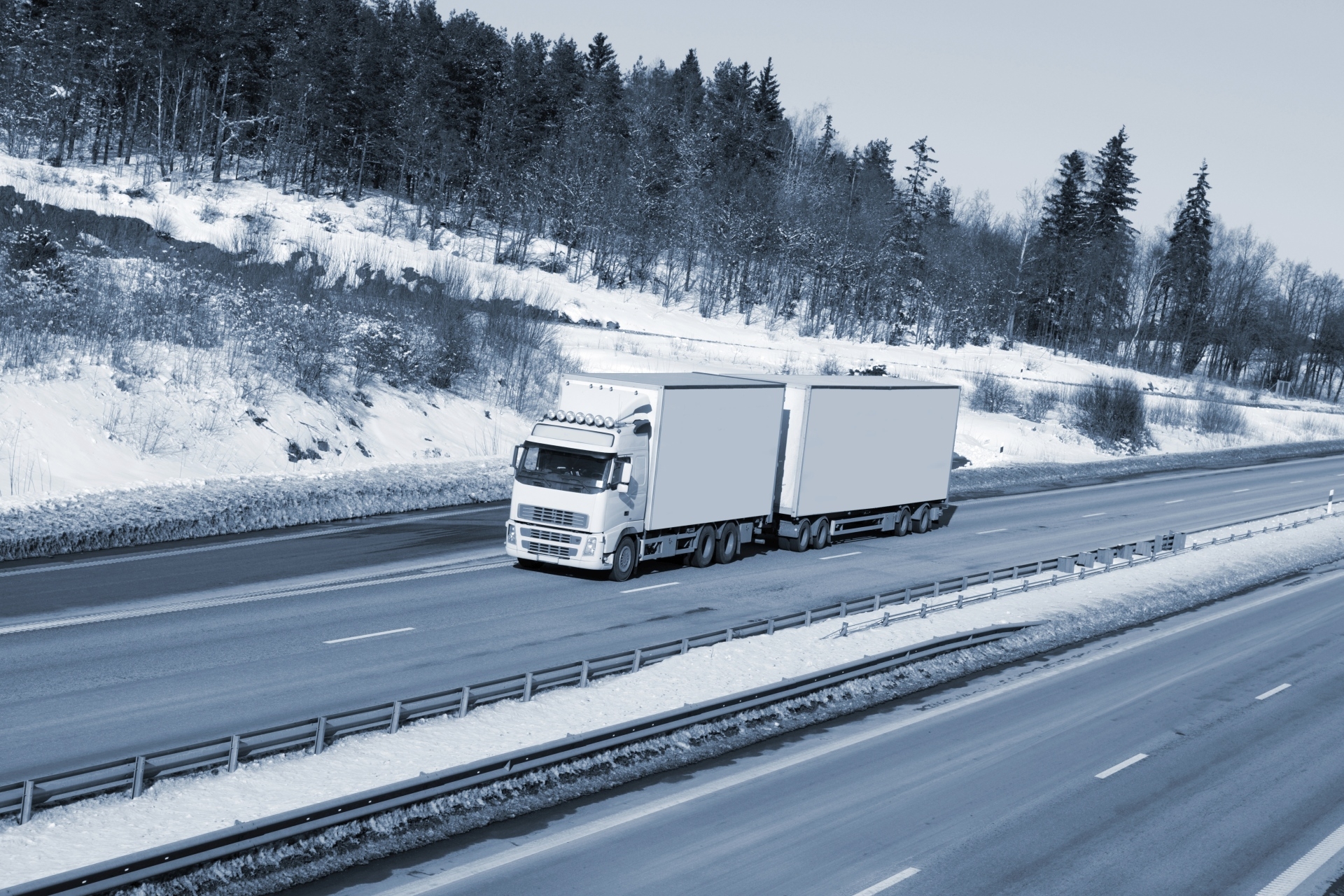
Changing weather conditions, which are becoming more demanding, herald more frequent roadside inspections. This year, the Road Transport Inspectorate (GITD) checked nearly 160,000 vehicles over 3.5 tons, of which over 18,000 were so-called solo trucks and over 141,000 were vehicle combinations. Irregularities due to technical condition were detected in nearly 2,000 trucks and 4,600 tractor-trailer combinations. Moreover, a large portion of them (a total of 4,400 vehicles) were prohibited from continuing their journey. The GITD also seized nearly 4,700 registration certificates for semi-trailers or trailers, and in over 3,200 cases, did not allow them to continue on the road.[1] The most common violations found regarding technical condition include excessive wear of the brake drum or disc or cracks on its surface, damaged tires, malfunctioning lighting, or leaks of operating fluids.[2] The autumn-winter period is a time when carriers should take a closer look at their fleet – on one hand, to ensure safety, and on the other, to avoid potential large financial losses caused by immobilizing a truck at the company.
As noted by Tomasz Czyż, Chief Expert on Technological Solutions at Inelo from the Eurowag Group – the lost monthly turnover on a vehicle in international transport due to an unplanned breakdown and the inability to perform orders can cost a transport company an average of about 56,000 PLN, and that is just the beginning of the expenses. How can this be avoided and how can safety on the road be increased? How to take care of the fleet during the autumn-winter period?
Downtime in transport, or the silent killer of company profitability
A lack of regularity in taking care of the fleet can lead to vehicle breakdowns, which are associated with costly downtime. These, in turn, can burden the company’s budget and affect its profitability. As emphasized by Tomasz Czyż, an Inelo expert from the Eurowag Group, financial losses due to unplanned downtime in international transport can amount to as much as about 13,000 EUR per vehicle, which is over 56,000 PLN.
– It should be emphasized that this amount refers only to the lost turnover on the vehicle. Additionally, other expenses resulting from the transport company’s operations must be taken into account. During unexpected delivery interruptions, carriers still incur vehicle leasing costs – about 2,000 EUR (8,600 PLN) for a tractor unit and 500 EUR (2,000 PLN) for a semi-trailer. Even if the driver can be used for other tasks, e.g., as a replacement, completely avoiding personnel costs is impossible. During downtime, companies are also obliged to pay for vehicle insurance, transport vehicle tax, and cover potential vehicle repair costs, which can amount to even tens of thousands of euros, which is a large financial burden for the company and can affect its profitability – emphasizes Tomasz Czyż, an Inelo Group expert.
In some cases, entrepreneurs decide to rent a replacement vehicle for the short term, which is an expense of 2,000–2,500 EUR (from 8,600 PLN to over 10,800 PLN). Downtime is therefore a multidimensional problem that directly affects the financial liquidity and stability of transport companies.
Regularity – the key to keeping the fleet in good condition
Carriers know perfectly well how important it is to take care of their fleet of vehicles all year round. However, the autumn-winter period poses additional challenges for them. A regular technical inspection is the foundation, without which it is difficult to talk about safety on the road.
– Neglecting maintenance can lead to breakdowns while driving, which directly threatens the driver and other road users. It is also worth remembering that checking the vehicle’s condition allows for the detection of minor faults before they turn into serious and expensive repairs. Planned maintenance is usually cheaper than emergency repairs, which are often associated with higher costs for parts and labor as well as delivery delays – assesses Tomasz Czyż, an Inelo expert from the Eurowag Group.
What needs to be checked in the car during the autumn-winter period?
During the autumn-winter period, road conditions are much more demanding than in summer. That is why, before the colder months arrive, it is worth taking special care of key vehicle components, namely:
- brakes – efficient brakes are the basis of safety. It is worth paying attention to the condition of the brake pads and discs in order to replace them if necessary before the frosts arrive;
- condition of operating fluids – coolant, brake fluid, and oils must be adapted to lower temperatures. Regardless of the time of year, failure to change fluids regularly can lead to serious engine damage;
- lighting – poor visibility is a common cause of road accidents in autumn. Ensuring that all lights on the vehicle are working properly is a step that can save lives;
- tire pressure – as the temperature drops, tire pressure decreases, which affects grip and control over the vehicle. Regular monitoring and adjusting the pressure can prevent this.

Monitoring the condition of vehicles has never been easier
Technological tools for transport contribute to improving safety in road transport not only through the ability to analyze driver behavior. They are also helpful in monitoring the technical condition of vehicles, and reliable equipment is one of the most important elements in transport.
– Technological tools for transport allow for an easy and quick assessment of the vehicle’s condition and when its service needs to be scheduled. Using telematics, the driver can fill out a checklist reminding them about the truck’s equipment or its technical condition. Such an option is available in, for example, GBox Assist. If the trucker gives a negative answer to any of the questions, e.g., whether they have working lighting on the vehicle, the system will send a notification to the device requesting the removal of the fault or contact with the fleet manager. Moreover, reminders about inspections and services, which can be set automatically thanks to the integration of telematics, such as GBox with a TMS-class system like fireTMS or TMS Navigator, are also a great convenience. In this way, transport companies gain certainty that they will not forget about a regular inspection, and most importantly, we will reduce the risk of sending a vehicle on the road that may break down along the way – comments Tomasz Czyż.
TMS-class systems are also equipped with dedicated functions that allow for convenient management of car parts and planning the work of mechanics, such as the workshop or warehouse module from TMS Navigator – These options can make it easier for fleet managers to keep records of warehouse stocks regarding car parts, e.g., a supply of light bulbs, and check the truck’s service history, and all this information appears during settlement in the vehicle’s results, which makes fleet management easier – adds the expert.
Eco-driving and road safety
Smooth driving in transport is extremely important not only because of the savings it can bring to a transport company, but also because it can increase the safety of all road users.
– Calm and defensive driving, supported by telematics, can increase safety on the road. It is also particularly important in adverse weather conditions, where visibility may be limited and the surface slippery. In such cases, maintaining greater than usual distances between vehicles and performing smooth maneuvers is the basis. The driver’s ability to observe what is happening on the road and the ability to anticipate future events also counts – notes Tomasz Czyż.
What other tools increase safety on the road?
In addition to systems monitoring driving style and the technical condition of vehicles, modern technologies offer a range of tools that directly support drivers during the route. An innovative solution is, among others, a driver fatigue detection system. It uses advanced algorithms that monitor the driver’s reactions, eye movements, or blinking frequency. If the system detects signs of fatigue, it can immediately alert the driver, suggesting a break in the journey.
Tire pressure sensors are also an interesting solution. In autumn, when temperatures start to drop, proper tire pressure becomes even more important. Sensors allow for ongoing monitoring of tire condition and alert the driver when the pressure drops below a safe level. This is especially important on slippery surfaces, where too low pressure can significantly affect the vehicle’s grip.
A blind spot monitoring system can also be a useful tool. It consists of sensors mounted in the mirrors or on the rear bumper of the vehicle. Its primary task is to identify other road users located in adjacent lanes. This sensor registers vehicles moving in side lanes and transmits this information to the driver. Warnings can be signaled through sounds, vibrations, or indicator lights. In more advanced versions, this system can use an image from a camera, allowing the driver to observe vehicles in the other lane.
[1] Road Transport Inspectorate, statistical data for 2024.
[2] As above.
Source: INELO