








A leading food manufacturer entrusted ISS RFID with conducting tests of an RFID system in production, warehouse, and office areas. The goal was to examine the environment for RFID technology operation and to check the possibilities for optimizing inventory and fixed asset management. The tests, the results of which were presented in the 3rd quarter of this year, confirmed the validity of implementing radio technology.
The requirements set by the client included supporting the fixed asset inventory process in all production, warehouse, and office spaces using mobile RFID readers, taking into account both main and detailed locations. Expectations also included the ability to integrate the RFID system with the SAP system used in the production plant, and generating reports from the inventory process, including temporary ones that would not automatically introduce changes to the core ERP.
– The first stage of environmental tests at this client’s site was to familiarize ourselves with the current inventory processes in the production area, i.e., on individual production lines, including the area of auxiliary equipment, such as electrical and ventilation systems. We analyzed warehouses, office rooms, and conference rooms separately – informs Adam Silny, CEO of ISS RFID and co-founder of Silny&Salamon.
Equipment under control
The scope of the inventory is ultimately intended to cover approximately 10,000 fixed assets with the possibility of assigning statuses to equipment, such as serviced or dismantled, to accurately reflect the actual state. Previous markings relied on placing nameplates on equipment components, which limits the flexibility and efficiency of managing them.
– For the tests, we selected 16 types of RFID tags, which were placed on individual components. Then, engineers measured the range and reading effectiveness and evaluated which of them showed the best performance relative to the requirements, which allowed us to select the most effective tags – adds Adam Silny.
Such a wide range of tested RFID tags resulted from the diversity of the inventoried objects. Metal objects, electronics, non-metal fixed assets, or office equipment have different requirements. The place of their use, the influence of factors such as temperature and humidity, and the available space for applying the RFID identifier are of great importance. The experts also verified potential radio signal interference generated by electromagnets in automatic valves on production lines.
The ISS RFID team used UHF RFID technology operating in the 865-868 MHz band for the tests, which enables reading RFID tags from a distance of several meters, as well as an installation simulating an RFID gate along with proprietary ISS Inventory software.
Potential and broad capabilities of RFID
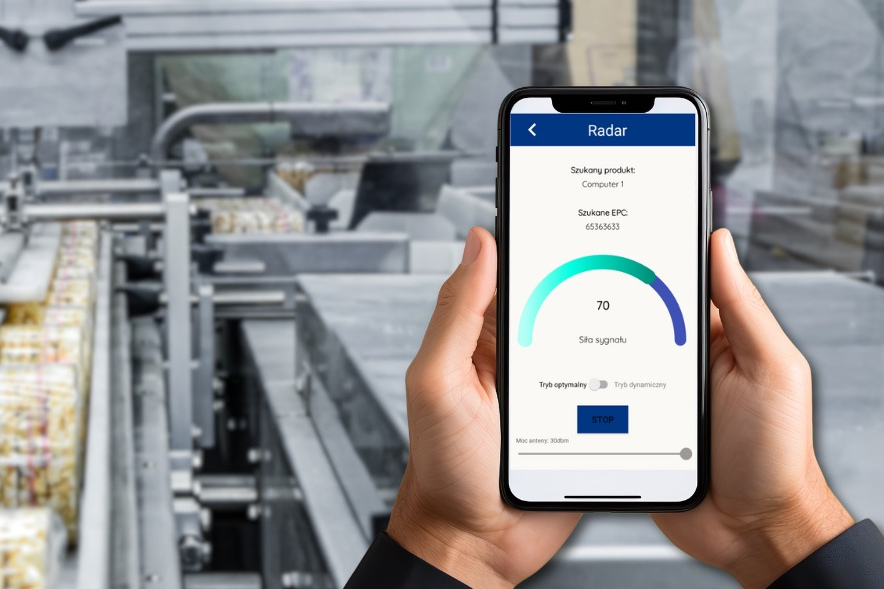
The client expected a clear view of the inventory status in mobile software with a breakdown by different types of equipment and a wide range of functionalities. The pilot project demonstrated the software’s capabilities, which include adding products, assigning attributes and parameters to them, adding a photo of the item and location with relevant data, and, crucially, inventorying and verifying equipment against a defined location. An interesting feature of the software, which the client noted, is the radar function, which helps to efficiently locate the searched product thanks to the signal strength revealed on the reader.
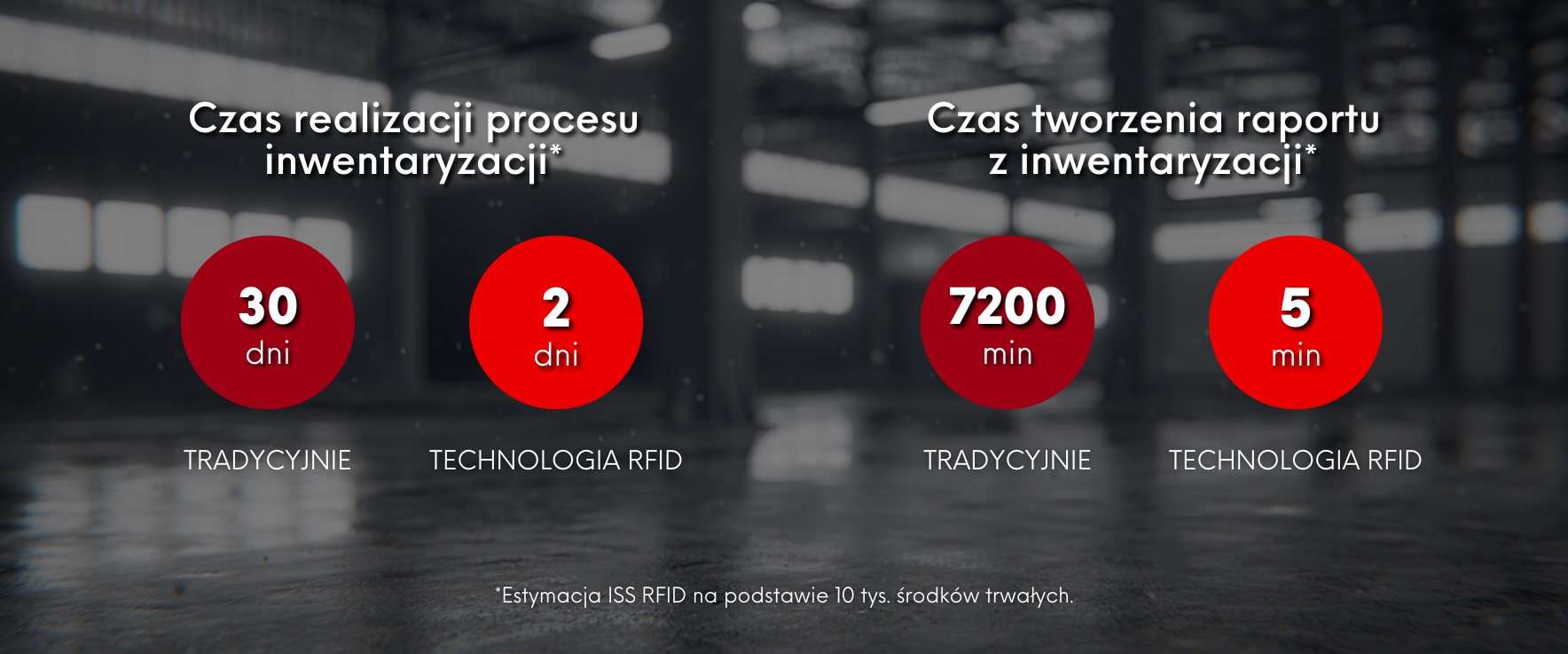
The tests conducted at the food production plant confirmed that RFID technology will work well in optimizing the inventory process and managing fixed assets in all indicated locations. Estimates indicate that with 10,000 fixed assets to be inventoried, the traditional method takes 30 full days, while with RFID it takes 2 days, and creating the report itself will take 5 minutes compared to 5 days using the manual method.
– We hope that the report presented to the client, confirming the validity of introducing an RFID system, both in terms of the appropriate environment for this technology and the benefits and savings in operational activities at the plant, will be an important step towards digital transformation. This is undoubtedly a factor that determines the competitiveness and resilience of enterprises in challenging times – concludes Adam Silny, CEO of ISS RFID.
The potential of RFID technology lies in creating management-useful information thanks to software that properly processes the data collected from RFID tags and, depending on defined needs, generates information that allows for better company management. Investment decisions are not easy, which is why the recommended approach is “Test before invest,” which allows checking the technology in a selected area of the company’s operation without financial risk.
Funding for innovation for SMEs
To take advantage of the opportunity to finance tests, entrepreneurs who want to increase their competitiveness can use subsidies or grants supporting digital transformation. One of them is the Pomeranian Digital Innovation Hub (PDIH), of which ISS RFID is a member. It is a support point for industrial companies that want to introduce Industry 4.0 solutions, where it will soon be possible to apply.
Source: ISS RFID Sp. z o.o.