








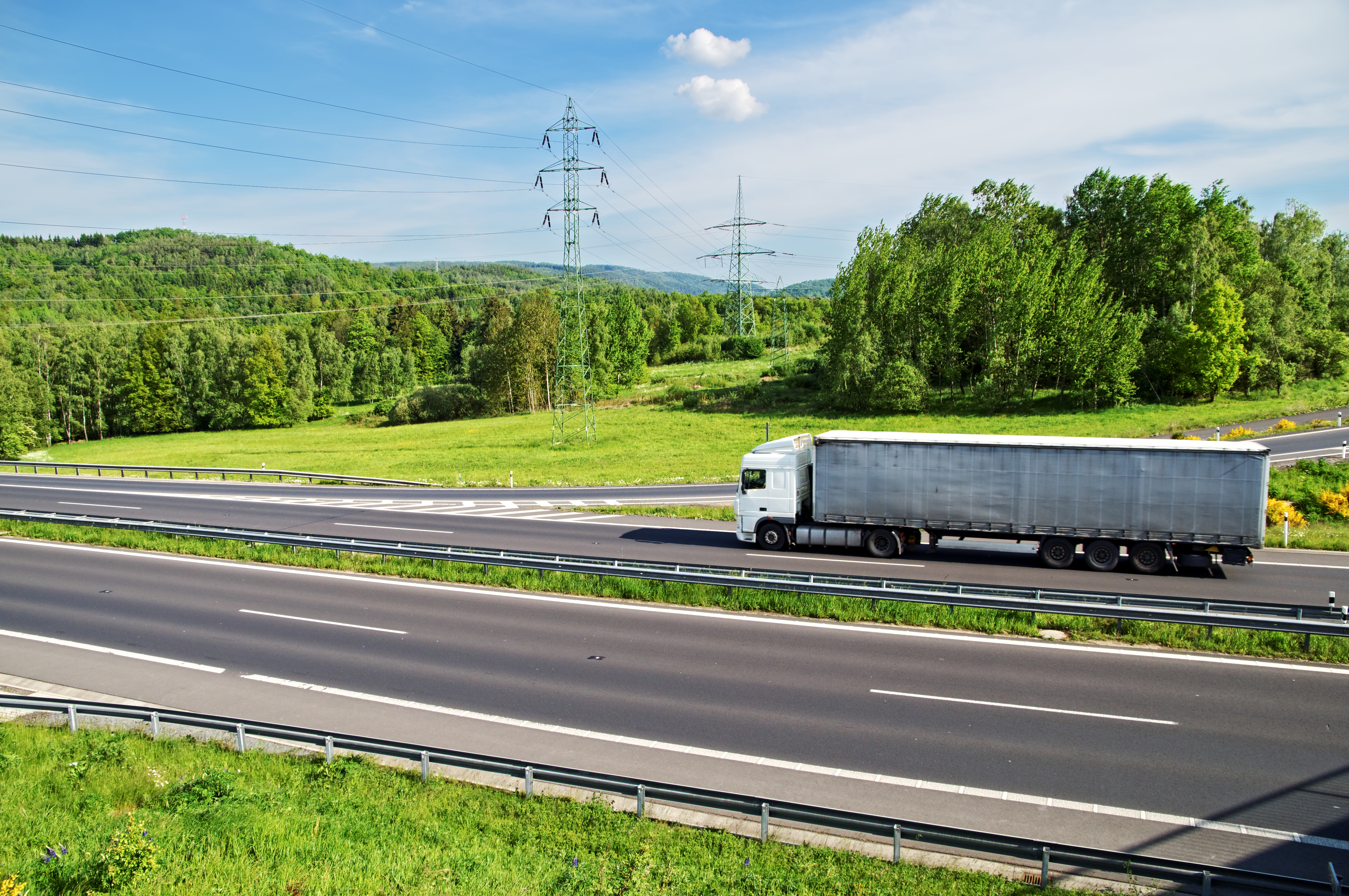
Polish companies account for 33% of the EU road transport market. This statement is losing its relevance very quickly, and Poland may lose its leading position. The reasons are clear: it is mainly the change in the way Polish drivers are remunerated and the increasing (not always fair) competition from Ukrainian companies. However, the pace of the decline is surprising. Since the beginning of the year, registrations of vehicles over 3.5 tons have fallen by one-fifth (data from the Polish Automotive Industry Association – PZPM). There were 20,356 new commercial vehicles with a GVW of over 3.5 tons added. In August, 63% fewer trucks were registered (the decline in tractor units was as high as -71%), and September was the worst in 4 years. The last month was the eleventh consecutive month of declines in the commercial vehicle market (since September 2023, with the exception of June this year, when the market grew slightly). There were also fewer used cars imported from abroad this year.
Can economic growth be achieved without transport?
In 2024-2025, the expected rate of economic growth in Poland will be almost the highest in Europe, significantly stronger than that of our EU neighbors. However, the 3.8% GDP growth for next year estimated by experts may be difficult to achieve without constant replenishment of the transport fleet.
Along with the decline in truck registrations, the number of new trailers and semi-trailers with a GVW of over 3.5 tons is also decreasing. In September 2024, 29.6% fewer were registered year-on-year (1,430 units – PZPM data). Since the beginning of 2024, the group of new trailers and semi-trailers with a GVW of over 3.5 tons has reached 13,859 units, which is significantly less than a year earlier (-31.5%).
– The economic and political situation negatively affected the profitability of the TSL industry a year or two ago. We clearly saw a tendency for medium-sized companies to liquidate or downsize from several or a dozen vehicles to one or two. In this context, the decline in new truck registrations seems understandable. However, we may soon witness the opposite trend – an increase in demand for transport services. This could be caused by economic growth, which is expected to be the highest in Europe in Poland. This will require trucks and semi-trailers, which may be in short supply given the current decline in registrations – analyzes Jerzy Dąbrowski, board member of Finea, a company specializing in TSL financing.
A similar scenario occurred in the case of railways. Poland, having a large base for rail freight transport, was unable to transport coal from Baltic ports or grain from Ukraine.
Regression in Poland, record growth in Ukraine
While truck registrations in Poland are hitting record lows, records are also being noted in Ukraine, but positive ones. In 2023, 4,853 new trucks with a GVW of over 3.5 tons were registered in Ukraine (data from “Auto-Consulting” Ukraine). This is 56.5% more than in the difficult year of 2022. This is the best truck sales performance recorded in Ukraine in the last ten years.
Since signing the agreement with the EU, Ukraine has increased the value of its exports to the EU carried out by road transport by two-thirds.
– Polish transport companies are able to compete not only with low costs. We still have a modern fleet, and the companies are experienced and well-organized. The TSL industry in Poland also has numerous financial tools, e.g., factoring, which make them more flexible, for example, compared to Ukrainian companies. After all, the cash flow there is not as fast as carriers would expect. Certainly, some TSL companies in Poland will not survive, but those that are well-organized and have access to fast financing will certainly manage – concludes Jerzy Dąbrowski.
The number of new vehicle registrations in Poland is still almost 6 times higher than in Ukraine. In the long term, Chinese and Indian trucks, which are most often purchased on the Ukrainian market, may also be a problem. Their quality and durability have yet to be verified; furthermore, such vehicles may be reluctantly used by service contractors from Europe, who are increasingly calculating their companies’ carbon footprint.
Source: Brandscope