








Trends in the TSL industry identified by experts include shortening supply chains, the growing popularity of intermodal transport, and the implementation of sustainable development goals, primarily through carbon footprint reduction. What lies at the foundation of these actions, and is also the essence of this industry, is intact and safely delivered cargo.
Safety and reliability of deliveries are the foundation for companies in manufacturing and service industries, where the availability of raw materials, products, and semi-finished goods determines business continuity. However, geopolitical turmoil means that company resilience must be built through the proximity of manufacturers and suppliers. This also means reducing the number of intermediaries, which allows final products to reach customers faster, with higher quality due to fewer transport and storage stages. However, proper cargo securing is crucial so that products arrive intact and any tampering attempts are immediately detected.
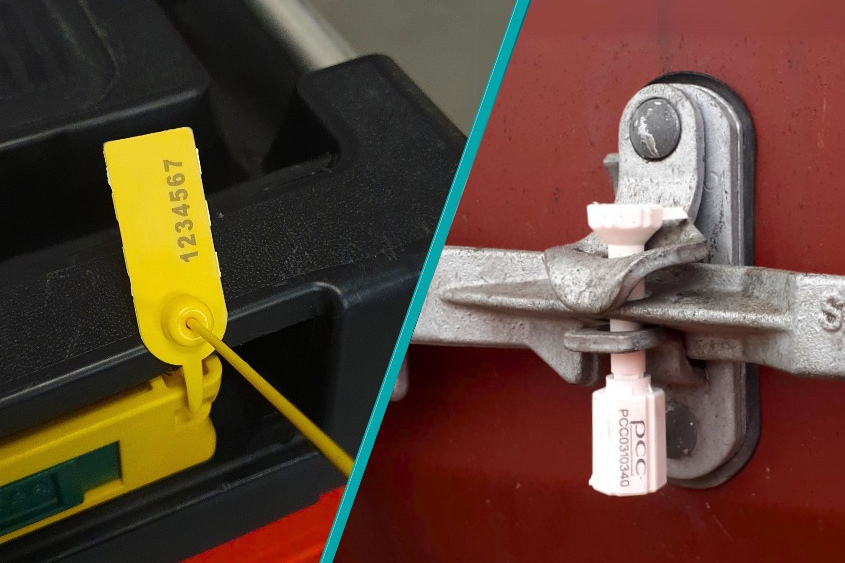
– Securing is an extremely important stage that requires selecting the right solution tailored to actual needs. It is worth consulting to choose the right one from a wide range of available seals, from plastic to metal, container, or electronic ones, which serve both security and identification functions. You need to know when to use security measures that meet ISO 17712 High Security standards or C-TPAT security criteria, and when less advanced ones will suffice – says Katarzyna Bieńkowska, CEO of Silny&Salamon.
Shortened supply chains mean financial, time, and quality benefits, which requires the selection of proven partners.
Intermodal transport
The growing importance of intermodal transport stems from the need to seek efficiency and optimize logistics costs. It combines various means of transport (sea, rail, road), and although it may sometimes take a little longer, it is more cost-effective, helps reduce road traffic, and thus reduces the carbon footprint. In intermodal transport, more and more cargo is carried in containers, which, as a single, well-secured transport unit, remain sealed throughout the entire route. This makes the cargo easier to move and better protected against theft and weather conditions.
– This is where Maxi Sal family bolt seals prove effective, providing a high level of security, with any signs of tampering visible on both the pin and the bottle housing. These are high-security seals made of durable steel alloys, covered with ABS plastic, with a breaking strength of 1100 kg – emphasizes Katarzyna Bieńkowska.
In the final stage of intermodal transport, modernly organized hubs play a key role. Depending on company policy, the nature of the goods, and the risks associated with a given transport, vehicles are secured with various types of seals.
Sustainable development
Logistics operations have a direct impact on the environment, which is why many TSL companies’ ESG strategies include an increasing number of initiatives aimed at reducing the carbon footprint, decreasing the consumption of raw materials and resources, and reducing the weight of generated packaging.
– We work with our TSL clients at the security design stage to strive for waste minimization and select mono-material solutions. We also encourage the use of collective and reusable transport packaging. I see how the philosophy we have followed for years fits very well into today’s ESG goals. Securing products, cargo, and spaces right at the beginning of the logistics process minimizes losses and saves resources – concludes Katarzyna Bieńkowska.
When implementing ESG practices, companies should focus on areas where they have a direct and significant impact. In addition to choosing economical packaging and mono-material security seals, for TSL companies, this also means optimizing routes and using innovative tools such as electronic security seals. A reusable electronic seal, together with a platform (in web and mobile versions) operating on the IoT concept, immediately provides information about the location, route progress, and security status at every point along the way. Such a solution can be integrated with any management system, which serves as a basis for optimizing subsequent processes.
A security partner in the Port of Gdynia
Silny&Salamon’s over 30 years of experience in securing supply chains and optimizing processes is based on long-term cooperation with clients, knowledge of designing dedicated solutions, and the synergy of services with its subsidiary ISS RFID, which complements the offer with intelligent solutions based on RFID technology. The location of both companies next to the rapidly developing Port of Gdynia, whose role in handling intermodal transport is constantly growing, is also significant.
The TSL industry is shaped by many entities that offer transport, warehousing, and logistics services and related activities; therefore, for the sector to develop, efficiently respond to dynamically changing customer expectations, and at the same time align with the direction of sustainable development, cooperation and the exchange of experience are essential.
Source: Silny&Salamon