








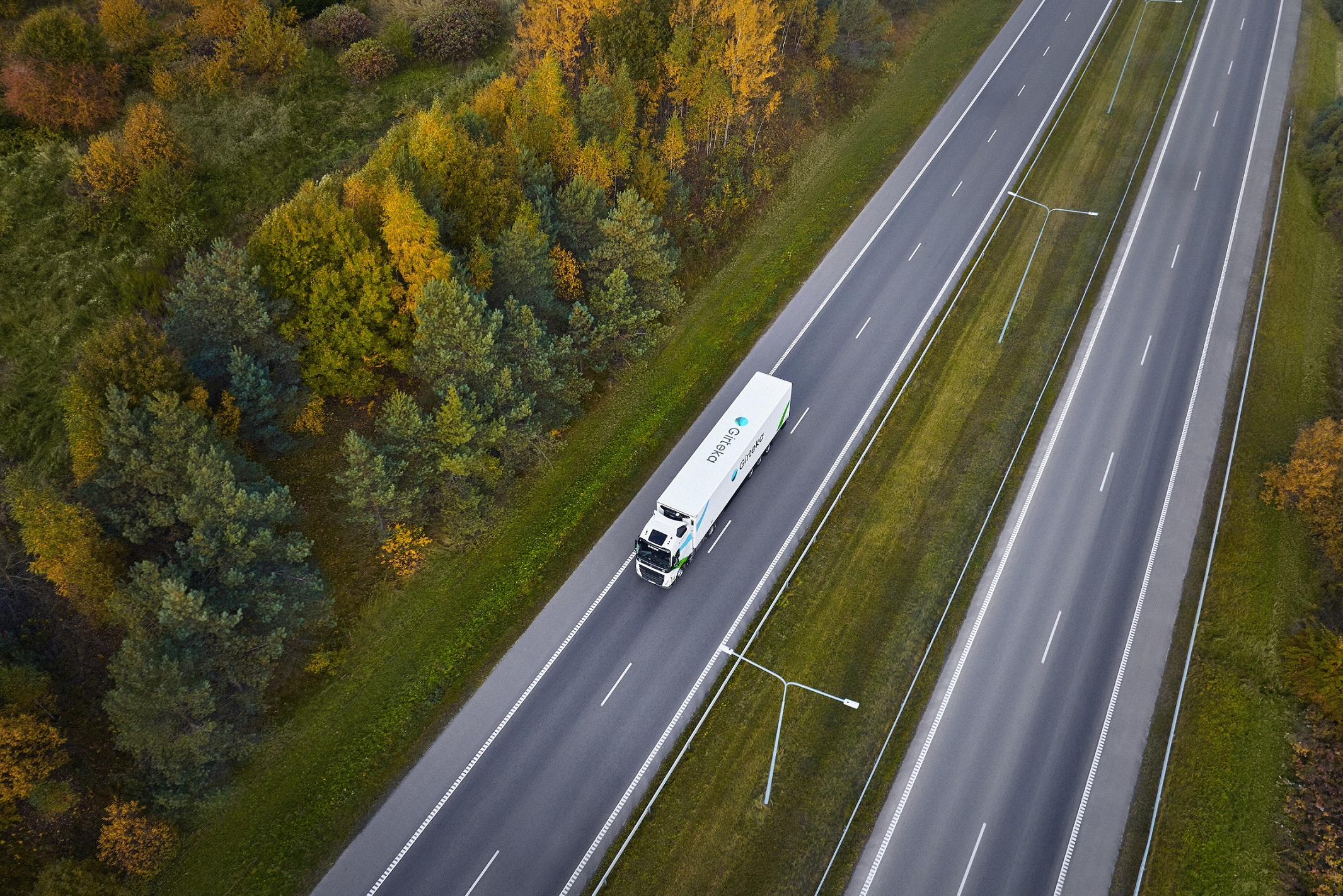
The priority for the transport services sector is the decarbonization of long-haul deliveries. Companies are investing in the development of new technologies, such as battery electric vehicles (BEVs), hydrogen-powered vehicles, or those fueled by HVO. However, drivers and their eco-driving skills remain crucial for achieving quick and measurable results. This is confirmed by the results of the latest edition of the Eco League incentive program for drivers, organized for several years by Girteka, the largest road carrier in Europe with a fleet of 6,000 trucks. It is through proper preparation and training of drivers, supported by advanced technologies, that the company is achieving significant progress in sustainable transport.
On the Eco League podium
In Girteka’s Eco League program, drivers’ performance is evaluated based on various parameters, such as engine idling, braking habits, braking in difficult conditions, stopping, coasting, and the use of cruise control, including its efficiency and engine load. The collected data allows for the calculation of an eco-score, with a maximum of 100 points. In the latest edition, eight drivers achieved the best results. The first place in the ranking and the title of eco-driving leader went to a driver with seven years of experience. He covered the most kilometers, achieving 100 points, with fuel consumption 2.4 liters per 100 km lower than the company’s average.
Small changes, significant effect
The results of the Eco League program show how important a role education and proper training play in achieving measurable results. The difference between the drivers who took the top spots in the ranking and those who placed lower is significant. The best drivers managed to reduce fuel consumption by an average of 2-3 liters per 100 km compared to drivers with lower eco-driving skill levels.
“The education we provide to our drivers is truly yielding results. In the third quarter alone, over 50% of our drivers adopted more sustainable driving practices. It is not just about fuel savings, but also a genuine commitment to reducing emissions and driving in a way that is beneficial for both the environment and the company,” says Karolina Žekaitė, Manager of the Girteka Training Center.
Why is it worth leveraging the scale effect? There are 6.5 million trucks on the roads of the European Union. This means that reducing fuel consumption by even 2 liters per 100 km can bring significant benefits. If all drivers adopted eco-driving principles, the total fuel savings could reduce CO2 emissions by over 40 million tons per year. This best demonstrates the potential of eco-driving in the logistics industry and its positive impact on the environment[1].
Digital solutions to support eco-driving
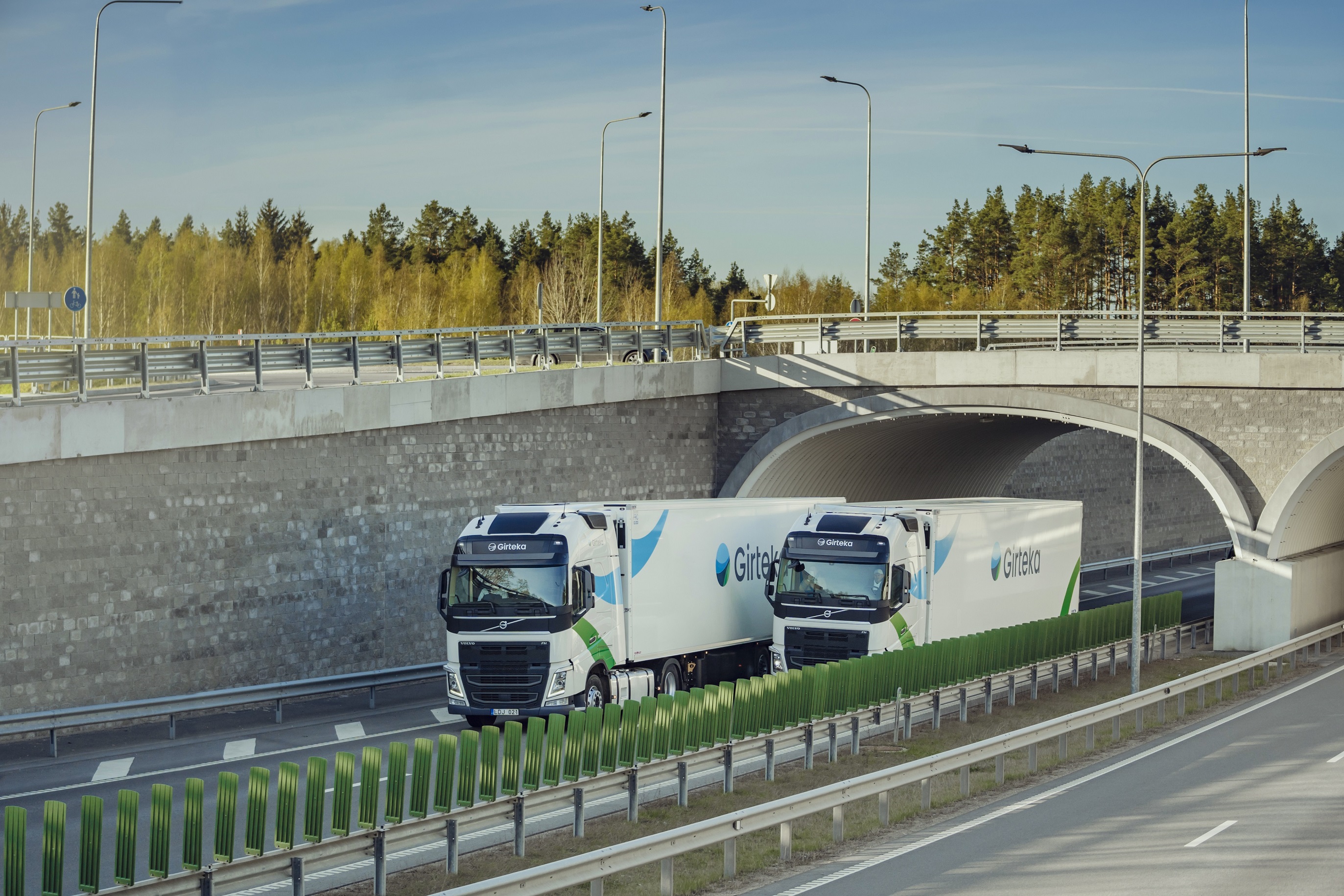
Girteka, by engaging in the promotion of eco-driving among drivers, uses advanced telematics solutions such as the Fleethand application. Its task is not only to assist and support drivers in their daily work, e.g., in finding optimal routes, obtaining necessary documents and information, or paying road tolls, but also to monitor driving parameters that affect their safety on the road and eco-efficiency. Thanks to real-time data, drivers can assess the impact of their driving style on the environment and adjust it accordingly, which in turn leads to further emission reductions. Moreover, the analysis of data provided by Fleethand also allows for the introduction of small but significant changes in route planning and optimization, which also contributes to achieving sustainability goals.
About Eco League
Eco League, organized under the slogan “Drive smart and safe,” is Girteka’s incentive program aimed at encouraging drivers to improve their eco-driving and safe driving techniques. It not only promotes competition but also provides drivers with the tools and knowledge needed to improve the efficiency of their driving style and enhance their professional qualifications. Eco League is an important element of the company’s efforts towards sustainable development in transport. But that is not all. It also shows Girteka’s commitment to creating modern and safe workplaces for drivers, as well as supporting the development of their professional skills. Such an approach by the company is also intended to encourage young people to pursue this profession.
[1] Calculations were based on the number of trucks according to ACEA (https://www.acea.auto/fact/fact-sheet-trucks/), an average annual mileage of trucks in the EU of 141,000 km (based on https://ec.europa.eu/eurostat/statistics-explained/index.php?title=Road_freight_transport_by_journey_characteristics), and an average emission of 2.6 kg of CO2 per 1 liter of diesel fuel (https://www.volvotrucks.com/content/dam/volvo-trucks/markets/global/our-values/environmental-care/our-trucks/Emis_eng_10110_14001.pdf).
Source: Girteka Group