









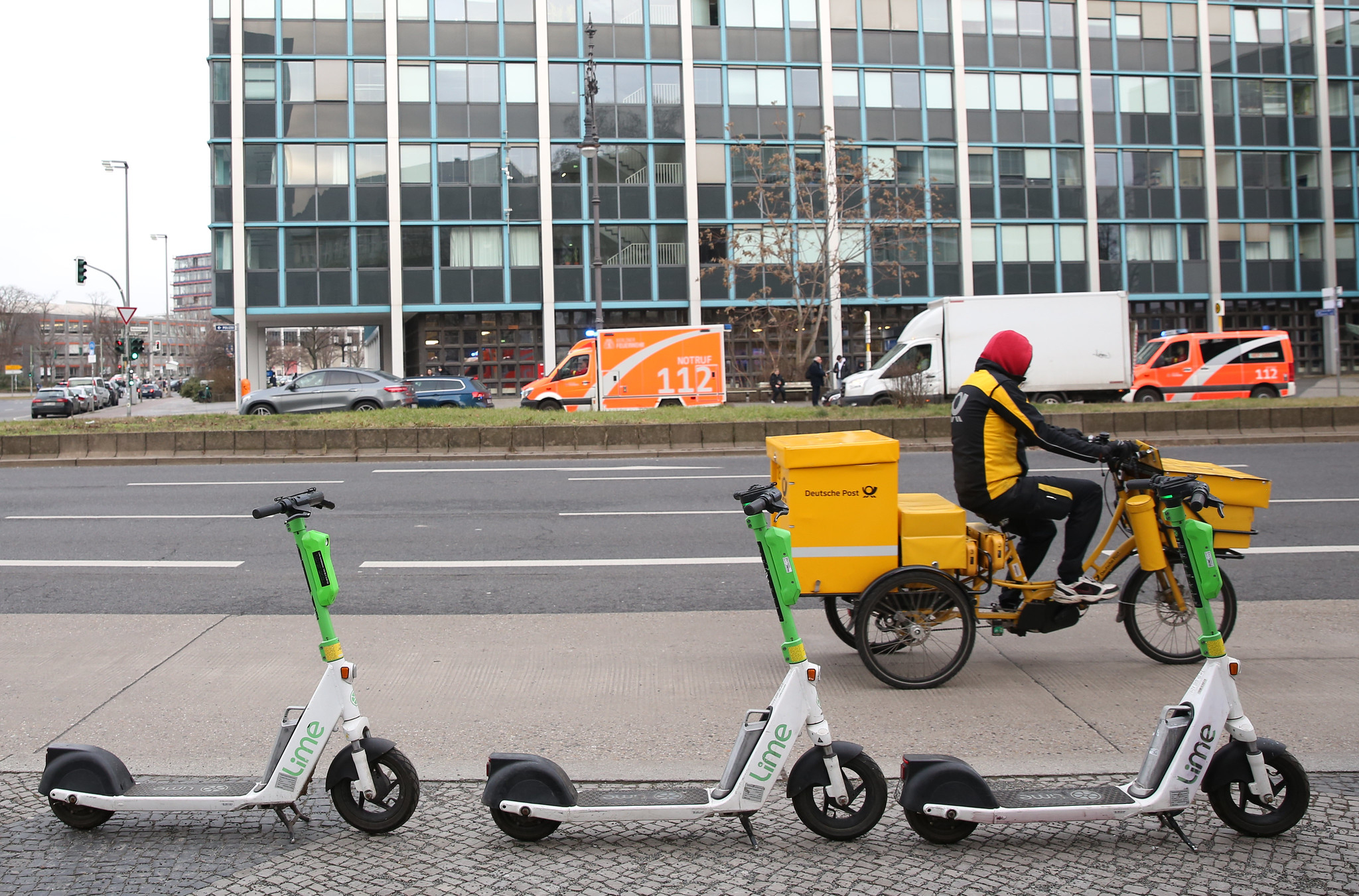
The transition to LEVs using planned battery capacity in Europe could reduce dependence on critical raw materials and lower CO2e emissions in transport by 30 million tonnes by 2030.
A new study conducted by EIT Urban Mobility and EIT InnoEnergy, which are supported by the European Institute of Innovation and Technology (EIT), an EU body, has shown that utilizing approximately 2-3% of the projected battery production capacity in the EU could power over 25 million light electric vehicles (LEVs) expected to be on European roads by 2030. Such a number of LEVs would help reduce CO2e emissions by 30 million tonnes, closing the projected gap in transport CO2e emissions in Europe of 165 million tonnes. Furthermore, encouraging LEV battery production in Europe could significantly reduce the current dependence on imports from outside the EU, as 95% of LEV batteries currently come from Asia.
LEVs, including e-bikes, e-scooters, and electric mopeds, represent an increasingly large part of modern urban mobility. It is projected that approximately 10 million such vehicles will be sold in Europe in 2022. Given that European demand for LEV batteries will triple by 2030 and then double by 2040, the study shows that LEVs represent an ideal market for battery cell production in the near future. This applies in particular to cylindrical cells, which are a standard component of most LEV batteries.
By 2030, the planned battery production capacity in Europe (1144-1800 GWh) will exceed the projected demand for electric vehicle batteries (317-696 GWh). Allocating a portion of this capacity to support the shift to LEVs, whose annual battery consumption is relatively low (only 36 GWh by 2030 and 71 GWh by 2040), will require 10-30 times fewer critical metals than in the case of electric cars.
Furthermore, the need for innovation in the LEV sector will ensure progress and trigger a “ripple effect” from which the entire sector can benefit. For example, any cost reduction, performance improvement, or battery recycling and reuse would bring significant market benefits to suppliers, especially in the shared mobility sector, where LEV batteries are frequently used. Improved battery production technology will improve the affordability of LEVs and make them better perceived by consumers, which is crucial for their widespread adoption. The use of cylindrical cells in various sectors outside of e-mobility, such as drones, power tools, home energy storage, and electric vehicle load balancing, will further strengthen and diversify the European battery value chain.
Sustainable mobility and emission reduction
In addition to industrial benefits, supporting the LEV market is essential for sustainable mobility. LEVs can significantly contribute to reducing CO2 emissions, as 13% of shorter trips (up to 8 km) by passenger cars and vans could be replaced by LEVs, which would save up to 30 MtCO2eq. Moreover, shifting to a different type of transport supports public and shared transport, which is consistent with European climate goals and the pursuit of more sustainable mobility. It is also crucial to support the operational efficiency of the battery system to facilitate repair, reuse, and recycling of batteries, as well as to introduce clearer safety standards and liability guarantees for effective repairs. Investing in battery construction that facilitates disassembly and recycling will further increase the sustainability of LEVs, not only in the shared mobility sector.
Bernadette Bergsma, Director of Communications and EU Affairs at EIT Urban Mobility, emphasizes the need for immediate action:
– LEVs complement public transport and play a key role in the transition to shared mobility in cities. They can accelerate the electrification of road transport and reduce pressure on critical resources. We must urgently start treating the LEV sector and its battery value chain as a strategic asset for sustainable urban mobility in Europe – says Jennifer Dungs, Global Head of Mobility at EIT InnoEnergy – Batteries are at the forefront of our efforts to decarbonize road transport. We support the industrial development of the European Battery Alliance (EBA250), and we recently announced the creation of a new 500 million euro “EBA Strategic Battery Materials Fund”. However, the introduction of alternative, rapidly developing mobility solutions must be better supported – LEVs are an easy-to-implement solution that has a huge impact on achieving European carbon neutrality goals – she adds.
The study calls on Europe to include LEVs in a broader industrial strategy and to support the development of the entire value chain, including batteries. This will ensure a more comprehensive approach to the transition to sustainable mobility in the EU.
The study also recommends supporting innovation in battery technology and the circular economy. Dedicated research and funding are essential to meet the specific requirements of LEVs and overcome barriers to their adoption. Increasing battery safety, reducing costs, and improving battery performance, along with regulatory support for repair, reuse, and recycling, will ensure the continued growth of the LEV sector.
More information on the study can be found at the link.
Source of information: EIT Urban Mobility / PAP Mediaroom