








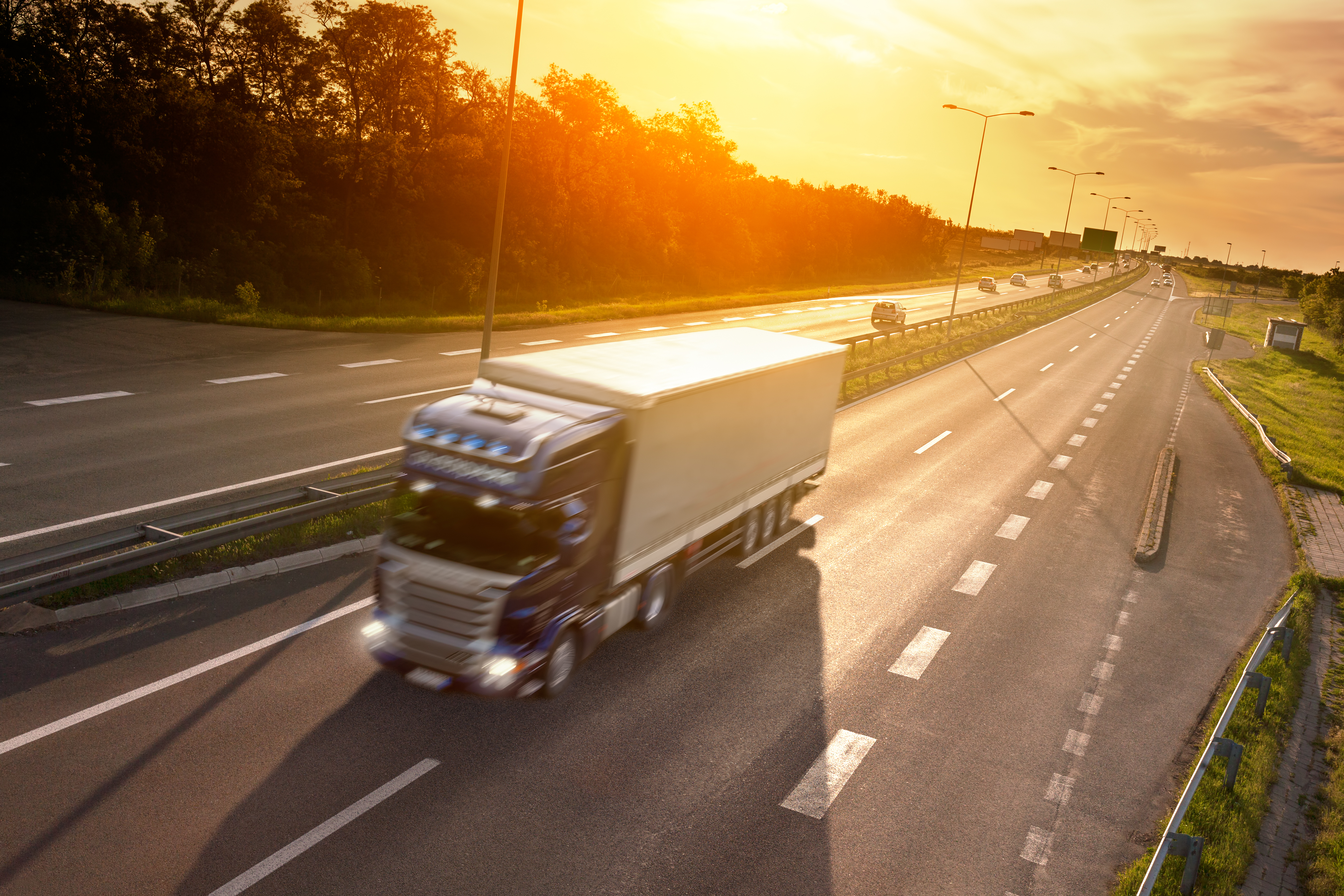
More than one-third of all domestic tourist trips by Poles take place during the holiday period, i.e., July and August[1]. Many visitors choose the car as their means of transport. Data from the Continuous Traffic Measurement Stations indicate that tourist and recreational traffic on roads during the holiday season is up to 50 percent higher than in other months.[2] In transport, delivery time is what counts, and this can be significantly extended by congested streets, ongoing road repairs, as well as summer traffic bans for trucks. Check where there may be disruptions on the routes.
GDDKiA monitors traffic information on selected road sections using so-called Continuous Traffic Measurement Stations. Thanks to this, it is possible to check, among other things, traffic intensity on a selected route in terms of time. Data from GDDKiA indicate that the highest traffic volume occurs during the day between 6:00 AM and 6:00 PM. At that time, nearly 80 percent of cars and as many as 73 percent of heavy vehicles are on the road. At night, i.e., from 10:00 PM to 6:00 AM, only 16 percent of trucks are moving.[3]
– As you can see, there are the most heavy goods vehicles on the roads at the same time as passenger cars. Such a situation can already affect the formation of traffic jams and, as a result, cause delays in transport. One must also take into account the fact that more people are usually driving in the summer than usual, and for professional drivers, this can mean a difficult and stressful time. You have to reckon with the fact that less experienced drivers or foreign tourists may appear on the road, who may not be fully familiar with all national traffic regulations – comments Jakub Ordon, Inelo from the Eurowag Group.
Road repairs – where are they ongoing?
Road services carry out many repairs during the holiday season. This can affect the formation of traffic jams, especially on main Polish routes or sections characterized by heavy tourist traffic. This concerns, among others, the A1 motorway, which tourists use in large numbers to travel from central and southern Poland to the Tri-City and further to the coast. Poles also choose this route when they want to reach foreign countries, such as Croatia or Bulgaria. Repair work is also underway on the S6 expressway, which is the most important route in the Pomeranian Voivodeship. The road enables travel from Gdańsk to Szczecin and is also the main access route to holiday resorts in this area. Drivers passing through this road can expect disruptions in the vicinity of the Orunia and Straszyn junctions, which result in a narrowing of the route and a speed limit of 50 km/h.[4]
– The road disruption search engine provided by GDDKiA indicates, among other things, road works between the Kopytkowo and Pelplin junctions on the A1 motorway, which are worth considering when planning a trip through Poland. Until September 15, the carriageway towards Gdańsk is closed, and traffic is bidirectional on one carriageway. Two lanes have been created for those traveling towards Łódź and one for those traveling to Gdańsk, which may cause delays, especially for drivers heading towards the Tri-City agglomeration and the coast. Moreover, on the A4 motorway, which connects eastern Poland with its western part, there are also disruptions related to repair work on selected sections of the route. Some of them will likely last until the end of September [5]. Consequently, drivers heading towards Germany may encounter traffic jams on this route – points out Jakub Ordon, an expert at Inelo from the Eurowag Group.
Additionally, drivers heading towards the Tri-City from the central and southern parts of Poland should pay attention to disruptions on the S7 expressway, which is being built on the section between the Modlin and Czosnów junctions, near Warsaw. The work will likely be completed in the middle of next year. Similar disruptions also occur on the same road on another section – Strubiny – Modlin junction in connection with the ongoing construction of the DK road, which is to connect with the S7.[6] All current road disruptions can be checked on the official GDDKiA website using the disruption search engine.
How to arrive on time, despite the holiday crowds?
Timely loading and delivery of goods during the holiday period can pose a serious challenge for drivers and carriers. Increased traffic and repairs on roads popular with tourists can cause traffic jams and hinder the effective use of drivers’ working time. Furthermore, summer traffic bans mean that many trucks must remain in parking lots or transport bases. Meeting all these difficulties can become easier through the use of modern technologies.
– In the summer, traffic jams on routes are a significant challenge for professional drivers. A trip that takes about 4.5 hours off-season can then be extended by even two or three hours. In order to avoid such delays, it is important to optimize routes using telematics. Information regarding, among other things, traffic intensity or current road works allows the vehicle to be directed to its destination by the fastest available route. Moreover, using the ETA Smart module in GBox telematics, you can quickly and accurately determine the delivery time of transported goods, also taking into account the required driver rest periods in accordance with applicable regulations. Thanks to this information, all trips are more efficient, and shipment recipients can more accurately plan warehouse activities related to unloading and storing goods – emphasizes Tomasz Czyż, an expert at Inelo from the Eurowag Group.
When not to plan transport? Summer traffic bans
Summer traffic bans introduced in Poland and other European countries are intended to limit the number of vehicles on the roads during periods such as Friday afternoons or weekends. It is on these days that the intensity of tourist road traffic is usually the highest.
In Poland, road traffic restrictions apply to vehicles with a GVW of over 12 tons from June 21 to August 28, 2024. This means that they cannot move on the roads on:
- Fridays from 6:00 PM to 10:00 PM,
- Saturdays from 8:00 AM to 2:00 PM,
- Sundays from 8:00 AM to 10:00 PM.
The truck traffic ban on Polish roads also applies on the Assumption of the Blessed Virgin Mary holiday – August 15 this year. Exceptions to the regulations are trucks carrying perishable goods, medicines, food products, live animals, certain ADR goods, and vehicles used in combined transport.
In Germany, in July and August, the Sunday traffic ban, which applies all year round from 12:00 AM to 10:00 PM, is extended to include Saturday on some roads. On this day, trucks with a GVW of over 7.5 tons cannot move from 7:00 AM to 10:00 PM[7]. In France, restrictions also apply to heavy goods vehicles over 7.5 tons GVW, which cannot drive during the holiday season from 7:00 AM to 7:00 PM, as well as every Sunday from 12:00 AM to 10:00 PM and on days preceding holidays from 10:00 PM to the same time on the holiday[8]. In the Czech Republic, summer traffic bans, which usually apply from 1:00 PM to 10:00 PM on Sundays, are also extended to Saturdays from 7:00 AM to 1:00 PM and Fridays from 5:00 PM to 10:00 PM.[9] In Italy, vehicles over 7.5 tons GVW cannot move on Sundays and Saturdays from 7:00 AM to 10:00 PM.[10]
[1] Statistics Poland, Tourism in 2023, p. 66.
[2] General Directorate for National Roads and Motorways, Seasonal fluctuations in road traffic in 2022.
[3] General Directorate for National Roads and Motorways, We present data from automatic measuring stations for 2022.
[4] General Directorate for National Roads and Motorways, List of disruptions.
[5] As above.
[6] As above.
[7] Trafficban.com, Truck traffic bans in Europe, Germany.
[8] As above.
[9] As above.
[10]As above.
Source: INELO