








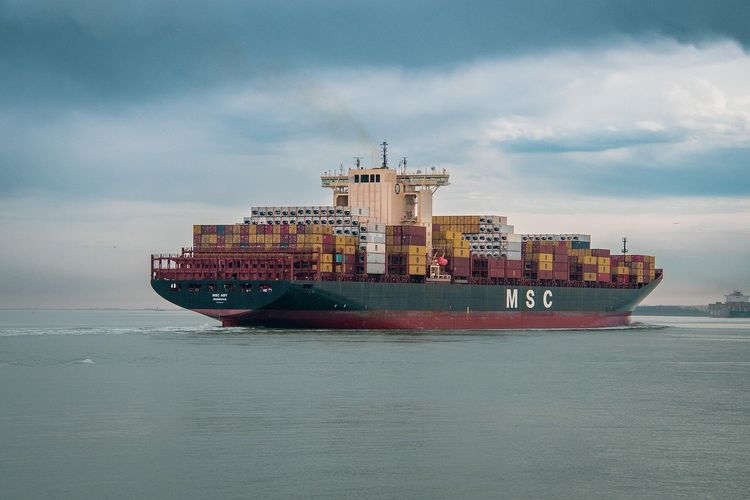
Sea transport is one of the oldest and most versatile logistics solutions in the world. It has always been the foundation of trade routes and laid the groundwork for international transport. Over time, sea transport has increasingly developed and specialized, while simultaneously trying to cope with challenges and dangers lurking at sea.
The role of sea transport
Sea transport plays a huge role in global trade, enabling the transport of goods over long distances at relatively low costs. It is the most effective type of transport for bulk cargo, such as crude oil, gas, grain, or metal ores.
One of the main advantages of sea transport is its cost-effectiveness. Transport costs are significantly lower compared to road or air transport. This makes sea freight preferred by companies that want to minimize logistics expenses. Furthermore, sea transport is environmentally friendly. Ships generate fewer CO2 emissions per ton of cargo transported compared to other means of transport, which makes it a more ecological choice on a global scale.
Dangers at sea
Despite its numerous advantages, sea transport is not without its drawbacks. One of the main challenges is delays related to customs clearance, changing weather conditions, and congestion in the largest container ports. Ports such as Shanghai, Singapore, Rotterdam, or Los Angeles often struggle with congestion, which can lead to delivery delays.
Another problem is the risk of cargo damage. Despite advanced security technologies, container transport can be exposed to harsh sea conditions. Shipowners must also take into account the risk of piracy on certain sea routes, especially in regions such as the coast of Somalia or the Gulf of Guinea.
The greatest advantages of sea transport
The main advantages of sea transport are:
- Cost-effectiveness: Sea transport costs are lower than in the case of air or road transport.
- Large capacity: Ships can carry huge amounts of goods at the same time, which is impossible to achieve in other types of transport.
- Ecological efficiency: Lower CO2 emissions per ton of cargo transported.
- Versatility: The ability to transport a variety of goods, from containers to bulk goods.
Disadvantages of sea transport
- Delays: Risk of delays related to weather conditions, customs clearance, and port congestion.
- Cargo damage: Risk of damage to goods during transport, especially in difficult sea conditions.
- Risk of piracy: Threat of pirate attacks on certain sea routes.
- Transport time: Longer transport time compared to air transport.
Sea transport in a nutshell
Sea transport remains an irreplaceable element of global logistics. In recent years, technological development and the modernization of port infrastructure have contributed to increasing its efficiency and safety. This type of transport is particularly beneficial for companies involved in large-scale export and import. The costs of delivering goods are lower, and the transport itself is more ecological compared to other types of transport, which is an important factor in the context of growing ecological awareness in the world.
Types of sea transport
- Container transport: Transport of goods in standard containers, which facilitates loading, unloading, and storage of containers.
- Bulk transport: Transport of bulk goods, such as crude oil, gas, grain, or metal ores.
- Ro-ro transport: Transport of vehicles on ro-ro (roll-on/roll-off) ships, which allow for easy loading and unloading of vehicles.
The largest container ports in the world
The largest ports in the world include:
- Port of Shanghai (China): The largest container port in the world, handling millions of TEUs (twenty-foot equivalent unit) annually.
- Port of Singapore (Singapore): The second-largest container port, known for its high efficiency and advanced infrastructure.
- Port of Rotterdam (Netherlands): The largest container port in Europe, crucial in the transport of goods to and from the European continent.
- Port of Los Angeles (USA): The largest container port in North America, handling huge amounts of goods from Asia.
The future of sea transport
Technological innovations, such as autonomous ships, advanced supply chain management systems, and increased energy efficiency, are contributing to the development of this sector. Sea freight is becoming increasingly automated, which allows for shorter transport times and increased safety.