









The world is changing, and the market along with it. Shifts in geopolitical power and interests, combined with supply chains under almost constant tension, underscore the need to develop new concepts. For logistics, this means achieving the best possible integration of global end-to-end transport and contract logistics solutions.
The current situation seems paradoxical. On one hand, an increasingly digitalized world brings people and markets closer together every day, but on the other, crises, wars, and shifting geopolitical forces and interests are creating a level of bloc formation, protectionism, and rejection of free trade not seen in a long time. One thing is certain: in this game, the cards are being reshuffled with ever-increasing frequency.
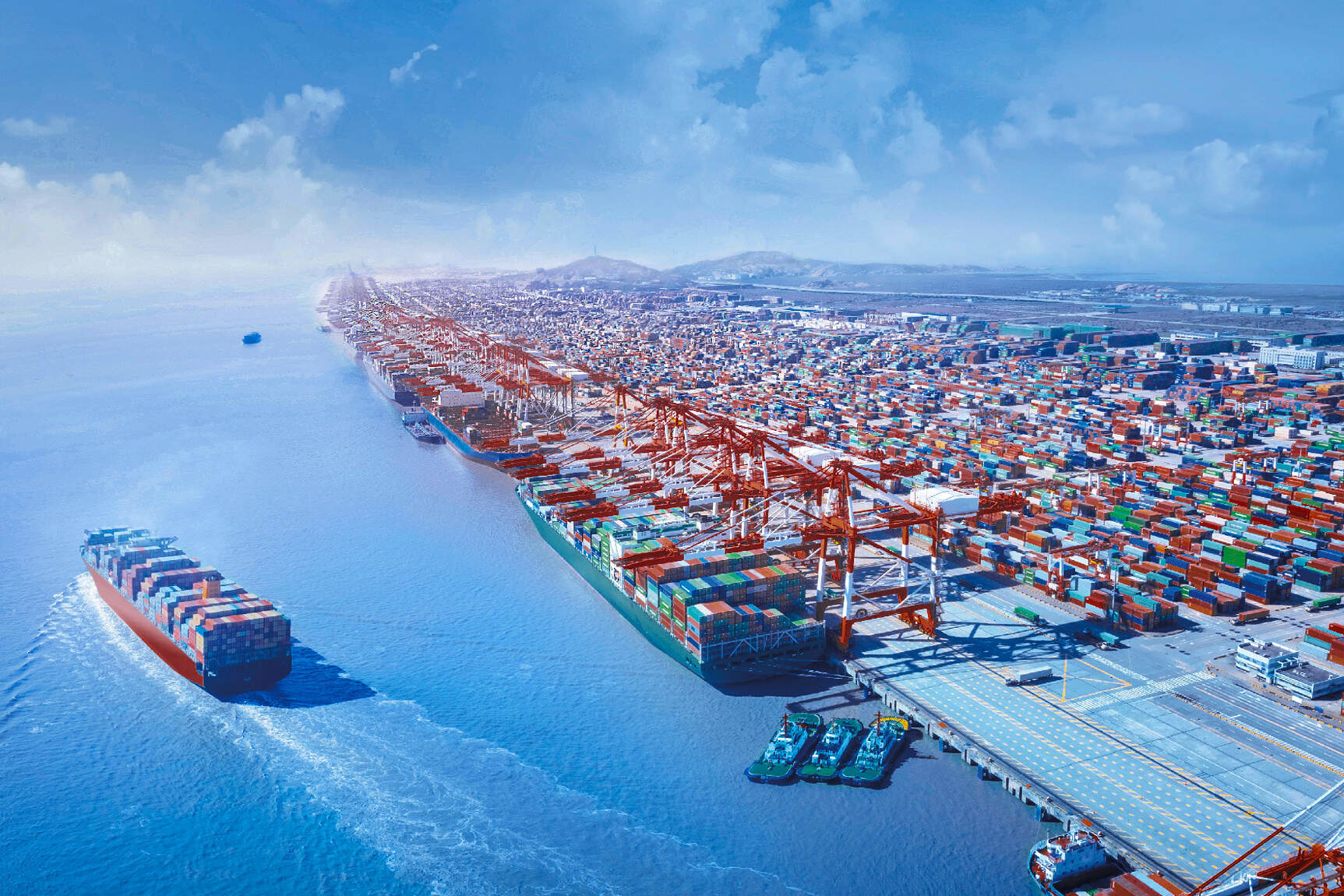
The pace of change in individual economies varies greatly. While in 2008 the United States and Europe were equal in terms of economic output, the figure for the US is now 80% higher. In the future, global growth will continue to occur primarily outside of Europe. According to International Monetary Fund estimates, the share of Asia-Pacific (APAC) countries in global gross domestic product will rise to over 40% by 2040, and by 2050 it will account for more than half. Nine of the ten largest ports in the world are already located in Asia.
The McKinsey Global Institute recently published a study titled “Geopolitics and the geometry of global trade,” which took a closer look at these changes. Market researchers analyzed how close trade ties are currently between different countries and economies—and how this might change in the future—regardless of actual geographical distance. Seeking to remeasure the “geometry of global trade,” the authors of the McKinsey study identify two paths for reconfiguration. The first is a trend toward the “deglobalization” of international trade. An example of this is the drifting apart of the world’s two largest economies: the USA and China. This manifests in the imposition of punitive tariffs, sanctions, mutual blocking of market access, the decoupling of research and development, and many other dissociative measures.
Resilience through cooperation
Nevertheless, the study’s authors advocate for a second path, namely more diversified trade that would take into account the potential for cooperation even with geopolitical constraints. Indeed, this would bring many potential benefits, including resilience to certain types of supply disruptions, as well as opportunities to promote a more integrated trade and economic system. The basis for such action must be mutual trust and open, transparent communication. – A broad and diversified network of trade connections will not be achievable without cooperation – the study reads.
Diversified trade would bring many benefits, including resilience to certain types of supply disruptions, as well as opportunities to promote a more integrated trade and economic system. In turn, time is running out, especially for those European economies that are under pressure as a result of recent, rather gloomy economic forecasts.
– Over the next ten years, about 85 to 90% of global economic growth will take place outside the EU – said Valdis Dombrovskis, Executive Vice-President of the European Commission and Commissioner for Trade, during the Munich Security Conference in February 2024 – If we want to maintain our growth and prosperity, we must remain connected – he appealed.
Integration of global networks
– The world around us is changing. Markets are changing. Our customers are changing. We must ensure that we change as well – says Burkhard Eling, CEO of DACHSER – If Asia and the Americas are to be the main drivers of DACHSER’s long-term growth, we must reflect this in the structure and quality of our networks. To do everything in our power to create the conditions for the business models of tomorrow and beyond, we are integrating the stable and highly efficient core of our European groupage business even more closely with our range of intercontinental logistics services. Thinking in such long-term dimensions is a challenge, but it is also a privilege for DACHSER as a family-owned company.
As Burkhard Eling says, DACHSER focuses on combining many individual solutions to create an integrated, holistic, and coherent solution from Europe to the world and from the world to Europe. “We call this Global Groupage,” adds Burkhard Eling.
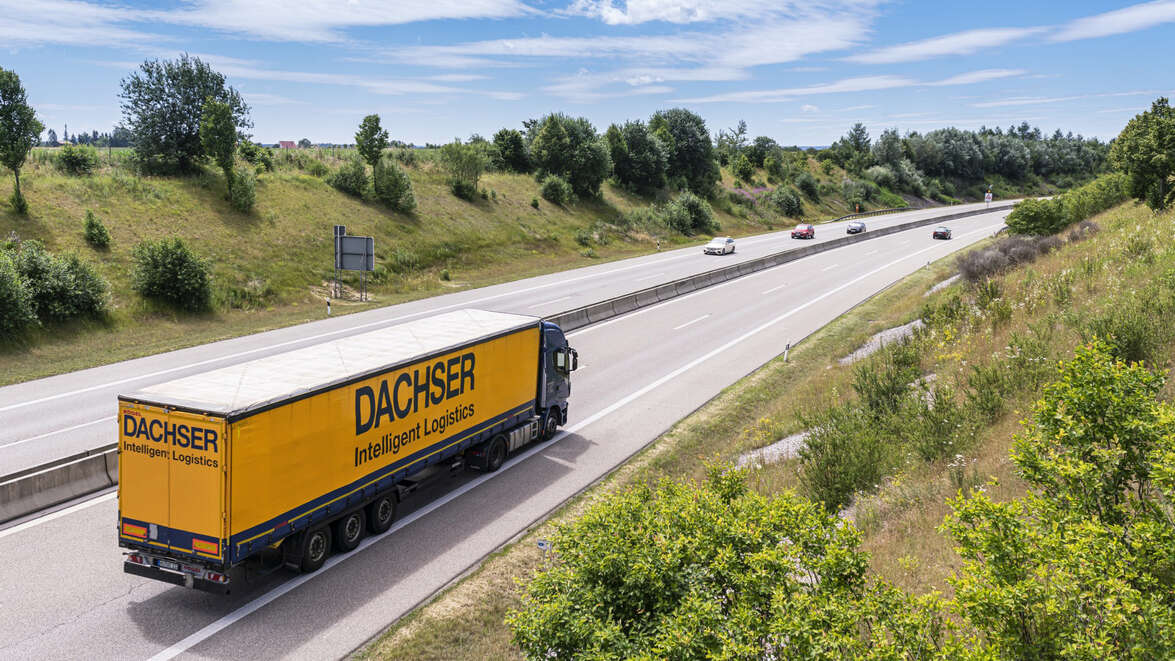
The foundation of this comprehensive integration across the entire logistics market, as well as air and sea freight, is DACHSER’s road logistics groupage network. This network has developed and matured over decades and is among the largest and best-performing in all of Europe.
–By further strengthening the physical and systemic integration of our two networks – European Logistics and Air & Sea Logistics – we will be able to offer our international customers a new integrated approach, as well as access to entirely new markets leading to and from Europe – says Dr. Tobias Burger, COO of DACHSER Air & Sea Logistics – This is something that, on a global scale, only a logistics operator like DACHSER can achieve. Characterized by the required network maturity and, most importantly, with employees around the world committed to service-oriented cooperation.
For other providers, logistics may mean only transport from point A to point B. However, at DACHSER, providing logistics services to customers goes far beyond standard logistics services, because thanks to integrated networks, it offers the possibility of endless modifications.
– Continuing the systematic development and expansion of our road logistics network, we are always guided by the principle that as the most integrated logistics service provider, we offer a level of quality that sets us apart from the competition – says Alexander Tonn, COO Road Logistics at DACHSER. – What makes DACHSER’s networks so unique is their interconnection in terms of resources, people, information, and technology.
Alexander Tonn believes that now that DACHSER is using the experience gained in European Logistics and applying it to the further development of its air and sea business, the company can combine the best of both business areas: Road Logistics and Air & Sea Logistics. Dr. Tobias Burger shares this view – Step by step, this is how we are expanding our global end-to-end transport and contract logistics solutions.
An example of how DACHSER manages the often highly complex supply chains of its customers is the cooperation with ifm electronic, a company from the technology sector. ifm electronic benefits from the seamless integration of DACHSER’s global Air & Sea and European Logistics networks. To start, DACHSER Air & Sea Logistics organizes the transport of components in shipping containers from Asia, specifically from Hong Kong to Europe. In the next step, the containers travel by train directly from Hamburg to southern Germany. DACHSER unloads them at its branch in Langenau near Ulm, from where the products are delivered by truck to ifm’s largest development and production plant in Tettnang, and then to the company’s European branches in France, the Czech Republic, and Poland. This results in total transparency and optimal quality control throughout the supply chain with significantly shorter times.
Effective supply chain management
An example of how DACHSER manages the often highly complex supply chains of its customers is the cooperation with ifm electronic, a company from the technology sector. ifm electronic benefits from the seamless integration of DACHSER’s global Air & Sea and European Logistics networks. To start, DACHSER Air & Sea Logistics organizes the transport of components in shipping containers from Asia, specifically from Hong Kong to Europe. In the next step, the containers travel by train directly from Hamburg to southern Germany. DACHSER unloads them at its branch in Langenau near Ulm, from where the products are delivered by truck to ifm’s largest development and production plant in Tettnang, and then to the company’s European branches in France, the Czech Republic, and Poland. This results in total transparency and optimal quality control throughout the supply chain with significantly shorter delivery times.
Customer solution
Economists advise globally operating companies to rethink their approach. McKinsey studies say: – In the current state of uncertainty, the imperative facing business leaders is to prepare for a range of potential changes in the geometry of trade – It is about having a strategy that will help shape a new architecture fitting an evolving world.
– We are developing Global Groupage as a future solution for our globally active customers – says Burkhard Eling – By doing so, we are clearly following DACHSER’s mission, which is to create the world’s most intelligent combination and integration of logistics network services and use it to optimize our customers’ logistics balance sheet. We see this as the future, especially in difficult times – concludes Burkhard Eling.
Source: Dachser