








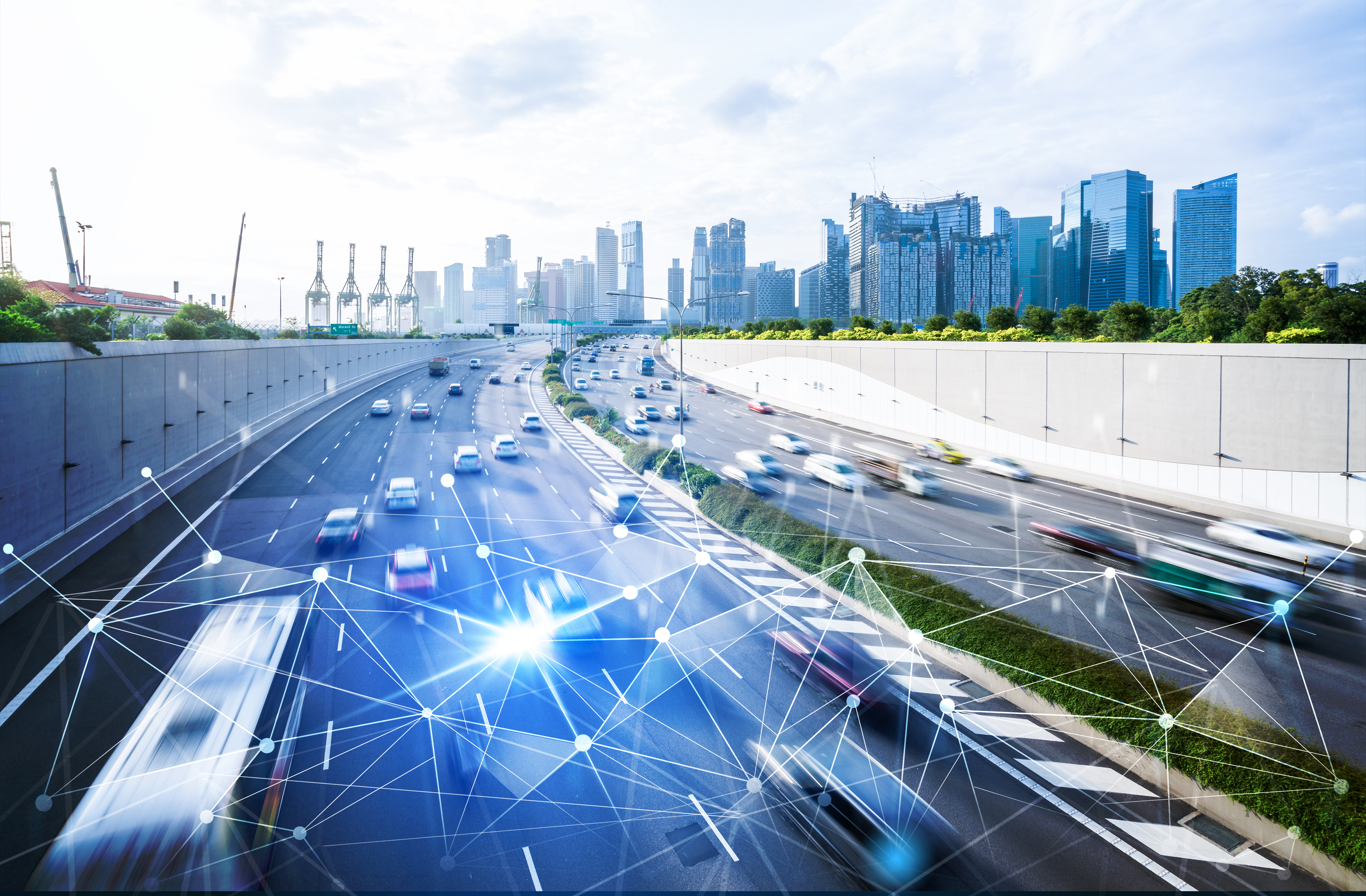
It can be said that transport has undergone a quiet technological revolution that is present at every stage of business operations. Transport tools that were once used to a limited extent due to technical limitations are now leading the way in effective company management. The phone, which was once the forwarder’s primary tool for communicating with the driver, has now become merely an alternative. All communication takes place at the level of telematics integrated with TMS systems. Tachograph charts, once essential for analyzing driver working time, have been replaced by remote data downloading. What else has changed in transport over the past decade, and why can we no longer imagine handling orders without the help of dedicated solutions?
Endless phone calls
Running a transport company 10 years ago was much more analog than it is today. Although vehicle geolocation systems were already a fairly popular solution back then, they were used to a lesser extent due to, among other things, high internet fees, especially abroad. Communication with drivers was mainly carried out via phone calls and SMS, which was time-consuming and generated significant costs.
– Although GPS systems were already used by transport companies, they were limited to basic vehicle location functions. This means they lacked capabilities such as monitoring driver working and driving time, remote reading of data from driver cards or tachographs. This involved forwarders or distributors performing a series of other operational tasks to obtain the necessary information. An inseparable element of their work was the phone, which was the main source of communication with the driver on the road. In my experience, the current possibilities for integrating technological solutions for transport allow forwarders to save a lot of time and dozens of phone calls made in the past throughout the day, which in total could amount to about 4-5 hours of daily conversations with the driver – comments Krzysztof Manys, an expert at Inelo from the Eurowag Group.
Maps, whiteboards, and Excel: handling orders in the past
The flow of transport documentation a decade ago differed significantly from today’s standards. TMS systems used, among other things, for coordinating transport order handling were already available on the market, but they were mainly used by larger enterprises. Smaller companies more often used all kinds of tables, Excel spreadsheets, or paper notebooks.
– At that time, TMS-class systems were already popular, but they were mainly used for maintaining driver records, registering orders by one’s own fleet, and issuing sales invoices for contractors. On the other hand, when organizing transport, tools such as e-mail, phone, maps, or whiteboards, on which planned orders were written down and their schedule determined, were used much more often. In turn, the analysis of transport profitability was mainly carried out using tools like Excel. However, it is worth adding that it was not always done by companies. In the past, profits and losses were not analyzed as accurately as is currently necessary to run a transport enterprise successfully – points out Krzysztof Manys.
Tachograph charts as the basis for time settlement
Settling driver working time in the past was based on data from tachograph charts, the so-called discs, used in analog tachographs that were installed in vehicles until May 2006.
– Analog discs from the previous 28 days had to be kept in the vehicle, which definitely affected driver settlement. This data was analyzed with a delay, and the discs themselves had to be scanned and manually entered into the appropriate software. Moreover, if a transport company used outsourcing services, the carrier had to deliver the necessary documents in person or by courier. It is worth adding that the settlement of driver working time has changed since 2006, when digital tachographs began to be mandatory in new vehicles, and data was already saved on the driver card. This process was more automated, but also not fully effective. After returning from a trip, the driver had to read all the saved information, and this was not always possible at the end of the month, which could lead to delays in calculating remuneration – comments Kamil Wolański, an expert at Inelo from the Eurowag Group.
Technology-driven transport – what does it look like?
Today, every transport company can easily choose modern technological solutions to meet its needs, regardless of size. Thanks to this, managing it will become more efficient and faster. Downloading an order from a transport exchange and handling it, as well as sending key information to the driver, takes just a few clicks, which proves the enormous progress in this field.
– Currently, it is difficult to imagine running a transport company without the support of technology. The development of TMS tools integrated with telematics or external service providers is of great importance because it provides many benefits. It not only improves communication and document flow but also allows for assessing the profitability of transport already at the stage of negotiations with contractors. This undoubtedly increases the attractiveness of the enterprise in such a volatile and competitive market – points out Krzysztof Manys.
Settling drivers from anywhere and at any time
Remote downloading of data from tachographs has automated the analysis of driver working time, and thanks to this, settling truckers is incomparably easier and faster than it used to be.
– Information saved on driver cards can be obtained regularly and at short intervals, e.g., every week. Moreover, the entire process can now take place almost without the involvement of transport company employees, because data from telematics tools can go directly to systems that control driver working time, such as the 4Trans program. Then, experts and specialists from OCRK have practically a complete set of data necessary to settle the driver. The only thing they sometimes have to ask carriers about are matters related to employee absences, which do not result directly from digital data, but this only happens when the transport company does not provide this information from payroll and HR systems – emphasizes Kamil Wolański.
In summary, the changes that have taken place in the transport industry over the last dozen or so years are significant. It is all the more good to look into the future and consider what new things await transport in the perspective of the next 10 years or later. It is worth noting that artificial intelligence is also playing an increasingly important role in the functioning of many areas of business activity, which favors the development of process automation. Systems using AI can calculate the estimated arrival time at the unloading point, taking into account the possible driver’s working time, required breaks that must be taken along the way, and the driver’s habits.
Source: INELO Poland