








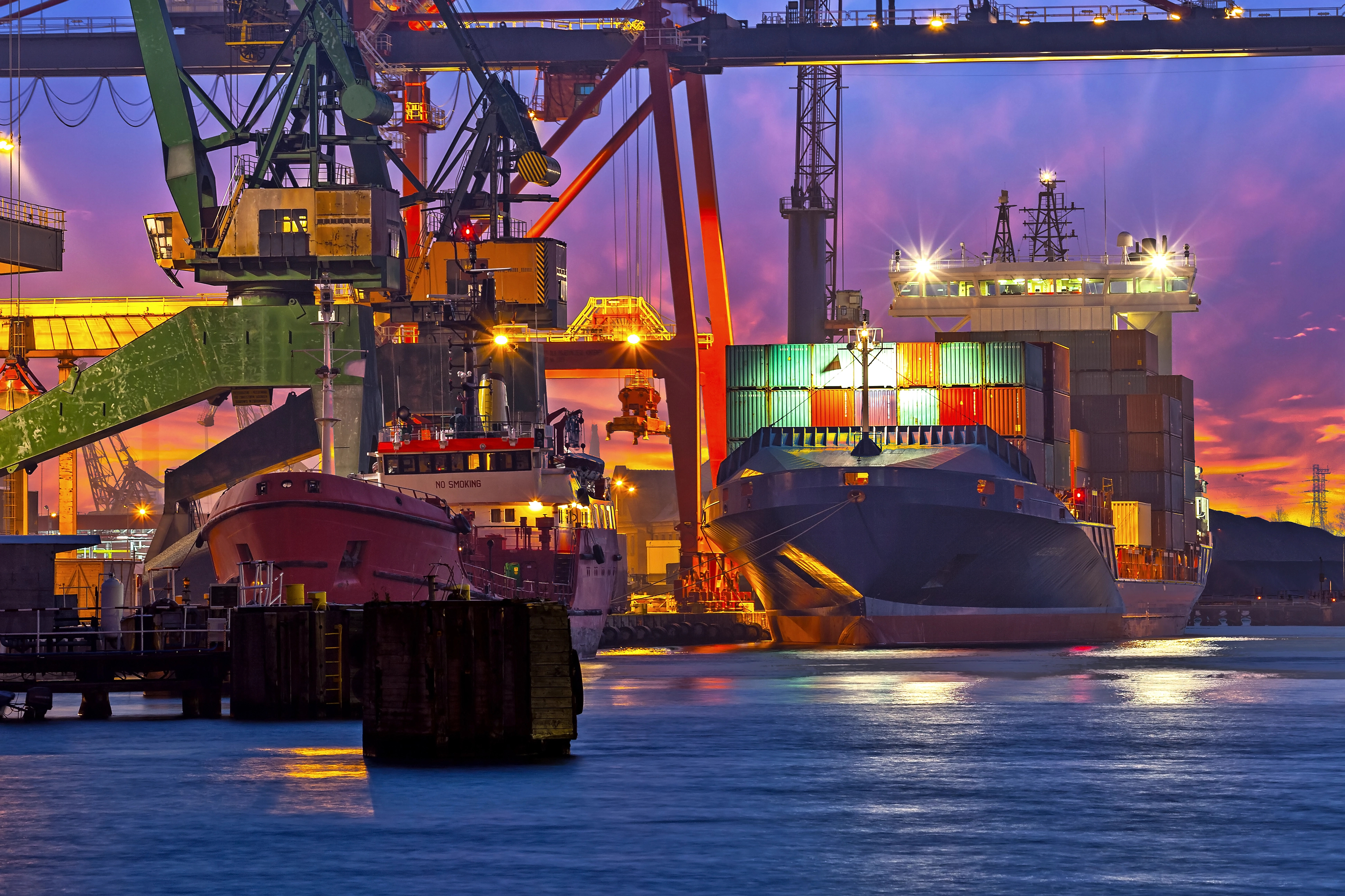
Geopolitical tensions are causing container freight rates to return to the peaks last seen in mid-2022. In addition to disruptions in the Red Sea, their increase is driven by currently rising demand associated with the economic recovery expected in the second half of the year, as well as the intensification of the trade war. In this situation, companies want to build up inventories.
Allianz Trade analysis shows that geopolitical tensions are causing container freight rates to return to the peaks last seen in mid-2022. After three months of consecutive weekly declines, maritime transport prices began to rise again from May, reaching 5,901 USD per 40-foot container last week (+121% since the beginning of the year and +297% y/y), a level not seen since August 2022.
Since it is unclear how long the prolonged conflict in the Middle East will last, Allianz Trade analysis indicates that companies are beginning to worry about securing supplies for the second half of the year, when a return of demand is expected. This applies in particular to European companies, which had previously been drawing down inventories at lower prices to avoid carrying costs.
European companies—unlike their American counterparts—are also more exposed during trade with Asia and more susceptible to blockades at major transshipment points. While the cost of shipping cargo from Rotterdam (Europe) to New York (USA) has only increased by +30% since the beginning of the year, shipping prices from Shanghai (Asia) to Rotterdam have risen by +383%. This is particularly concerning for European companies, as 22% of EU imports currently come from China (compared to 16% before the pandemic), and 40% from Asia. This means that the profit growth expected in the second half of 2024 is in question in sectors highly dependent on trade with Asia, such as: machinery and equipment, cars and auto parts, household appliances, electronics, and clothing.
Disruptions in the Red Sea may be the biggest driver of freight rate increases, but a widespread recovery in maritime trade is also playing a role. After being muted for most of 2023, there is now a timid recovery in global trade, driven by growing demand. The international trade balance index—which tracks the volume of the goods trade balance—rose by +2% y/y in April, 1.1x above pre-pandemic volumes. Moreover, despite geopolitical tensions and tariffs imposed on Chinese exporters, China’s trade surplus continues to grow, reaching 99 billion USD in June, a level never seen before.
As expected, Chinese exports rose by +8.6% last month, reaching a value of 307.8 billion USD, with the fastest-growing categories being steel, household appliances, ships, and cars. Interestingly, Chinese passenger car exports showed a remarkable +29% y/y increase in June. Other Asian countries are also contributing to the trade recovery. South Korea’s export volume index rose by +2.6% in June, at a similar pace to India, while Taiwan’s exports rose by +23.5% year-on-year, with a noticeable improvement in trade in computers, electronics, and semiconductors. It can therefore be assumed that since Q2 2024, both demand and supply have been contributing to the rise in container freight rates, although they only account for about 15% of the upward deviation in prices, with disruptions in the Red Sea responsible for the rest of the cost spike. Crude oil prices have fallen significantly from the peak recorded in 2022 and are no longer contributing to the increase in transport costs.
In this context, in the opinion of Allianz Trade, supply chains are still being adjusted to account for new delivery times, which increases port congestion in Western Europe and Asia. While the number of ship calls in Asia has started to rise (+8% since China’s reopening), in Western Europe, the number of port calls has started to rise (+10% since the beginning of the year) since the start of the Red Sea crisis. The Western Mediterranean region has been hit hardest, where the number of port calls has increased since the beginning of the year by +51% in Spain, +30% in Italy, and +15% in France, while disruptions caused by strikes at major German ports continue to increase regional delays (Hamburg is the third busiest container port in Europe).
As long as tensions in the Middle East persist, maritime transport costs will remain high, increasing the profits of the companies carrying it out. While the first peak in maritime transport rates was justified by the longer distance (and thus higher fuel costs) incurred to bypass the Suez Canal, today’s peak is above the break-even threshold for shipping companies. As a result, profit outlooks for global container lines have improved compared to the situation three months ago. Along with hospitality and tourism, shipping is currently the sector with the highest upward profit revisions. However, heavy rains and storms raging in South Africa have recently forced some ships to seek shelter or even change course, which could increase pressure on the shipping sector and further extend delays.
In short:
- After three months of continuous week-on-week price declines, container freight rates have returned to the highest levels not seen since 2022.
- Although demand recovery and supply (transport) disruptions play a role in raising transport costs, they account for only 15% of the price increase in Q2, and changes in oil prices are no longer influencing their growth.
- Instead, speculation and expectations have developed that are intensely influencing the market, namely that a potential re-election of Donald Trump will significantly affect US-China trade and, more broadly, global trade. As a result, both American and European companies are increasing demand (for goods and their transport services) to account for and minimize expected disruptions.
- As a result, China’s trade surplus reached a record 99 billion USD in June, which is also benefiting other Asian economies. As long as tensions in the Middle East persist, transport costs will remain high, boosting short-term profit prospects for the shipping industry.
Source of information: AKM multiAN PR / Allianz