








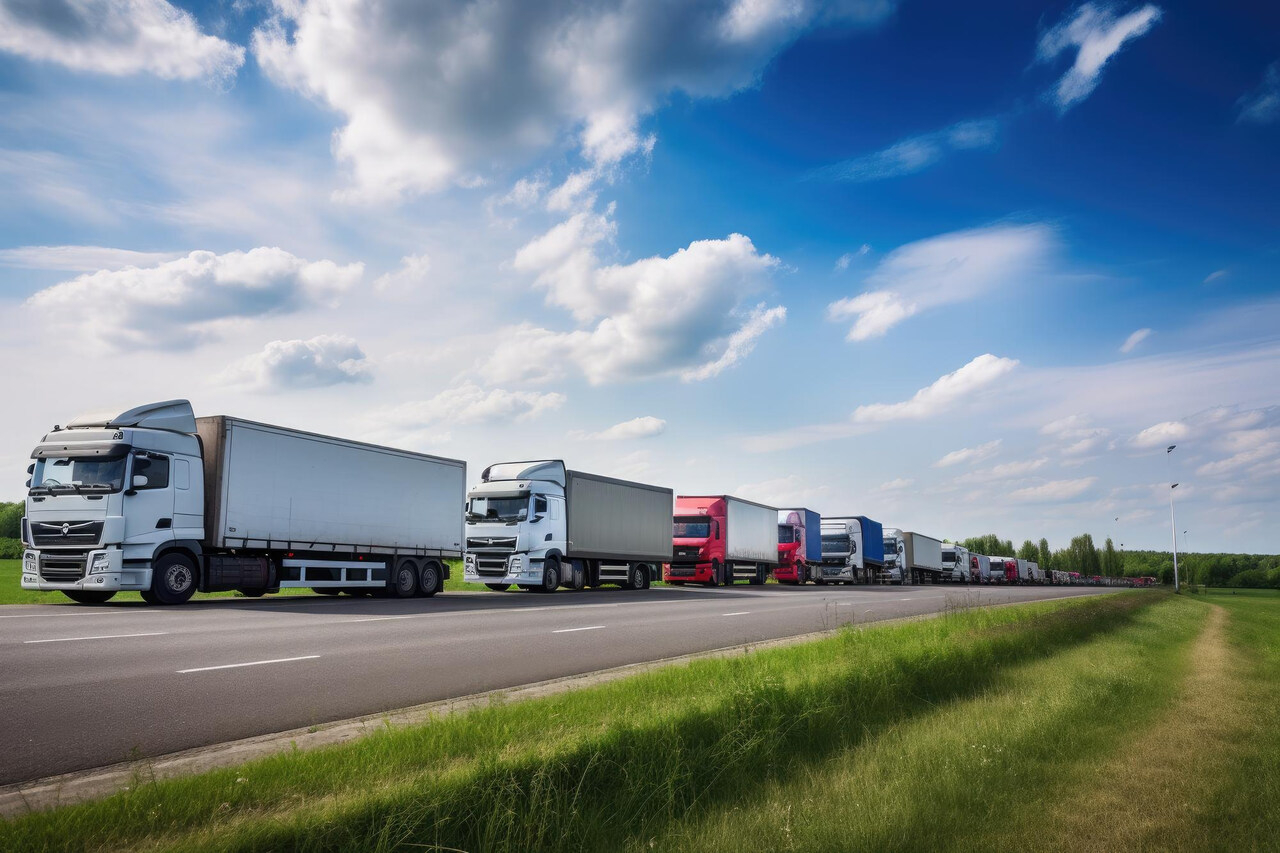
The crisis experienced by the Polish TSL sector will not be resolved without state assistance. High-profile driver protests and lobbying by organizations representing the sector are starting to show results. On July 1, 2024, a mandatory electronic permit control system for foreign carriers entering Poland came into effect, alongside modified rules for the transport agreement between the EU and Ukraine. Their goal is to ensure fair cooperation rules in the tension-filled cross-border TSL market.
No more lenient treatment
The control was introduced as part of an amendment to the Act on the Posting of Drivers in Road Transport, prepared by the Ministry of Infrastructure. According to its provisions, as of July 1, 2024, carriers entering Poland from outside the EU are required to “register in the monitoring system for road and rail transport of goods and trade in heating fuels, hereinafter referred to as the ‘SENT system’.”
Polish carriers, who have been suffering losses due to the growing scale of transport operations performed without appropriate permits, have been pushing for such a change for a long time. The amendment introduces the possibility of controlling transport companies from outside the European Union, but it does not cover EU carriers, who are subject to restrictions, e.g., regarding cabotage.
– Until now, bypassing the regulations limiting transport was relatively simple. It was enough for a carrier not to fill out the issued permit form and thus not record the completed transport to be able to use it multiple times. In the IT system, the fact of holding a permit and its scope will be registered at the moment of crossing the EU borders, which will prevent its reuse. That is the theory – in practice, achieving full system efficiency will require time and multi-million investments planned for this and next year – explains Jakub Gwiazdowski, Head of Partnership & Relations at Transcash.eu.
Unequal chances in the fight for freight
The system was implemented to control foreign carriers, but in practice, its goal is primarily to curb the illegal activity of Ukrainian transport companies. Their activity increased significantly after the outbreak of the war, when the requirement to hold permits was lifted as part of industry support. This decision drastically changed the balance of power – until 2022, Polish entrepreneurs controlled one-third of the transport market between the European Union and Ukraine. After the permits were lifted, Ukrainian transport companies left their competitors behind. Unbound by the restrictions imposed by the EU and the Mobility Package, carriers from the east can offer services on competitive terms. Only the cabotage and cross-trade market remained out of their reach.
Stricter controls after protests
The scope of control for Ukrainian carriers went a step further after recent protests at the eastern border. As a result, on June 18 of this year, the transport agreement concluded between Ukraine and the EU was amended, which also entered into force on July 1, 2024.
Under this agreement, Ukrainian vehicles entering Poland “empty” must possess documents confirming the cargo order and identification stickers.
– In accordance with this recommendation, Polish border services stopped vehicles that did not meet the requirements from midnight on July 1. This met with clear opposition from Ukrainian politicians and media, and as a result, the controls were abandoned. The opposition was said to stem from a too short vacatio legis, which prevented carriers from adapting to the new requirements. As reported by the Ukrainian Ministry of Infrastructure, the transition period in this regard, in accordance with the agreement, should have lasted until July 10 – says Jakub Gwiazdowski.
Still visa-free, but under new conditions
Border controls, however, seem to be only a moderate inconvenience that will not significantly affect the situation of carriers from Ukraine. On June 20 of this year, the European Union extended the possibility of visa-free transport with Ukraine for another 12 months, with the prospect of an automatic extension of this period until the end of next year.
As the Transcash.eu expert points out, the new agreement tightens the regulations regarding controls, which Polish carriers had been calling for, and introduces one potentially significant change from the market’s point of view:
– We are talking about a safeguard clause that will allow member states to suspend the agreement with Ukraine for a specified period if “serious disruptions occur in the transport market.” The agreement therefore suggests that the further dominance of carriers from Ukraine may be halted if its impact on the EU market is negative, which in this case improves the situation of Polish transport companies – comments Jakub Gwiazdowski.
Will Ukraine lose its privileges in the EU?
According to EC data, since 2022, the volume of road transport on the EU-Ukraine route has increased by 2/3, reaching a scale of 700 million euros per month. The decision to conclude the agreement was a direct consequence of the blockade of Ukrainian seaports by Russia. As a result, local carriers gained access to the EU market, but without the need to adapt to the rules in force there, especially regarding rates and driver salaries. Despite the ban, Ukrainians also began to carry out cabotage transport, which the agreement prohibits.
It is worth remembering that Ukraine officially became a candidate for EU accession in 2022 and began negotiations in 2023. Given the ongoing armed conflict, it is difficult to predict when a final decision will be made, and thus when Ukrainian carriers will be obliged to operate under the rules common to the entire EU. From this perspective, it is hard to be surprised by the community of Polish carriers who, placed in an exceptional and unfavorable situation, are trying to fight for their position and advocate for fairness on both sides of the eastern border.
Source: Transcash