








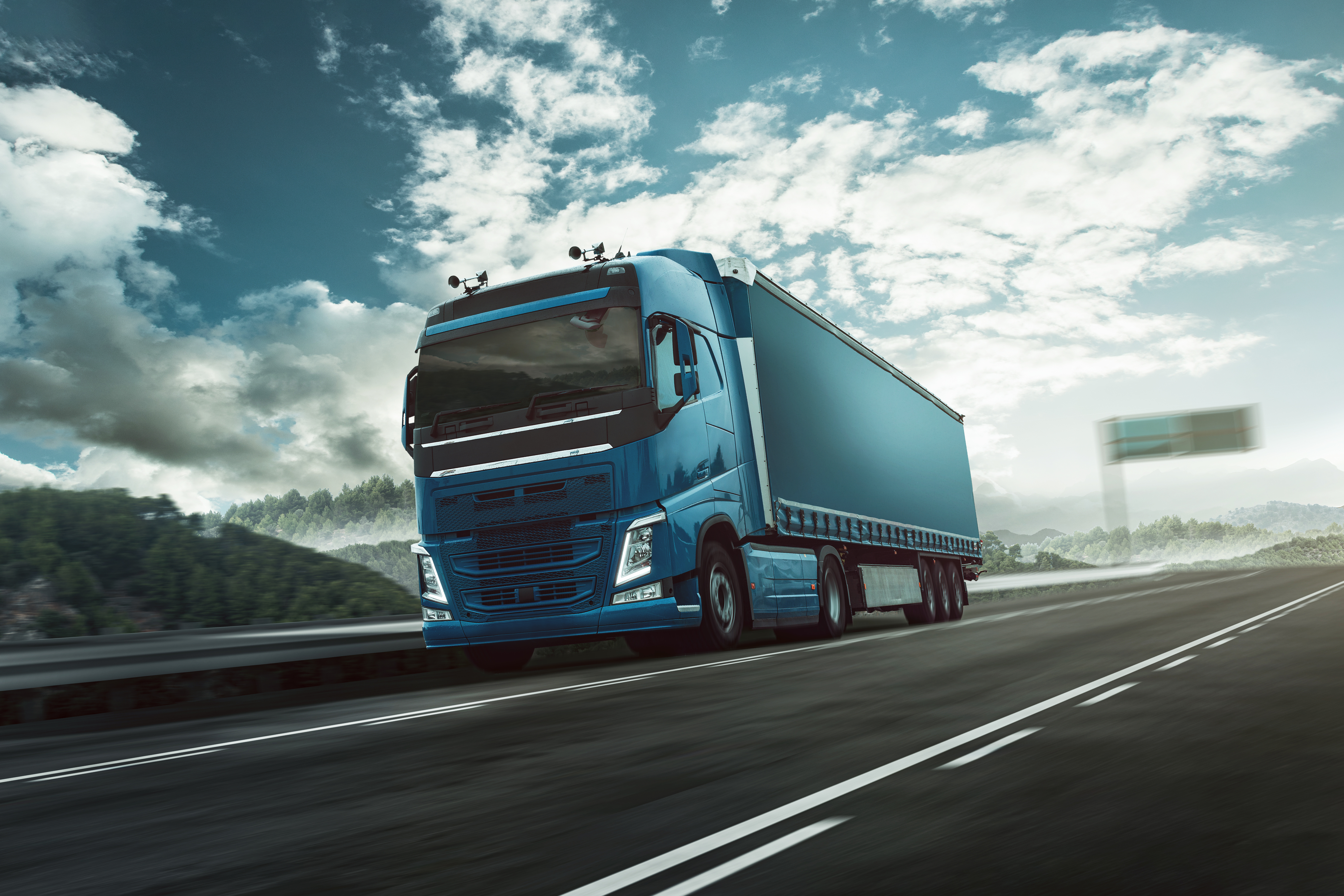
Zero-emission delivery vehicles have finally left the laboratory of the future. However, there are still several challenges ahead for this new type of truck before it becomes a practical technology for everyday use.
The European Union has officially initiated the end of the era of internal combustion engines in trucks based on fossil fuels (diesel, LNG/CNG) by adopting EU Regulation 2019/1242 (as amended) earlier this year. Under the new rules, heavy-duty vehicle manufacturers are required to reduce the average CO2 emissions of newly registered trucks by 90% by 2040 compared to the 2019 baseline year.
Within just two decades, the logistics industry will face the greatest transformation in road freight transport since cars replaced horse-drawn carriages. Currently, the most important task is to transform zero-emission vehicles (ZEVs) from a level of technology into practical solutions that will reliably fulfill their role and be used for various goods transport tasks.
However, this is not the beginning of the ZEV journey. The starting point for this transformation was the EU Regulation 2019/1242 adopted five years ago. Since then, commercial vehicle manufacturers have been challenged to reduce average emissions of newly registered vehicles by 15% from 2025 and by 30% from 2030 (now increased to 45%). The ZEV vision also appears in other regulations, for example in the five new CO2 classes for truck toll systems, which were adopted by all EU member states in 2022. At the beginning of this year, this new classification was already implemented in Germany and Austria.
The transformation process has begun
OEMs (Original Equipment Manufacturers) have adjusted their strategies to the regulatory changes accordingly. For example, in the autumn of 2019, market leader Daimler Trucks announced that it would shift its entire production to battery electric vehicles (BEVs) and fuel cell electric vehicles (FCEVs) within two decades. These changes are not limited to the EU: other countries have also committed to phasing out the production of vehicles with traditional internal combustion engines. Among others, in Norway and the US state of California, the end of sales for the classic internal combustion engine in trucks will begin five years earlier than in the EU.
In addition, all established OEMs, as well as some start-ups and entrepreneurs from other sectors, are actively investing in new production facilities and supply networks around the world. For these companies, the main goal is the electrification of the powertrain and the production and purchase of efficient traction batteries and fuel cells.
Currently, the first BEV truck models with a range of up to 300 km are available on the market, and versions with up to 500 km, intended for both short- and long-haul transport, will soon be offered.
Currently, the first BEV truck models with a range of up to 300 km are available on the market, and versions with up to 500 km, intended for both short- and long-haul transport, will soon be offered. For comparison, FCEV trucks with a range of over 700 kilometers are expected to be available as production models only towards the end of this decade. In turn, according to EU regulations, hydrogen-powered vehicles with an internal combustion engine (HICEV) and trolley trucks powered by overhead lines are also classified as ZEVs. However, in both cases, there are no practical, mature technologies or plans for the development of appropriate infrastructure on the market yet. Consequently, the chances of such types of zero-emission trucks appearing in large quantities on European roads in the foreseeable future are very low.
The situation is similar for synthetic fuels. Under the revised EU regulation, trucks with internal combustion engines powered by biofuels or e-fuels are not zero-emission vehicles, nor are there any future benefits provided for them in the form of toll discounts. Only vehicles powered exclusively by green electric fuels have a chance of being registered in the “e-fuels only” class after 2040. However, all the legal details in this regard are still missing.
What about these e-fuels?
There are also many question marks regarding the political attitude towards e-fuels. Although an agreement was recently reached at the EU level to consider their use in the future, it is currently impossible to say whether such preliminary commitments will ever turn into regulations, gain majority support, and become legally binding. Due to the limited production capacity of such fuels, they will certainly not be a reliable way for OEMs to achieve fleet targets. Moreover, the use of e-fuels does not allow for the reduction of air pollutant emissions (nitrogen oxides, particulate matter, etc.) to zero. Which remains an important issue, especially for cities and metropolitan areas.
The adoption of the revised EU Regulation 2019/1242 sets the legal framework and technological possibilities. However, for these technologies to be suitable for everyday use, work must be urgently undertaken in the following areas:
- Public truck charging infrastructure: rapid implementation of the EU regulation known as the AFIR regulation on the installation of fast-charging stations by 2030. The project assumes the deployment of stations at least every 60 km along main motorways, every 100 km along the entire Trans-European Transport Network, and in urban nodes.
- Urban power grids: creation and implementation of plans for the expansion of power supply systems in industrial zones.
- Legal norms and standards: immediate revision of rules and regulations governing the use of zero-emission vehicles and renewable energy sources, including technical rules regarding fire prevention or the handling of dangerous goods. Equally important, especially with regard to the SME sector, remains the timely adjustment of guidelines in the area of financing and social law.
- Investment security: laws and regulations must be reliable so that private investors have the planning certainty necessary to carry out their ventures.
- Constructive cooperation of all involved parties aimed at preparing solutions and their implementation.
DACHSER, as part of its sustainability and climate protection strategy, is preparing for a gradual transformation towards ZEVs and renewable energy sources. In practice, this means continuously increasing the number of BEV and subsequently FCEV trucks in short- and long-haul transport, depending on their performance, charging infrastructure, and cost-effectiveness.
At the same time, it is equally important to continue avoiding unnecessary and energy-intensive journeys by ensuring high process and energy efficiency. In the coming years, we can expect modern, fuel-efficient Euro 6 diesel trucks, even greater optimization of payload thanks to well-prepared specialists and new digital support systems, and even more effective route planning.
It is clear that the intelligent logistics of the future will be based on a combination of zero-emission and high-efficiency vehicles.
Source: Dachser