








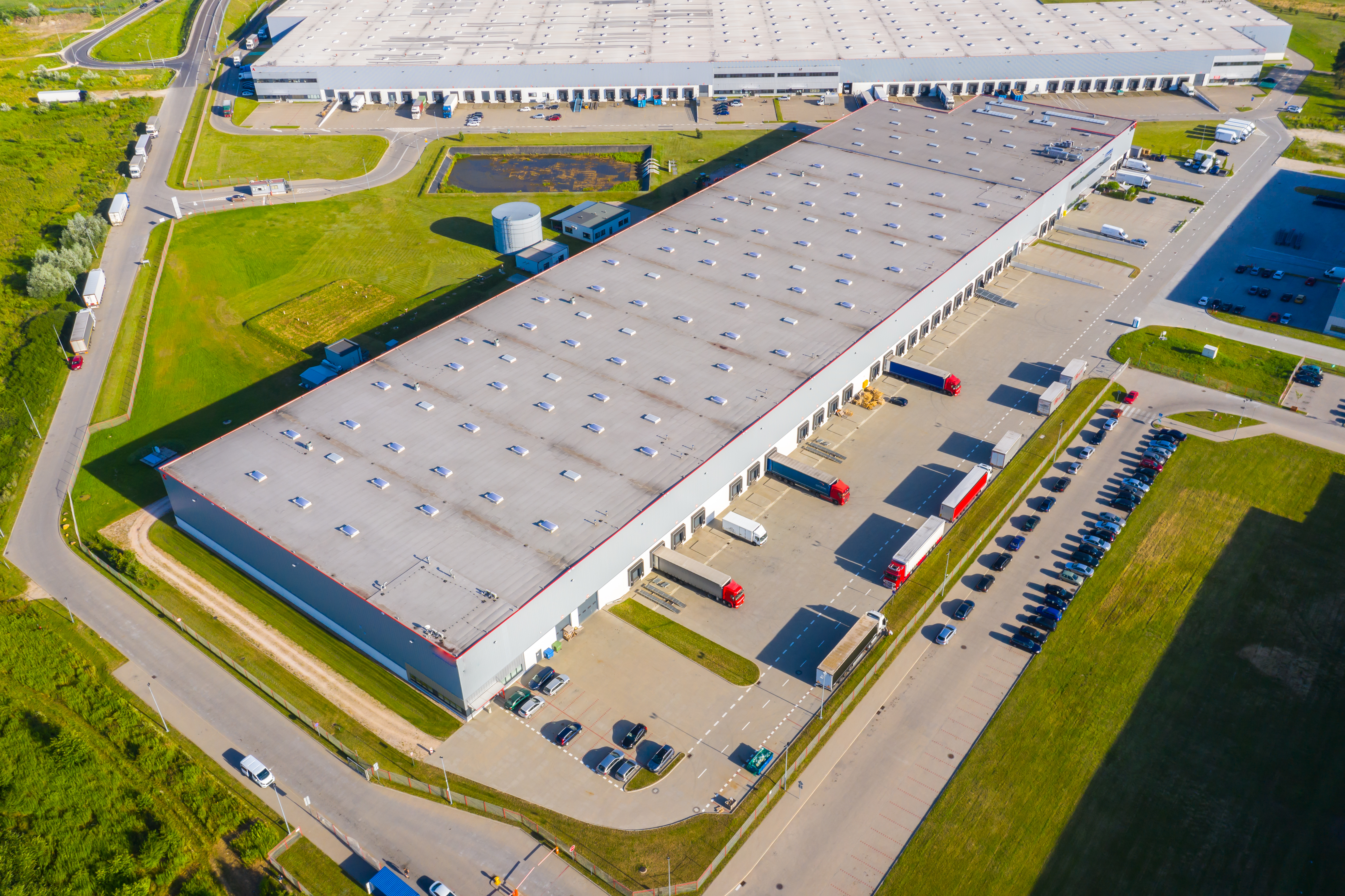
Poland’s accession to the European Union was a milestone in the country’s transformation path, visible in every area of the economy, including the real estate sector. Changes in the market landscape were driven by shifting supply, new customer preferences, labor market evolution, and infrastructure development. The warehouse sector was already well-positioned in terms of existing resources by 2008, with approximately 5 million m² of space. Then, ten years later (2018), the warehouse sector overtook the retail market, possessing 15 million m² of stock at that time. JLL experts summarize how the Polish real estate market has changed over the last 20 years.The office market in regional cities has grown by over 820% over the last 20 years.
Poland’s accession to the European Union resulted in an increase in existing supply in the office market by over 10 million m². This consists of a 173% increase in Warsaw and over 820% in regional cities, which represents a huge success for the Polish office market. While in 2004 the existing supply was 3 million m² and the market was mostly developing in Warsaw, currently 4 markets dominate, each with over 1 million m² of supply – Warsaw, Krakow, Wroclaw, and the Tri-City.
Over the last 20 years, companies have signed lease agreements for over 20 million m².
Over 800 new retail facilities in the last 20 years
The retail market in Poland has developed dynamically over the last 20 years, adapting to the new needs and shopping habits of Poles. Since Poland’s accession to the European Union, over 800 retail facilities have been built on the retail market, which accounted for an increase in total resources by nearly 13 million m². While the last decade of the 20th century was the heyday of the first hypermarkets expanded with basic service and retail offerings, the EU accession coincided with the launch of flagship projects on the map of Polish retail real estate, such as the Westfield Arkadia shopping center.
An example of the further development of this sector is the entry of developers into medium and smaller cities, which resulted in the creation of, among others, Galeria Jurajska in Częstochowa or Millenium Hall in Rzeszów. In 2004, shopping centers accounted for over 70% of the total supply existing at that time. Currently, the proportion of individual formats is slightly different. Although shopping malls still dominate, a significant part of their share has been taken over by retail parks, which currently account for about 18% of total supply. Together with convenience centers, this is already over 25% of the market.
The Polish warehouse market has grown twentyfold over the last 20 years
Since Poland’s accession to the European Union, over 30 million m² have been leased on the warehouse market, which means that this sector has grown 20-fold over the last 20 years, due to, among other things, the dynamic development of Polish road infrastructure (over 4,000 km of expressways have been added in the country).
The first modern facilities implemented in Poland by leading players in the development industry appeared after 2000, but Poland’s accession to the EU can be considered a milestone in the development of this sector. The warehouse market in Poland then offered 1.6 million m² of space. After 2004, we observed a strong acceleration, visible in the development of regions such as the vicinity of Wroclaw, Greater Poland, or Central Poland. In the first years, the accession caused rapid growth, recording the highest dynamics between 2007 and 2008 – 44% y/y.
After years of slowdown caused by the economic crisis, the market rebounded. The e-commerce industry began to flourish, driven by new contracts from global operators. This sector was additionally fueled by events related to the pandemic. JLL experts predict that in the coming years, the warehouse market will develop at a relatively stable pace. Within 6-8 years, this market may grow by another approximately 20 million m².
Transaction volume close to 78.5 billion euros over the last 20 years
Since Poland’s accession to the European Union, the total volume of transactions in the commercial real estate market has reached nearly 78.5 billion euros across nearly 1,700 transactions involving over 500 unique investors. In the office sector alone, approximately 30 billion euros were spent, which gives it first place among all asset classes, followed closely by the retail sector, and then the warehouse sector. These leading industries in the investment market accounted for a total of over 90% of the total value of commercial real estate transactions.
The dynamics in the investment market have changed significantly over the years. One of the main factors affecting the market was the fluctuation of financing costs over the last 20 years. The best example is the unprecedented series of interest rate hikes by the European Central Bank started in the second half of 2022. As a result, turnover in the investment market last year reached its multi-year lows, not only in Poland but in almost all developed markets. The impact of the aforementioned high financing costs was definitely stronger than the direct effect of both the COVID-19 pandemic and the outbreak of the war in Ukraine. That is why the June interest rate cut by the European Central Bank was extremely important for the investment market, giving the green light for further cuts.
Source: JLL