








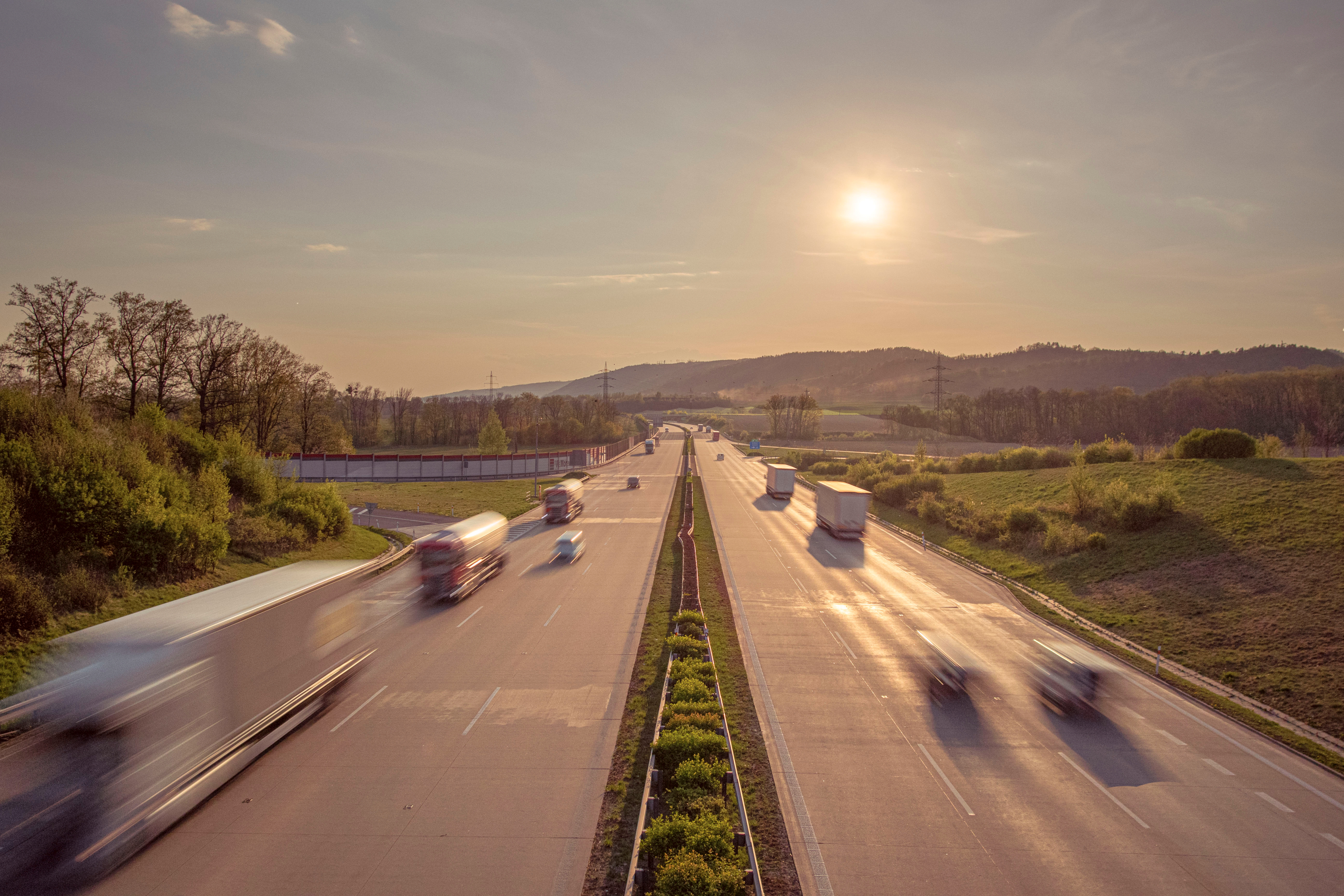
The holiday season poses a significant challenge for carriers. Beyond staff shortages caused by vacations, transport companies must carefully plan truck routes to ensure timely loading and delivery of goods despite holiday traffic bans. Finding comfortable and safe truck parking spaces, both in Poland and along major European transport routes, is also crucial during this period.
Holiday traffic bans in Poland
Holiday traffic bans for heavy goods vehicles in Poland are intended to limit the movement of trucks not only during holidays but also on Fridays and weekends, which are periods of increased holiday passenger car traffic. Detailed information regarding summer truck bans is contained in the regulation of the Minister of Transport dated July 31, 2007.[1] These restrictions in Poland apply to vehicles with a permissible total weight exceeding 12 tons, and apart from the Assumption of the Blessed Virgin Mary holiday celebrated on August 15, the truck ban is in effect from June 21 to August 28, 2024, on the following days and hours:
- on Fridays from 6:00 PM to 10:00 PM,
- on Saturdays from 8:00 AM to 2:00 PM,
- on Sundays from 8:00 AM to 10:00 PM.
For failing to comply with traffic restriction regulations, carriers may receive a financial penalty of 2,000 PLN. Transport managers, in turn, can be fined 1,000 PLN.
Who is exempt from the restrictions?
Exempt from the holiday traffic ban in Poland are, among others, trucks transporting perishable goods and food products, medicines, live animals, as well as certain vehicles carrying ADR goods and trucks used in combined transport. However, a significant portion of heavy goods vehicles with a GVW over 12 tons is forced to remain at transport bases or parking lots while the restrictions are in effect.
Telematics proves particularly useful during this period, allowing for real-time monitoring of the traffic situation, driver working hours, and vehicle parameters. Constant access to this information allows for effective planning of trips and stops for every truck in the carrier’s transport fleet.
– It will be crucial for carriers to plan the schedule of departures and arrivals in detail in advance and to continuously monitor where traffic restrictions occur on European roads. It is also worth checking optional routes to destinations that may be available at that time – notes Tomasz Góralewicz, National Sales Manager, Eurowag Group.
Parking spaces during the summer season
According to the PITD report on professional driver earnings in Poland 2023[2], as many as 17 percent of respondents answered the question: “What do you dislike about your job?” by citing an insufficient number of parking spaces. Meanwhile, 16 percent of drivers complain about sanitary conditions. Although the lack of infrastructure and good equipment at loading or unloading points has long been a pain point for the TSL sector, social initiatives aimed at protecting drivers are increasingly emerging, striving to improve sanitary facilities and create rest areas for them.
An example of such action is the TruckersLife foundation, which has been working since 2013 to improve the health, safety, and conditions of professional drivers. Also very important is the activity of transport-related companies that want to invest in new concepts that increase driver safety and driving comfort, such as Eurowag Prime – a network of fuel stations located in the most strategic and prominent locations in Europe, which may feature parking for trucks.
– There are already over 70 EW Prime facilities across Europe, and their number is constantly growing. In Poland, premium stations and parking lots are located along all major roads, such as the A1, A2, or A4 motorways. The location of the nearest gas station marked with the blue logo with a black crown can be easily checked using the Eurowag mobile application available in the Google Play and App Store. We wanted to implement a concept that would provide drivers and customers with a higher standard of service, better prices, and additional amenities that are particularly important on the road. We are, of course, planning to gradually expand the network – explains Tomasz Góralewicz, National Sales Manager, Eurowag Group.
Summer traffic bans in Europe – selected directions
Germany
Holiday traffic bans also apply in many European countries. In Germany, the permanent ban on trucks with a GVW over 7.5 tons, which applies every Sunday from midnight to 10:00 PM, is extended in July and August to include every Saturday from 7:00 AM to 10:00 PM on certain road sections. The truck traffic restriction on German roads does not apply to a certain extent to vehicles used in combined transport, as well as, among others, vehicles transporting fresh dairy, meat, fish, fruit, and vegetable products, and vehicles traveling to the loading point for such products “empty”.[3]
– When it comes to penalties for non-compliance with German regulations, a driver can receive a fine of 120 euros (about 500 PLN). In turn, the penalty amount for the carrier depends on several factors, including the number of kilometers traveled, and is determined based on German penalty calculation formulas – says Jakub Ordon, regional expert, Inelo from the Eurowag Group.
France
In France, during the holiday period, the ban applies to most Saturdays from 7:00 AM to 7:00 PM and on all Sundays from midnight to 10:00 PM, as well as from 10:00 PM on the eve of a holiday until 10:00 PM on the holiday itself. During this time, there are two holidays during which a traffic ban applies to vehicles with a GVW over 7.5 tons. The first is the national holiday on July 14, and the second is the Assumption of the Blessed Virgin Mary celebrated on August 15. The aforementioned traffic bans do not include, among others, vehicles transporting live animals and perishable food, such as eggs, shellfish, fish, meat, and other food products requiring constant and chilled transport temperatures.[4]
Transport companies that ignore the applicable traffic ban regulations may receive a financial penalty ranging from 750 euros to as much as 4,000 euros, which is from about 3,200 PLN to as much as 17,000 PLN.[5] (update – 17.06.2024).
Czech Republic
In the Czech Republic, holiday traffic bans for trucks with a GVW over 7.5 tons apply from July 1 to August 31. During this period, the Sunday traffic restriction for heavy goods vehicles from 1:00 PM to 10:00 PM is extended to include every Saturday from 7:00 AM to 1:00 PM and every Friday from 5:00 PM to 9:00 PM. Furthermore, on Czech motorways, expressways, and first-class roads, the truck traffic ban applies on the holidays of July 5 and 6. The restrictions do not apply to, among others, vehicles used in combined transport on the section from the sender to the nearest unloading point, as well as trucks transporting live animals and perishable goods, provided that the sensitive products occupy at least half of the cargo space[6]. It is worth remembering that drivers in this country who do not comply with the aforementioned bans may be fined the equivalent of about 500 PLN.
Slovakia
In Slovakia, summer traffic bans for trucks apply in July and August on Saturdays. On these days, heavy goods vehicles cannot move on roads from 7:00 AM to 7:00 PM. The ban also applies to all Sundays and holidays from midnight to 10:00 PM. Holidays in Slovakia fall on July 5 (St. Cyril and Methodius) and August 29 (anniversary of the Slovak National Uprising). Exempt from traffic bans are, among others, vehicles transporting live animals and dangerous goods.[7] Other trucks are required to park in parking lots.
Austria
In Austria, the holiday traffic ban applies from July 6 to August 31 on the A13 motorway leading through the Brenner Pass on all Saturdays from 7:00 AM to 3:00 PM and is combined with the permanent weekend ban in effect on Saturdays from 3:00 PM to midnight and on Sundays and holidays from midnight to 10:00 PM.[8]
Italy
In Italy, during the holiday period, i.e., in July and August, the permanent ban on trucks with a GVW over 7.5 tons in effect on Sundays from 7:00 AM to 10:00 PM is extended to include Saturdays. On these days, restrictions on truck movement on roads apply from 8:00 AM to 4:00 PM. It is also worth remembering the traffic ban on August 15, which will be in effect from 7:00 AM to 10:00 PM. Traffic bans do not include, among others, trucks transporting fresh food and live animals. Furthermore, in the case of those entering Italy from abroad, the start time of the ban is shifted by four hours.[9]
Source: EUROWAG
[1] https://isap.sejm.gov.pl/isap.nsf/download.xsp/WDU20210000783/O/D20210783.pdf
[2] Report, Earnings of professional drivers in Poland 2023. Safety and state of parking infrastructure
[3] Trafficban.com, Truck traffic bans in Europe, Germany
[4] Trafficban.com, Truck traffic bans in Europe, France
[5] Wise.com.pl, Currency converter
[6] Trafficban.com, Truck traffic bans in Europe, Czech Republic
[7] Trafficban.com, Truck traffic bans in Europe, Slovakia
[8] Trafficban.com, Truck traffic bans in Europe, Austria
[9] Trafficban.com, Truck traffic bans in Europe, Italy