








A service has been introduced in the UK that allows medicines to be delivered by food delivery companies. This is intended to increase convenience for patients, who can now receive their medication without having to leave their homes. While this idea seems like a promising solution for many patients, experts point to potential challenges associated with this delivery model.
For many people, especially those with limited mobility or suffering from chronic illnesses, the ability to order medicines in the same way as food can be a significant convenience. Users in the UK order medicines via apps, which are then delivered directly to their doors. But is this a safe option?
Logistical challenges that couriers must face
Despite the numerous benefits, the new service also raises certain challenges. Medicines require special storage and transport conditions to maintain their efficacy and safety. High temperatures in summer can be particularly problematic, as standard vehicles used by food delivery couriers may not provide the appropriate conditions.
– Heat negatively affects the performance of medications. It is important that both patients and medicine suppliers pay special attention to the conditions in which pharmaceuticals are kept and transported – says Sylwia Baranowska-Skoneczna, MSc in Pharmacy, manager of the Pharmalink Pharmaceutical Warehouse.
The list of pharmaceuticals that should not be overheated is long, and it primarily includes antibiotics, insulins, adrenergic drugs, sedatives, as well as some supplements containing probiotics. Contraceptive pills, thyroid medications, and others containing hormones are also susceptible to temperature changes.
Proper logistics is a guarantee of safety
Specialized logistics companies that handle the transport of medicines must comply with strict safety regulations. Such suppliers have appropriately adapted vehicles equipped with modern systems that can meet even the most stringent requirements.
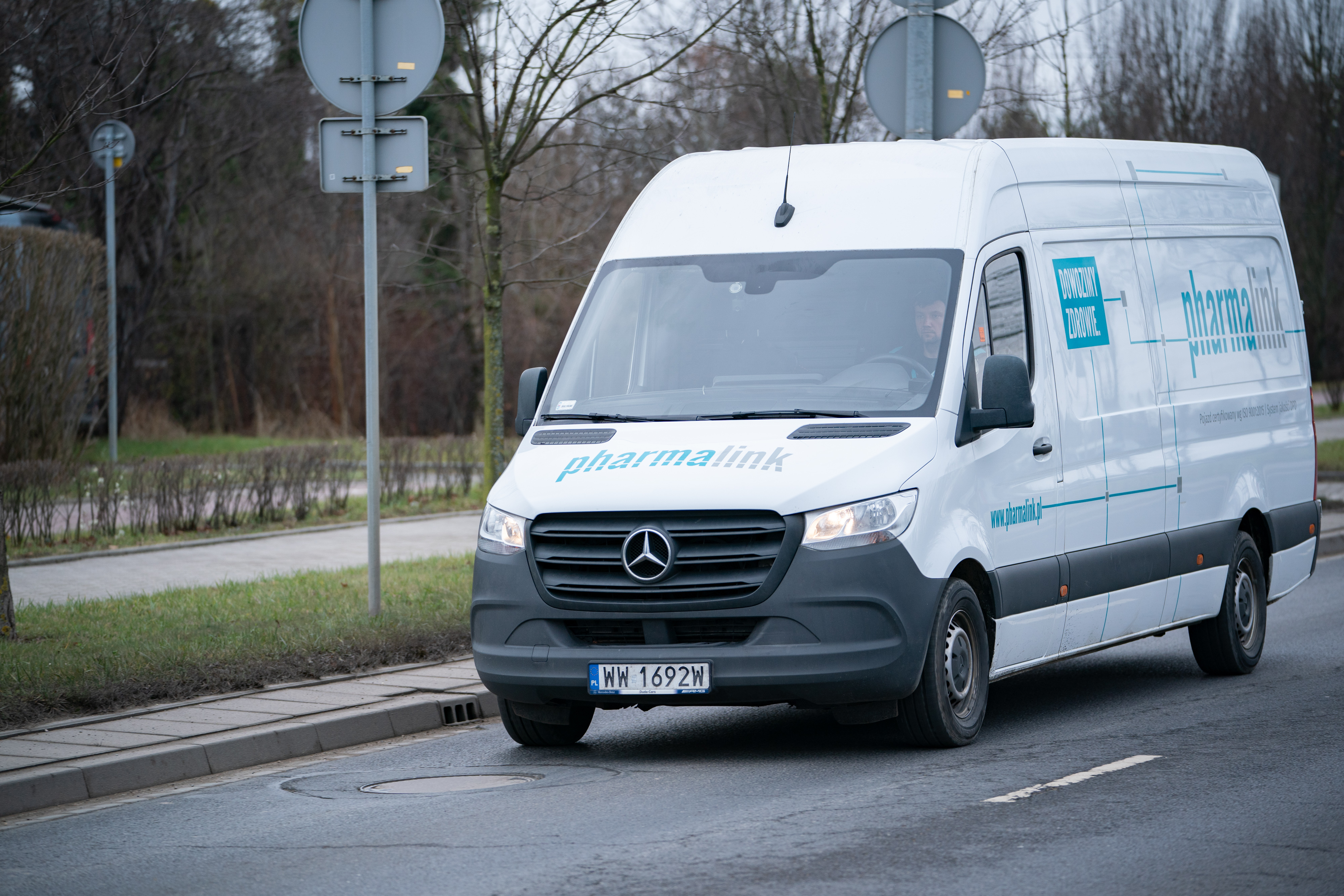
– We have specialized transport facilities that meet all the requirements of the pharmaceutical industry. We have a fleet of dual-chamber vehicles with isothermal bodies, heating and cooling devices, and a modern monitoring system to control temperature and other key parameters during transport. Thanks to this, the transport of medicines under controlled temperatures is carried out quickly, safely, and on time – says Daniel Charucki, transport manager at the logistics company Pharmalink.
Experts from the pharmaceutical industry emphasize that while the new service is convenient, it is essential to ensure proper conditions for the transport of medicines. Specialists point out that it is recommended to use the services of specialized logistics companies for such deliveries, as they have the appropriate infrastructure and experience in transporting pharmaceuticals.
In Poland, the shipment of pharmacy medicines is regulated by pharmaceutical law and Good Distribution Practice (GDP) requirements. Shipment is possible, but specific conditions must be met, such as: proper storage and transport of medicines under controlled conditions, and maintaining the integrity of the supply chain, where specialized logistics companies play a perfect role.
– This is particularly important because if a patient needs to take specific medicines and they are incorrectly delivered or stored, they may lose quality, resulting in the failure to receive the recommended dose – adds Sylwia Baranowska-Skoneczna, MSc in Pharmacy.
The introduction of home medicine deliveries via food couriers might seem to bring only benefits, but is that really the case? This type of transport also presents challenges, and serious ones at that – on one hand, concerning human health and life in terms of the safety of transport and storage of medicines, and on the other, there is a risk of losing the direct contact between the patient and the pharmacist, which may lead to the patient not fully understanding the instructions for using the medicines. It is not without reason that pharmaceutical care is gaining importance in Poland. When selling medicines, a pharmacist is able to perform medication reviews or provide pharmaceutical consultations. Without direct contact, this would be impossible. There is also the issue of responsibility for the safety and quality of medicines during transport, as well as potential problems related to delivering medications in the patient’s absence or delivering them to the wrong address, and this raises the question of who will bear the consequences for such a mistake.
Could this system be introduced in Poland? Currently, the regulations do not allow for it, and there are no ongoing discussions about changing the law in this regard.
Source: Pharmalink