








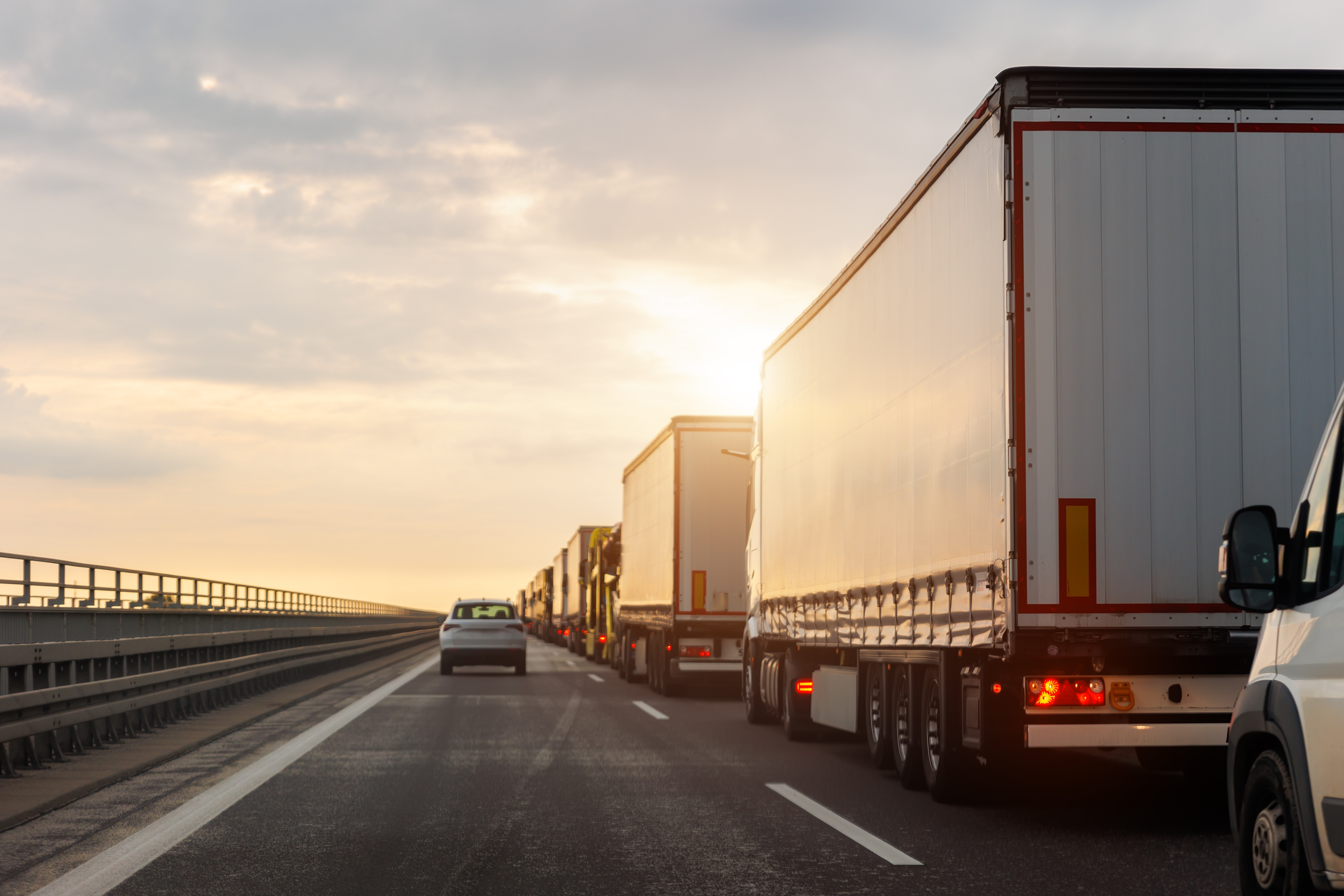
Specialists at DSV – Global Transport and Logistics, based on their own experience, have estimated the losses caused by agricultural road blockades in March of this year. They identified costs directly related to the transport of goods as a significant factor.
The bigger you are, the more you can do
The recent agricultural protests in March of this year caused road blockades in over 500 locations across different parts of the country. Experts at DSV – Global Transport and Logistics point to the losses in the TSL industry caused by the resulting delays due to vehicle downtime, missed deliveries, redeliveries, and the handling of piled-up inventory resulting from the accumulation. According to their estimates, the events of March 19th hindered the movement of up to 30% of the heavy goods vehicles traveling on Polish roads that day (out of 1.3 million such units registered in Poland). In their opinion, the delays were most noticeable in the domestic transport sector, primarily due to short contractual delivery times compared to international transport services. Assuming that 1.3 million heavy goods vehicles travel on Polish roads every day, with an average vehicle delay estimated at 3 hours and current transport rates, this results in a loss of 450 PLN per vehicle. According to these estimates, the losses for carriers in this regard could amount to as much as 175 million PLN per day nationwide.
In a situation where a larger number of roads are paralyzed, a particular problem in organizing transport is deliveries to so-called time windows. If a given distribution vehicle has a delivery scheduled for 5-6 points in one day and only completes it at two, the rest of the goods must return to the DSV warehouse. Then the delivery is carried out again in the following days. Of course, this increases the demand for transport resources and drivers on those days. In such situations, it is necessary to rely to a much greater extent on vehicles outside of one’s own contract fleet, which affects the quality of services provided, but also increases the costs of handling deliveries
– Furthermore, such delays cause an accumulation of inventory, which without an appropriate reserve of space can be a major organizational problem, and in extreme cases, even a temporary blockade of operations in warehouses or transshipment hubs. Mitigating the effects of one day of nationwide blockades takes from 2-3 days up to a week. Of course, optimal management of this situation costs money, and this cost most often remains solely with the logistics operator. Unfortunately, for many entities in our market, especially smaller ones, the effects of road blockades can mean financial problems – argues Marta Kućmińska-Mróz, Key Account Director at DSV – Global Transport and Logistics.
The longer it lasts, the worse it gets
Specialists at DSV – Global Transport and Logistics note that knowing the date and location of short-term protests or other events disrupting road traffic allows for minimizing their impact on the punctuality of deliveries to some extent. The logistics operator can then properly replan routes and, in consultation with clients, adjust the delivery schedule. The situation changes diametrically if the announced protests take on a long-term character. Then the palette of options available to the logistics operator, necessary to effectively manage the situation, shrinks significantly. In contrast to the rapidly growing costs, which consist of the costs of additional fuel, working time of drivers and warehouse staff, and potential contractual penalties for delayed or unfulfilled deliveries.
– In the medium term, protests and the resulting road blockades may lead to an increase in transport service costs – operators will have to pass the cost increases on to customers. They may also affect the liquidity of deliveries and the supply of trade and production, and as a result, for example, the need to increase stocks for entities in the production, trade, and distribution market
– argues Marta Kućmińska-Mróz.
Strikes without impact on ports
DSV analysts also looked at operations in Poland’s largest sea and air ports. Interestingly, the March agricultural protests did not have a major impact on their functioning. Since a significant portion of deliveries and pickups at these types of terminals takes place at night, major disruptions to schedules were avoided.
Source: DSV – Global Transport and Logistics