








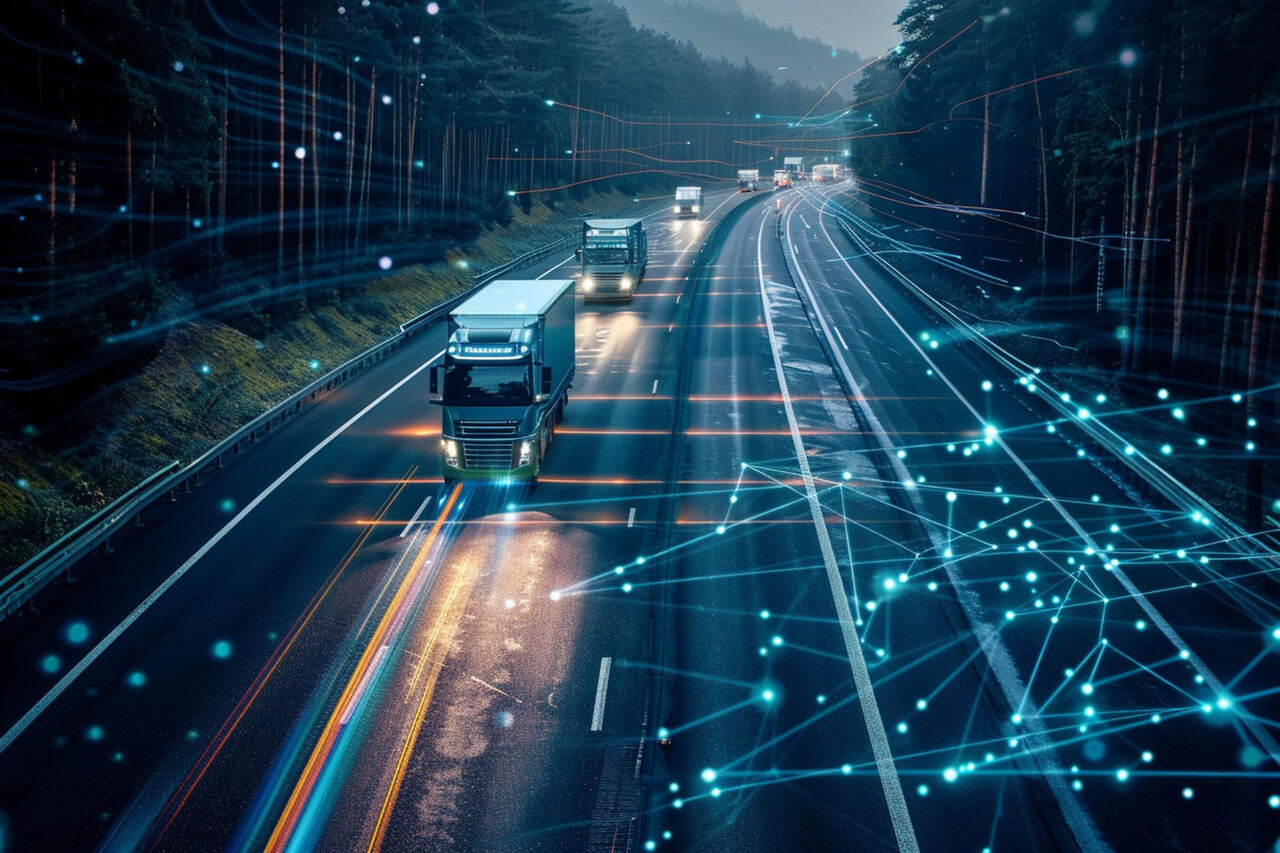
Artificial intelligence can become a driving force for revolution in the freight forwarding industry. Through the use of advanced data analysis and machine learning, it is possible to automate and optimize many processes, which will help increase efficiency, reduce costs, and improve decision-making. These innovations allow freight forwarders to offer better services to a larger number of clients. However, not everyone will be able to seize this opportunity due to the obstacles and risks associated with using artificial intelligence in the TSL industry.
AI in freight forwarding – how does it work?
Systems based on artificial intelligence analyze historical data and real-time information to optimize transport organization. This knowledge allows companies to predict future events and implement strategies that improve supply chain operations.
Thanks to artificial intelligence, freight forwarders can not only reduce costs but also minimize downtime and transport inefficiencies, leading to improved service quality. According to a report by the consulting firm McKinsey & Company, companies that adopted artificial intelligence early in logistics and supply chain management achieved significantly better results than their competitors. With the help of AI solutions, they reduced logistics costs by 15% and increased service levels by 65%.
How can artificial intelligence support freight forwarding operations?
– Solutions using artificial intelligence improve freight forwarding operations in many ways. Freight forwarders can use the predictive capabilities of AI to increase the accuracy of transport cost calculations. Thanks to access to automatic analysis of historical and real-time data patterns, taking into account fuel costs and traffic conditions, freight pricing is more efficient and based on real economic premises. With these tools, it is possible to optimally match the sender with the recipient, minimizing empty runs or fuel consumption – says Jakub Gwiazdowski, Head of Partnership & Relations at Transcash.eu.
AI can also simplify the information exchange process in the context of pricing. Traditional freight pricing usually looks like this: the client sends an inquiry by email, and the forwarder collects rates from various sources and passes them on to continue negotiations.
Thanks to artificial intelligence, a computer can automate the entire pricing process. Starting from reading incoming messages, through automatically extracting key data using language processing, to retrieving rates from carriers and inserting the formatted quote back into the email.
Full control over freight
The use of artificial intelligence in freight forwarding allows for precise calculation of delivery times, taking into account all relevant data such as traffic on the route, supply chain complexity, and cargo types. An AI algorithm, integrated with transport management systems and databases, also works perfectly for tracking the exact location of a shipment and its status in real-time. This gives the forwarder constant insight into its journey and allows them to react faster in case of problems.
Freight forwarders can gain a competitive advantage by consolidating smaller shipments into a single load (provided the transport contract allows for this). Automatic analysis of data such as cargo size, destination, and expected delivery dates allows for determining the best packing combinations and increases cost efficiency.
A “greener” freight forwarding
The role of reducing emissions will grow in the coming years, and analyses based on artificial intelligence contribute to more ecological practices in freight forwarding. By optimizing shipping routes, load capacity, and fuel consumption, artificial intelligence minimizes the industry’s carbon footprint.
Risk management and fraud prevention
The data analysis capabilities of artificial intelligence prove invaluable in identifying patterns related to dishonest activities and potential risks. By analyzing data from various sources, AI can identify anomalies and highlight suspicious activities, thereby preventing potential losses and maintaining the integrity of the supply chain.
Progress in the shadow of doubt
Although the prospects for using artificial intelligence in freight forwarding operations are promising, they are also accompanied by challenges.
– Integrating AI technology requires money, training, and a change in the mindset of employees, who may also fear for their job stability. They are also expensive, and to work correctly, they require long-term investments. AI operation requires a large amount of input data (big data), which must be systematically supplemented. Implementing solutions in this area in a freight forwarding company should therefore begin with organizing and digitizing the data already possessed so that it can be used by artificial intelligence algorithms – says Jakub Gwiazdowski.
A key issue related to implementing AI solutions is IT security. Data collected on an ongoing basis must be secured, and the systems used must be protected against takeover via cyberattacks. Preparation for the wider use of artificial intelligence solutions in a company should therefore be preceded by a thorough analysis of system security and the implementation of measures to guarantee their protection.
AI within legal frameworks
Another issue is legal regulations, which are still lacking, not only in Poland. A step in this direction has just been taken by the Council of the European Union, which on May 21, 2024, adopted world-pioneering regulations on artificial intelligence called the AI Act. This is the first legal act that classifies artificial intelligence in terms of the potential risk of its use for users, which will affect the strictness of the regulations. The AI Act divides artificial intelligence into four groups: high-risk software, limited and minimal impact technologies, and unacceptable systems, which will be banned in the EU.
The Polish Ministry of Digital Affairs is working on the implementation of the AI Act, emphasizing the role of public consultations in the implementation process. A Working Group on Artificial Intelligence (GRAI) and the Internet of Things (IoT) and breakthrough technologies has also started operating under the ministry, bringing together experts from fields such as technology, law, and ethics.
AI is the future, automation is a fact
According to Jakub Gwiazdowski from Transcash.eu, the possibilities for using AI in freight forwarding are both limitless and exciting.
– Artificial intelligence can be used in countless ways to improve customer service and help freight forwarders operate at new levels of speed, efficiency, and service. Automation, which lies at the heart of AI, is already improving freight forwarding operations in many ways, including through TMS or ERP systems, as well as through the use of vehicles equipped with driver assistance systems.
Source: Transcash