








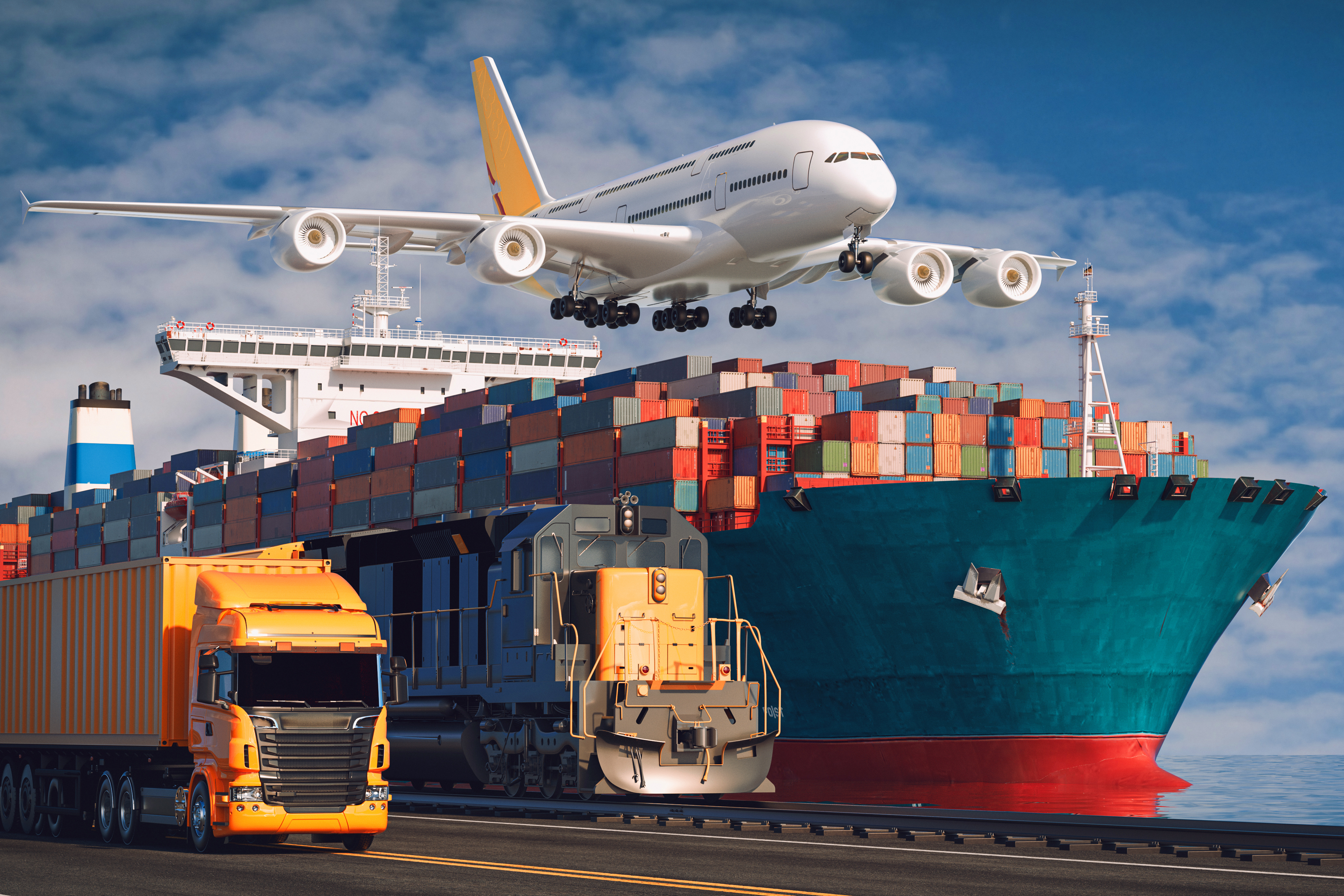
Transport is the lifeblood of the European economy – emphasizes Magda Kopczyńska, Director-General for Mobility and Transport (DG MOVE) at the European Commission, in an interview with PAP about the importance of this sector for the functioning of Europeans, as well as about Ukraine and the Green Deal.
“On one hand, transport enables the entire EU economy to function, because the European economy cannot operate without the transport of goods and people. But transport itself is also a very important branch of the economy – just think of all the people employed in this industry, of the companies producing planes, trains, ships, or cars,” emphasized Kopczyńska, one of the few Polish representatives holding such a high position in the EC structures.
“To remind everyone what transport is, it is worth recalling Covid-19 and what suddenly happened when we could not travel between countries. Suddenly, it turned out that something we take for granted, something we pay no attention to, becomes impossible. And only then did we start to appreciate it. Sometimes from a neighboring city, and sometimes from the other end of the continent. Covid reminded us that if transport does not work, our way of life is called into question,” she added. She pointed out that the items we buy in the store every day “do not fall (…) from the sky, and they are not only produced somewhere, but they are also delivered to that store.”
Asked about the role played by Polish transport companies after the outbreak of the war in Ukraine, the head of DG MOVE replied: “Gigantic.” “Polish companies got involved in helping refugees and enabled them to get to a safe country. On the other hand, Ukraine immediately lost its most important transport corridor, i.e., the Black Sea. We had to – but we also wanted to – build transport corridors overnight so that Ukraine would be able to export and import goods without having a functioning sea route,” she recalled.
“We are therefore building transport corridors with Ukraine that were once not needed on such a scale. Now, admittedly, the humanitarian corridor through the Black Sea is working, but we should remember that Ukraine’s import and export needs are very large and depend on land corridors,” emphasized Kopczyńska.
When asked what is more important in transport – geography or politics – she assessed that the geographical factor should not be overestimated. As an example, she cited the project of the so-called Middle Corridor, intended to connect Central Asian countries with the EU via the Caucasus or Turkey.
“This is a transport project that we have been looking at for quite some time. We have done a feasibility study. We know that the countries in Central Asia are incredibly involved in this and are keen for such a transport connection to be created. Connecting the elements of such a corridor, which already partially exist, is an effective way to bring the countries of this part of Asia into our orbit of trade exchange. Transport is therefore a very important, if not the most important, instrument for connecting and facilitating cooperation between different countries. There are, of course, some question marks regarding geopolitical issues in this region. But there is interest from financial institutions to support this project and build it step by step,” stated Kopczyńska.
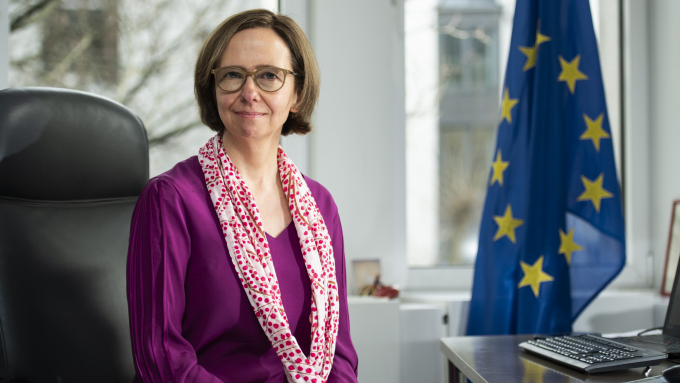
Head of the Directorate-General for Mobility and Transport (DG MOVE) of the European Commission Magda Kopczyńska / Photo: EC – Audiovisual Service
As another, closer example of the primacy of politics over geography, the Commission representative cited cooperation within the framework of transport projects with Ukraine.
“Shortly after Russia’s aggression against Ukraine, as the EC, we proposed expanding the map of the Trans-European Network, i.e., the basic scheme of connections we have in the EU, to include Ukraine, Moldova, and the Western Balkan countries. This expansion of the Trans-European map is intended to show how we see the future routes of transport networks in the Union, as well as with neighboring countries, even if they do not join the EU,” she emphasized.
She cautioned that the implementation of these projects requires high financial outlays, especially in the case of Ukraine, which has an extensive network of railway tracks with a different gauge than tracks in the EU.
“This is a gigantic scale of investment and they will not be implemented overnight, also because the Ukrainian railways consist of 20,000 km of tracks with a different width than the European one. We are looking at technological solutions that would allow for a dynamic change of wheel gauge from 1520 mm to 1435 mm and vice versa,” she added.
Asked whether the European Green Deal would not clip the wings of the transport sector in the EU, as was partially the case with agriculture, Kopczyńska replied: “I would ask this question differently: will climate change not clip the wings of how our transport functions?”
“We are already dealing with situations where floods, fires, and landslides can effectively immobilize functioning transport connections or destroy infrastructure. One cannot think about the functioning of transport in the long term without taking into account that we must somehow address climate change issues,” she noted.
“With the Green Deal proposals, we do not have solutions that say transport must start functioning differently overnight. It was very clearly stated in the Green Deal that the entire European economy must prepare and adapt to the fact that it must emit less CO2, while at the same time being an impulse for innovation. During the recent Connecting Europe Days conference held in Brussels, it was clear among the participants that if we do not think about transport that is resilient to the effects of climate change, we will not have transport,” concluded Magda Kopczyńska.
Source of information: PAP