








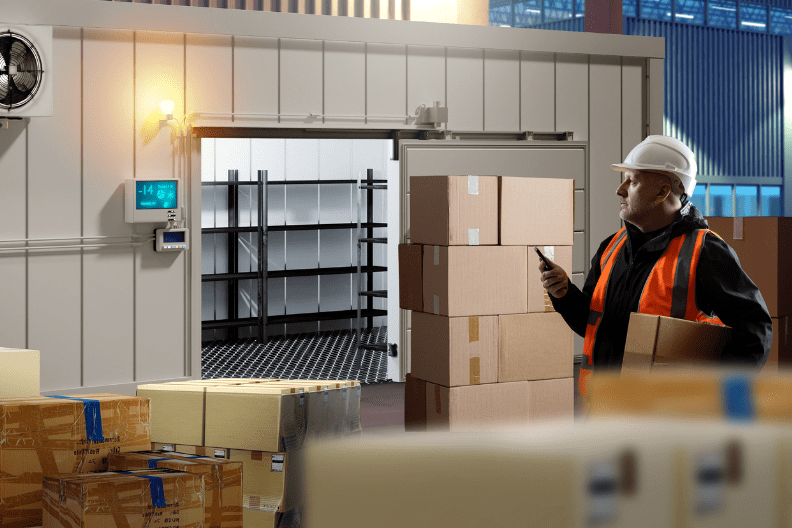
Imagine carrying a glass of ice across a desert without it melting. This is the challenge faced by those managing the cold chain. This process is a unique supply chain operation that requires specialized equipment to ensure quality and safety throughout the product’s lifecycle. It primarily involves managing temperature-controlled deliveries, but it can also include monitoring air quality levels, such as carbon dioxide, humidity, and oxygen. An effective cold chain requires a continuous, constant supply of temperature-controlled conditions and products, starting from production through packaging, transport, storage, and distribution.
The cold chain covers a wide range of temperatures depending on the temperature-sensitive product being used, from -30°C for shrimp and ice cream to 12-14°C for certain fruits and vegetables. Vaccines, for example, are typically stored at temperatures between 2 and 8°C and can be damaged by excessive heat or cold.
If at any point between pickup and delivery, a shipment of refrigerated products or temperature-controlled cold chain products ever exceeds a specified temperature, the integrity of the refrigerated vehicles or cold chain products may be compromised, and the shipment will likely need to be disposed of.
The production of appropriate packaging, cooling units, storage, and transport of temperature- and condition-sensitive products is complex, demanding, and expensive. This is becoming increasingly critical as safety standards for pharmaceuticals, chemicals, and perishable food leave no room for error. These temperature-sensitive products require exceptional compliance with cold chain requirements.
Equipment for delivering and storing low-temperature-sensitive goods makes the level of difficulty go beyond a standard supply chain due to the need for strict temperature control. With rugged devices designed for the environment, those involved in cold chain management can help ensure the safety and quality of these critical products using the right technology.
Trends in the cold chain management process
Meeting the need for safe and efficient transport of perishable food and goods requires consistent investment in cold chain technology and infrastructure.
Growing demand for cold chain logistics
The global cold chain logistics market is projected to exceed $410 billion by 2028. Many pharmaceutical products, such as vaccines, biologics, and active pharmaceutical ingredients, require transport at low temperatures with standardized temperature control and zones, as well as strict monitoring of their range. Temperature-sensitive food and fresh produce are shipped worldwide, with some requiring appropriate temperature control to support controlled ripening.
Regulatory environment
Depending on where a cold chain logistics industry operates, several agencies oversee the compliance of cold chain goods. These include the World Health Organization, the U.S. Centers for Disease Control, the U.S. Food and Drug Administration, and European Union Good Distribution Practice guidelines. Regulations typically require uninterrupted documentation of cold chain storage to ensure product safety, especially for temperature-sensitive products used in the pharmaceutical industry.
Traceability
Regulators and consumers want to know where food products come from and how they are processed to ensure food safety and ethical sourcing. They want the same degree of traceability as with pharmaceuticals and medical materials, where it is crucial to be certain that goods are genuine and have been stored and shipped in accordance with regulations.
Challenges in cold chain management
Changing market conditions and accelerated demand pose challenges for the cold chain industry:
Real-time visibility
Even short-term temperature spikes in refrigerated containers can cause some temperature-sensitive food products to spoil. Today’s standards require real-time monitoring and alerts for temperature excursions. Mobile devices can help increase productivity by scanning temperature loggers inside refrigerated containers or cold storage and uploading data to the cloud for analysis. Workers alerted via mobile devices can take immediate action to maintain the quality of temperature-sensitive goods.
Documentation
Regulations and compliance require verification that every step of the product cold chain and the shipping environment receiving low-temperature deliveries meets legal standards. If a failure has occurred, there must be a plan to address the spoilage and ensure that products do not reach the end user. As part of the technology stack, mobile devices can help provide accurate, real-time information throughout the cold chain process.
Cold chain technology
The cold chain industry is constantly developing technologies to ensure the safety and quality of temperature-sensitive products. Refrigeration equipment, vehicles, containers, cold packaging, and other elements are critical to the cold chain management process. These components of the entire supply chain will be connected to the Internet of Things to monitor temperature-sensitive products and enable cold chain providers to respond quickly and effectively to issues to maintain a temperature-controlled environment.
The value of rugged mobile devices in cold chain management
Rugged devices provide access to information and connectivity closer to the point of work. In cold chain management, devices must be equipped and adapted to the required temperature range. Otherwise, the devices may be damaged or stop working, compromising the integrity and durability of the cold storage equipment needed to conduct chain operations.
Many standard COTS laptops are designed to operate in ambient temperature ranges from 10 to 35°C. A COTS tablet device may operate in a wider temperature range from -20 to 45°C. The recommended operating temperature range for non-ruggedized devices makes them unsuitable for cold storage and cold chain management.
While using COTS devices for cold chain management may be tempting, it may not be the most cost-effective option in the long run. Rugged devices that meet high standards for durability, temperature, shock, moisture, and other hazards ensure a long service life in harsh environments. With durable, rugged devices, there is less likelihood that a failure will negatively impact supply chains or cold chain operations.
Source: Getac