








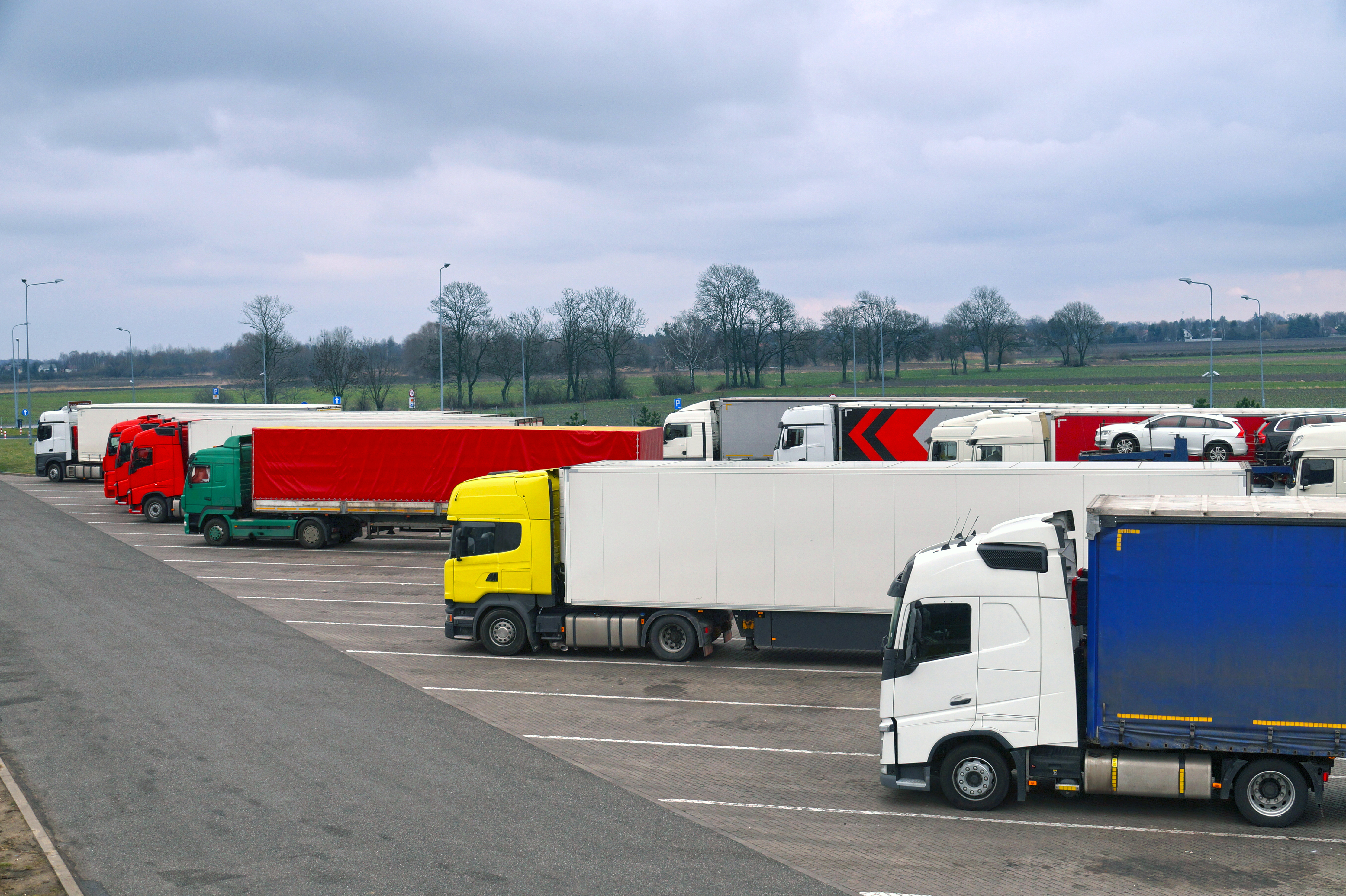
Undercutting rates by competitors, rising operating costs, and a decreasing number of orders are the main problems for companies in the freight forwarding sector, according to a Transcash survey conducted among industry representatives. These are the aftermath of broader problems plaguing the entire TSL sector, among which the impact of the geopolitical situation on its condition deserves special attention.
Freight forwarders in trouble
Over 68% of our respondents admitted that their company’s situation has worsened over the last 12 months. Only slightly more than 9% declared an improvement, and the rest do not see significant changes in the condition of their enterprise. When asked about the factors that most influence the current state of the transport market, our respondents placed the geopolitical situation and the decline in global production in first place ex aequo (50% of indications in a multiple-choice question). In third place, with a result of 45.5%, was the increase in road tolls.
Costs will rise
The long-awaited declines in inflation levels in recent months have not brought the expected relief. The industry, strained by rising costs, is experiencing a crisis that has forced many companies to cease operations. This trend in relation to the entire economy is shown by the latest Dun&Bradstreet analysis, which reports a record number of 250,000 suspended businesses and 4,200 corporate restructurings in Poland in 2023.
|
Photo source – Freepik.com |
– Operating costs in the TSL sector are constantly rising, also driven by EU regulations. The directive making the amount of tolls dependent on the scale of CO2 emissions has caused a drastic increase in road tolls in Germany, by over 80 percent for vehicles meeting the Euro 6 standard. By March 24, 2024, all EU countries must implement the directive, which means further price hikes for companies involved in international freight transport – comments Jakub Gwiazdowski, Head of Partnership & Relations at Transcash.
In turn, the international situation affects the industry in often unpredictable ways. Farmers’ strikes sweeping across Europe are also a huge hindrance for carriers. In Poland, they are associated not only with EU legislation but also with the desire to limit privileges for food suppliers from Ukraine. After the outbreak of the war, Poland enabled duty-free imports of goods from that country, which reduced the competitiveness of, among others, Polish farmers.
Historic drops in freight rates
We asked those who declared a worsening of their company’s situation about the reasons for this state of affairs as part of a multiple-choice question. They included undercutting rates by competitors (63.64%) and rising operating costs (61.6%) as the most important. A decrease in the number of orders is a problem for half of our respondents. The smallest group (40%) pointed to a decrease in margins.
– Freight rates, the number of orders, and payment terms are the most frequently indicated factors that, according to survey participants, affect the functioning of transport companies. Although the discussion about the decreasing number of drivers does not cease, less than 5 percent of our respondents considered this factor significant for the company’s daily operations – says Jakub Gwiazdowski from Transcash.
The drops in freight rates and the uncertainty associated with them are confirmed by the latest Upply x Ti x IRU report. According to the organization’s data, in the fourth quarter of 2023, rates in Europe clearly decreased, resulting in a reduction of their value in spot orders compared to contracts – this is the first such case since the beginning of 2017. The difference amounted to as much as 6 percentage points. This phenomenon was not recorded in Poland, which does not change the fact that rates were systematically falling throughout 2023, most strongly in relation to spot rates.
A way to stop the declines could be the introduction of a pan-European minimum freight rate. The Hungarians followed this path, who, by means of a regulation, established an algorithm calculating it based on variables related to transport, such as the amount of the road toll, distance, or fuel price.
Good relations with carriers
Freight forwarders asked by Transcash about what attracts carriers to them point to two issues: a reputation as a reliable payer and long-term contracts. Freight forwarders looking for new subcontractors must therefore ensure their stability, i.e., constant orders and certain payment on time.
These indications are not surprising, given the scale of payment bottlenecks in the TSL industry. As shown by the “SME Scanner” survey, carried out by Big Info Monitor in the first quarter of this year, 54% of transport companies work with contractors who delay payment for more than 60 days after the original deadline. This makes the transport sector an infamous record-holder compared to other surveyed industries, not only in terms of payment terms but also in the rate of growth of arrears. In 2023, the debts of TSL companies increased by 18%, exceeding PLN 3 billion, with an average for the SME sector at the level of 6%.
Good relations with carriers are built by payment credibility, which is difficult to achieve without financial stability. Support in this area can be eSkonto, a service thanks to which a freight forwarder is able to pay its carriers without involving its own funds.
– Regardless of whether a carrier decides to finance an invoice as part of the eSkonto service, this possibility in itself increases the payment credibility of the freight forwarder. This is especially important in a difficult period for the TSL industry, the end of which is difficult to predict – concludes Jakub Gwiazdowski.
Source: Transcash