








It is not just vaccines that require a cold chain for transport. Popular over-the-counter fever reducers, immune-boosting supplements, or inconspicuous suppositories require special storage conditions. Otherwise, their medicinal properties, consistency, shelf life—in short, their stability—are compromised. Interestingly, popular courier companies do not accept liability for such situations. Why?
Transport service providers explicitly state in their terms and conditions that they do not handle the transport of medicines, i.e., products requiring special storage conditions. However, as it turns out, even widely available “over-the-counter” products require at least room temperature (between 15°C and 25°C), which is almost impossible to achieve in a standard delivery van during the summer. If an ordered medicine is damaged (e.g., melted paracetamol suppositories, softened tablets, etc.), the customer can file a complaint with the entity that commissioned the courier service. This situation puts pharmacies, wholesalers, and pharmaceutical manufacturers in an uncomfortable position. Not to mention consumers, who are exposed to the use of substandard preparations. Where should the pharmaceutical industry look for support in the transport of medicines?
Delicate pharmaceuticals – what do they need?
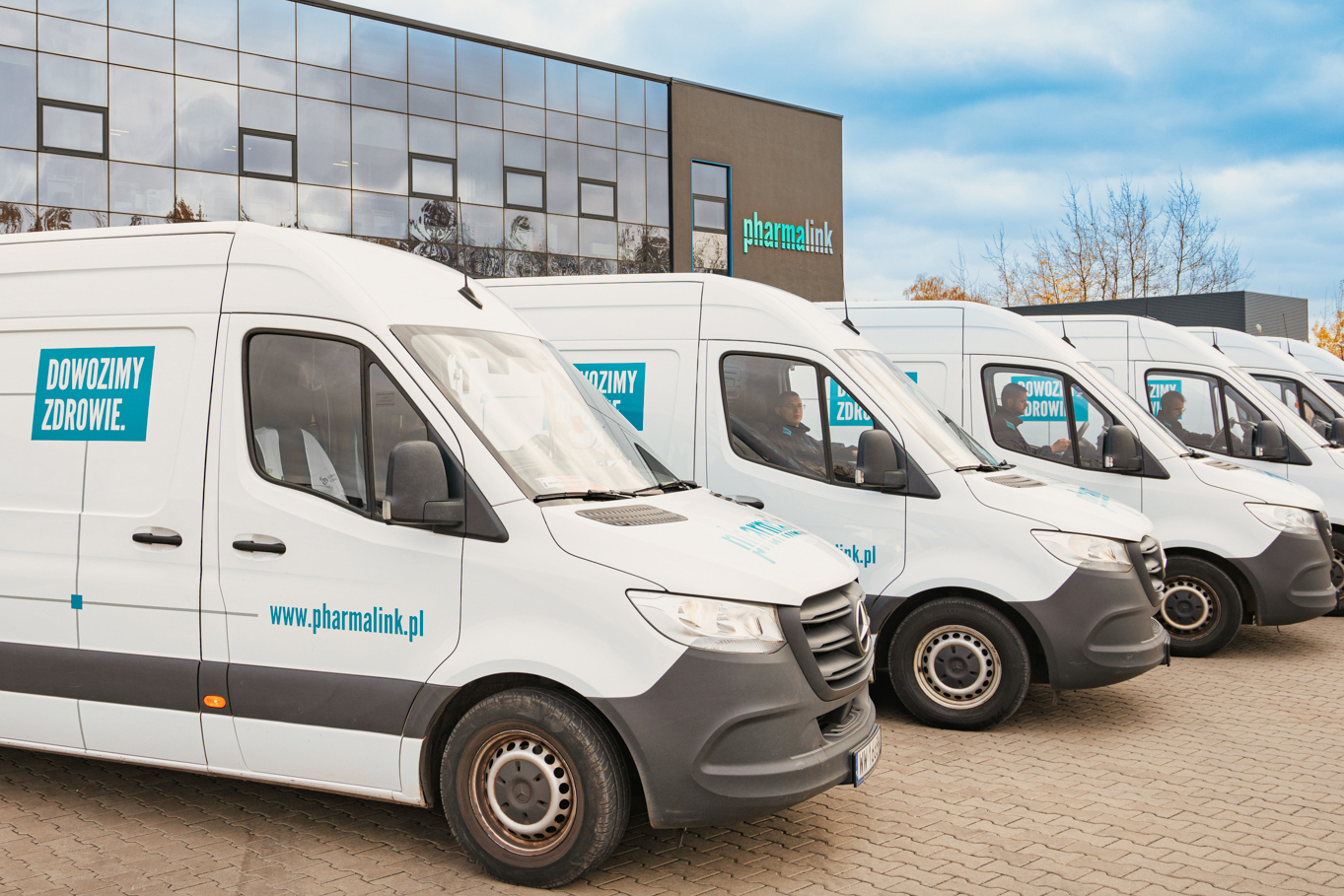
Transport under controlled conditions, which all pharmaceuticals require, necessitates a special fleet and warehouses. The goal is a specific temperature range regardless of weather conditions: 15-25°C (warm chain), 2-8°C (cold chain), and below -20°C (in dry ice). This allows for the preservation of the composition and properties of pharmaceuticals, avoiding damage, spoilage, or loss of effectiveness. Standard delivery vans do not pass the test here. That is why, in the pharmalogistics industry, vehicles are equipped with dual-chamber isothermal bodies, heating and cooling units, and modern monitoring systems to control temperature and other critical parameters during transport. Additionally, the fleet is covered by a continuous GPS tracking system – 24 hours a day, 7 days a week. The vehicles are also equipped with portable refrigerators, useful during the transport of pharmaceuticals requiring appropriate temperatures between the vehicle and the pharmacy or hospital.
Specialization and full control
Importantly, logistics operators providing services for the pharmaceutical industry carry only medicines and medical products in their vehicles, which is a guarantee of safety. Qualified employees are well-acquainted with the layout of medical facilities, which significantly shortens the delivery time of pharmaceuticals. Trained personnel have a much greater awareness of the importance of efficiency and speed in handling shipments under controlled conditions. Most importantly, every deviation from the established cooling requirements is reflected in a report. The GPS system and the Temperature Department effectively support drivers in preventing such situations. If the temperature approaches alarm thresholds, i.e., 3°C or 7°C, the driver receives an alert. This message is also sent to an employee of the Temperature Department. At this point, the driver can change the settings of the cooling unit. After the shipment is delivered, the employee can provide the recipient with a printout containing detailed data on the ambient temperature during the entire storage and transport process, giving the recipient certainty that the medicines were stored and transported under appropriate conditions.
[Even] shorter path for medicines
Pharmalogistics leaders are able not only to transport medicines safely and responsibly but also to significantly shorten their path to the customer. This happens, among other things, thanks to special services such as distribution in DtP and DtH models. Direct distribution is an alternative to the classic model of medicinal product distribution, in which pharmaceutical wholesalers play a key role. In DtP and DtH, the pharmaceutical company, i.e., the manufacturer, remains the sole owner of the medicines throughout the entire distribution process. In turn, the logistics operator carries out, on behalf of and for the benefit of the manufacturer, all necessary activities related to the logistics and administration of the sales process, assuming full responsibility for it. The DtP and DtH models, which are implemented in Poland by companies such as Pharmalink, shorten the path of medicines to pharmacies and hospitals, ensuring safe and quick access for patients. These models are also beneficial for pharmacies and hospitals, which do not have to store large quantities of medicine stocks to have quick access to them.
– As a specialized logistics operator for the pharmaceutical industry, the moment we take over a medicine from the manufacturer, we become responsible for it, both in terms of transport and storage. That is why we have control over the conditions in the vehicle and all security measures in the warehouse. We constantly train our staff because the safety of medicines depends on them. Our employees from the temperature department know, for example, exactly where the vehicles are, or at what temperatures the pharmaceuticals were distributed and delivered to the end recipient. We are aware of the risk to human health and life that our work entails, which is why for us it is not just a job, but also a mission – says Daniel Charucki, Transport Manager at the logistics company Pharmalink.
In summary, the work culture, equipment, and services provided are designed by pharmalogistics operators from start to finish with the needs of the pharmaceutical and healthcare sectors in mind. It is hard to find a more clear example of the huge role that specialization plays in the quality of services provided.
Source: Pharmalink