








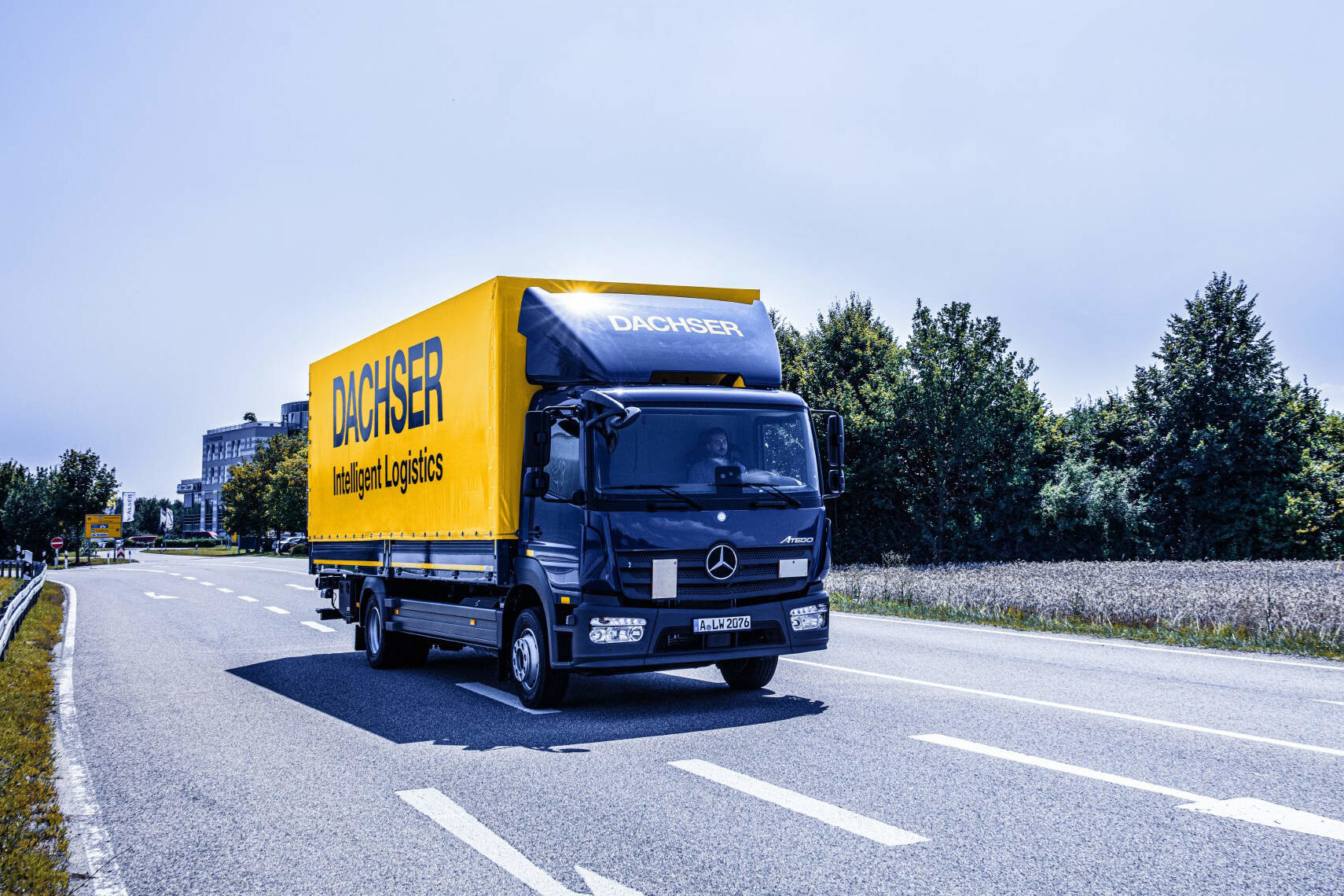
At the beginning of February, the international logistics operator DACHSER launched its first customs warehouse in Poland. This is an important element in the development of the operator’s global logistics network, as well as a complement to the comprehensive offer of the company’s Rzeszów branch, which supports companies from the Podkarpacie and Eastern Lesser Poland regions in building efficient supply chains.
Rzeszów is strategically located in the south-eastern part of Poland, close to the borders with Ukraine and Slovakia and at a relatively short distance from the border with Belarus. This makes it a convenient location for storing and inspecting goods delivered by manufacturers and distributors to countries in South-Eastern Europe.
A customs warehouse means greater efficiency
The DACHSER branch in Rzeszów has been operating since 2019 and is located at the Rzeszów-Jasionka Airport, in the immediate vicinity of the A4 motorway, which is part of the E40 international road connecting Ostend in Belgium with Kyiv. The branch has a modern contract logistics warehouse with an area of 2,100 square meters and a transshipment terminal with an area of 1,530 square meters. In addition to road transport and warehousing, it also handles intercontinental freight, including air shipments. Every day, it carries out connections with 34 countries in Europe and the other nine DACHSER branches in Poland, which handle a total of nearly 100 daily European groupage connections. It is prepared to handle ADR shipments and ensures smooth and compliant transport of goods in international trade. Furthermore, the DACHSER Customs Agency unit not only advises on issues related to customs clearance but also handles all formalities such as customer registration or data archiving.
– The customs warehouse is another important step in the development of the DACHSER Rzeszów branch, following the launch of a regular supply line from Jasionka to Lviv and Kyiv in the autumn of 2023. Thanks to the new service, customers can optimize the customs and tax process, both in terms of customs clearance and documentation procedures, which can accelerate the flow of goods in international trade and increase the cost-efficiency of businesses run by our customers – said Dariusz Walo, Customs Manager at DACHSER.
The DACHSER customs warehouse in Rzeszów is a warehouse approved by customs and tax authorities and remains under their constant supervision, intended for the storage and keeping of “non-EU” goods, which, covered by this customs procedure, are not subject to import duties or trade policy measures. It also allows for the storage of cargo without time limits and, which is extremely important for importers and exporters, the deferral of customs and tax duties until the moment when the goods or a part thereof are released for free circulation or re-exported. It is also possible to make changes to the goods, in particular repacking, dividing goods into smaller batches, mixing, labeling, maintenance, or taking samples and conducting tests. Thanks to this solution, companies minimize storage costs while maintaining all safety standards and full protection of the goods. It is also a facilitation for the transit of goods that can be stored in a customs warehouse while passing through the territory of Poland. Furthermore, DACHSER ensures fast and efficient execution of customs operations without the need for the customer to be present at the warehouse. This is possible thanks to obtaining the status of an Authorized Economic Operator (AEO), which is recognized in all member states.
DACHSER as a gateway to the world
In all locations in Poland, DACHSER has Temporary Storage Warehouses and Approved Places. This is particularly important in the context of changes in customs regulations that will apply in Poland from May 1, 2024. The new legal system does not provide for the possibility of using the simplified procedure in export operations in its current form. Therefore, DACHSER has introduced a model for clearing goods to the United Kingdom, whereby goods leaving Poland are cleared already at the import stage. In practice, this means that goods leaving the last cross-dock in the European Union are delivered directly to the final recipient in the United Kingdom – meaning they no longer need to be stopped along the way.