








In the face of dynamic market changes, the chemical industry is focusing on finding the most effective logistics solutions that will not only ensure transport safety but also contribute to saving time and money. The choice of road transport type is of great importance. A DACHSER expert advises when to choose LTL, FTL, or network groupage to optimize logistics costs.
In 2022, the total value of Polish exports in the chemical sector amounted to nearly PLN 227 billion – an increase of approximately 16 percent compared to the previous year. Preliminary data for 2023 also indicate market growth, although not as dynamic as in 2022, there is still potential for optimization, especially regarding financial costs.
Due to a lack of adequate planning, companies often make decisions regarding transport means in a routine manner, skipping the analysis of previous deliveries. Such a practice can lead to a situation where we overpay for a specific service. It is also common practice to choose transport means based solely on unit price, ignoring potentially hidden costs such as administration or other additional fees. Careful selection of the delivery type allows for significant cost minimization across the entire supply chain, taking into account both direct costs and those that can be easily overlooked with a superficial approach.
Transport of special care
Special transport requirements for chemical products include not only appropriate temperature conditions and security but also compliance with safety standards, both during transport and transshipment. The transport of hazardous materials is covered by ADR regulations (European Agreement concerning the International Carriage of Dangerous Goods by Road) and involves a number of legal requirements aimed at ensuring safety in transport and minimizing risks to people, property, and the environment.
– In the case of transporting hazardous materials, it is also important to use the services of experienced operators who are aware of the risks associated with performing this type of transport operation, both during transport, loading, unloading, and warehouse handling – What type of transport is best to choose for your products? Specialist Ewelina Staszewska Kobiela, Business Development Manager at DACHSER Chem Logistics in Poland, explains – When optimizing costs, precise knowledge of the service, including the advantages and disadvantages of a given solution, is key. In the case of transporting hazardous materials, it is also important to use the services of experienced operators who are aware of the risks associated with performing this type of transport operation, both during transport, loading, unloading, and warehouse handling.
For whom FTL, and for whom LTL?
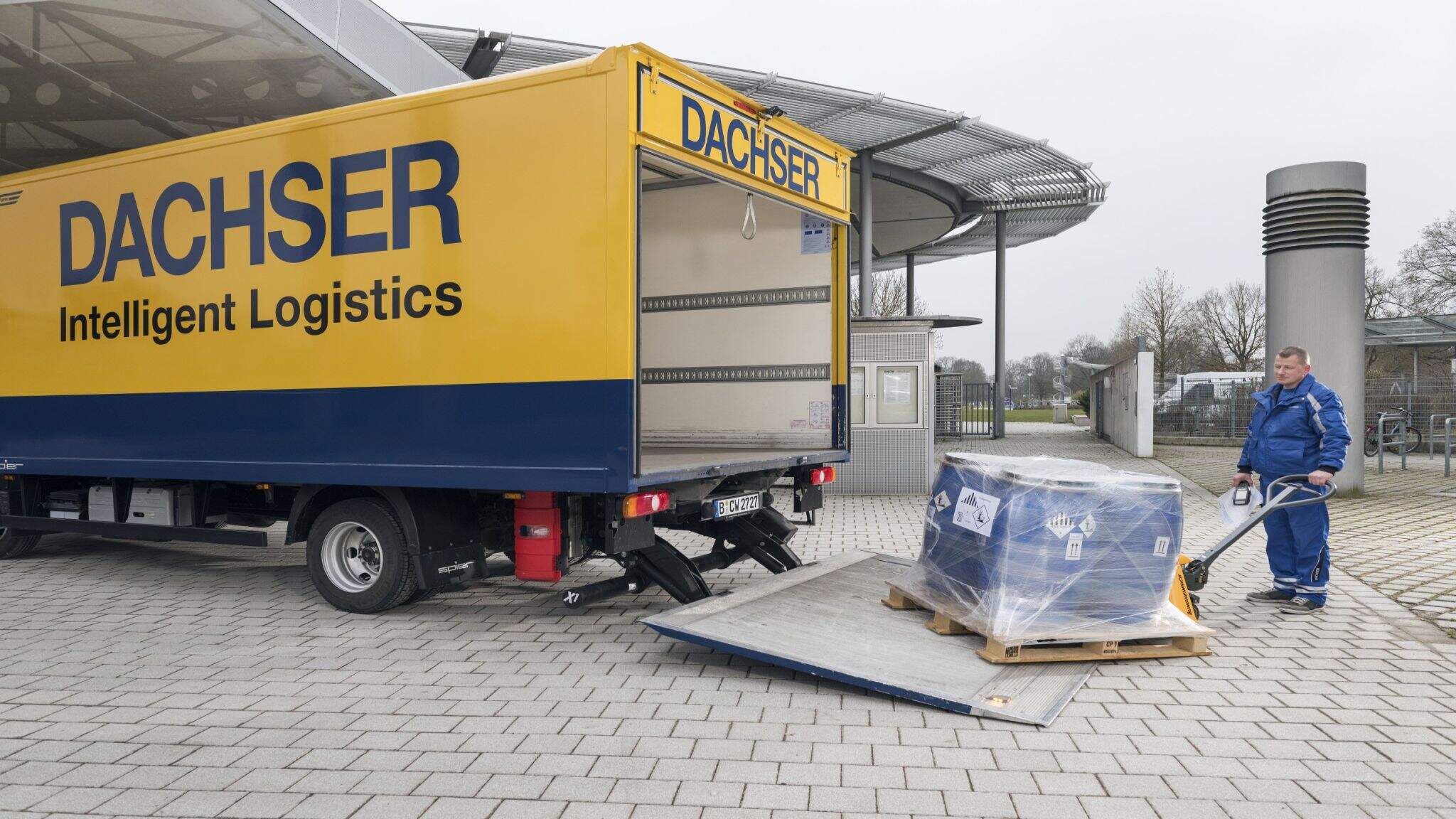
Full Truck Load (FTL) transport assumes that the entire cargo space in the vehicle is reserved for one customer. From an economic point of view, this type of transport works best when there is a need to transport a larger load that can occupy the entire surface of the trailer. Services of this type are most often used by larger companies that do not want to share space with other shippers or want to deliver the shipment quickly without stopping at intermediate points. It is certainly also a good solution if we want to deliver goods in a very short time, from day to day, on the weekend, or at non-standard hours. However, in the case of smaller quantities of goods and incomplete use of cargo space, choosing FTL can lead to inefficient fuel consumption and, consequently, higher CO2 emissions per shipment, which is synonymous with incurring higher costs, including environmental ones.
Customers are increasingly looking for more ecological solutions. Modern groupage deliveries, including those organized by DACHSER, are carried out via transport based on swap body containers with a double floor, which can be used to deliver up to 76 pallets to the nearest consolidation warehouse. Vehicles handling BDF bodies consume 30-32 liters of fuel per 100 kilometers, making the environmental burden 85 percent lower per shipment than in the case of FTL delivery. Therefore, when choosing the type of transport, the size and weight of the cargo should be taken into account.
For smaller quantities of goods, where the available cargo space is shared between different shippers, using LTL transport can be an optimal choice. In practice, this means that the shipper pays only for the used cargo space.
It is worth noting, however, that LTL transport may involve a longer transit time compared to FTL and network groupage transport. The driver, having goods from different shippers on board, must deliver the loads to different places, which in practice involves extending the route and, consequently, the delivery. Moreover, delays can be affected by the waiting time for filling the entire cargo space in a given direction.
Despite these challenges, LTL transport is an excellent solution when the goods are too heavy for a network groupage operator, and at the same time too small to qualify for FTL transport. This method of transport becomes profitable especially in situations where there is no need for urgent delivery of goods, and the shipments are directed to different recipients.
An important issue here is also the price of the service. At first glance, LTL seems to be a cheaper solution than groupage. However, it is worth noting that the price of LTL depends on the time of year. During transport peaks, e.g., in December, the same shipment costs significantly more than in the so-called dead period, e.g., during the holidays. This makes planning and cost management difficult. When creating delivery schedules, an annual analysis of transport costs can be helpful. If the sum of expenses for LTL is similar to the costs of network groupage transport, it is worth considering a complete switch to groupage to generate significant savings related to the administrative handling of shipments. When choosing the type of delivery for chemical materials, including hazardous ones, the logistics company’s preparation for handling this type of goods should also be taken into account.
For whom is groupage?
Network groupage transport, i.e., one in which shipments go to transshipment points, so-called cross-docks or logistics hubs, works best for loads with lower weight and volume. At DACHSER, this includes shipments up to 4 tons and 3.2 ldm. This type of transport enables efficient distribution of small shipments to various locations in Europe, while maintaining all necessary rules regarding the transport of hazardous materials. In groupage, a dedicated IT system watches over their safety. It calculates ADR points, checks whether a given UN number can travel on the same truck as another, etc. In the case of LTL transports, this can look different; everything depends on the company that carries out the delivery. It is also worth paying attention to the schedule of line departures in a given direction. DACHSER offers daily connections with all of Europe according to a fixed schedule, which significantly facilitates planning and foreign expansion, ensuring ease and speed of entry into new sales markets.
– Network groupage transport allows for considerable flexibility both in terms of the type and size of the cargo, and in the case of the need to intervene in the delivery. At DACHSER, this is possible at every stage of its journey to the customer. We can stop a shipment even if the driver is already standing in front of the recipient’s door. And what if something gets damaged in transport? This is also not a problem for us. The shipment, while at the cross-dock, can be repacked, secured, additionally labeled, or even stopped and replaced with new goods, and these can be key issues in the case of transporting hazardous materials – emphasizes Ewelina Staszewska-Kobiela.
Source: Dachser