








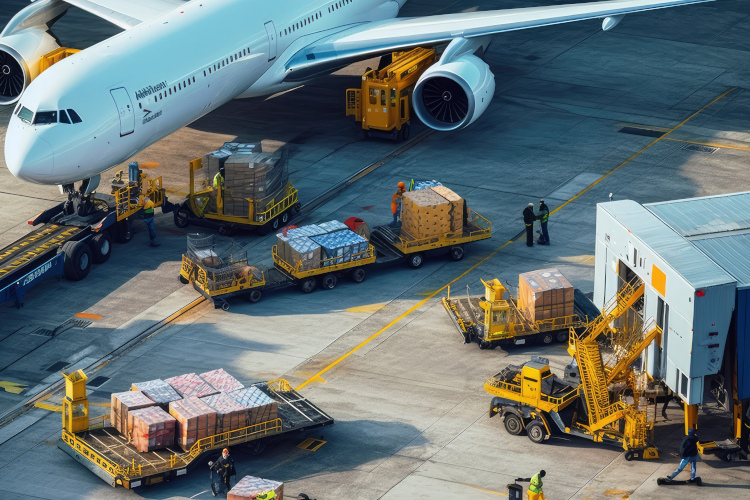
According to the assumptions, the Central Communication Port (CPK) is to connect key air, rail, and road transport points. There is an ongoing discussion about whether Poland needs such a logistics hub. “If we want this project to have a chance of success, we need changes in customs and tax law. Without them, we have no way to compete with Western European countries,” says Joanna Porath, owner of the AC Porath customs agency.
“Currently, the Polish legal system lacks the tools to efficiently conduct fiscal clearance, as used at the largest European airports, while limiting the liability of the representative – in this case, the customs agency,” explains Joanna Porath.
- The creation of an air-rail hub should begin with preparations for its legal and customs handling;
- Currently, a client importing goods into Poland would incur higher costs than in Western European countries;
- Control activities are also an obstacle: it has still not been possible to create a single institution for the inspection control system.
Higher costs for the importer
In Western countries, e.g., Germany or the Netherlands, when the cargo recipient is from the European Union, has an active European tax number, and the goods are to leave the territory of the member state to which they were delivered by air, fiscal clearance can be applied. A separate issue is the currently applicable VAT rates. A client importing goods in Germany, for example, pays 19 percent VAT, in the Netherlands 21 percent, and in Poland – 23 percent, meaning they would incur higher costs in our country.
“It consists of the fact that at the moment of customs clearance in the release for free circulation procedure, the client only settles customs duties to the member state where the goods arrive and where the customs clearance is performed. Tax liabilities (VAT) on imports are settled in their tax return. Therefore, it is not settled physically, in cash. However, in Poland, VAT is standardly settled at the time of clearance – to the account of the National Revenue Administration or to the account of the agency that prepays it to customs and tax authorities from its customs guarantee,” says Joanna Porath.
Fiscal clearance as applied in Germany or the Netherlands has similar effects to the procedure using Art. 33a of the Act on Tax on Goods and Services in Poland, which allows for deferred settlement of import tax in the tax return for a given month.
“However, using it requires many permits, verifications, and the consent of the head of the customs and tax office, so it is not only more time-consuming but also more complicated. To apply it correctly, you need well-trained employees,” explains Joanna Tymińska, an expert in customs and tax law at the AC Porath Customs Academy.
A separate issue is the currently applicable VAT rates. A client importing goods in Germany, for example, pays 19 percent VAT, in the Netherlands 21 percent, and in Poland – 23 percent, meaning they would incur higher costs in our country.
Liability for customs debt
Furthermore, Poland lacks competitive regulations when the recipients of goods in Poland are companies from outside the Union that have an address and tax representation in our country but do not have a VAT number or a registered office within the EU.
“In such a situation, it is the customs agencies or tax representatives who act on their behalf before the customs and tax office (so-called indirect representation clearance). In the Act on Tax on Goods and Services, we have so-called subsidiary liability, which means that both the agency and the importer are responsible for the customs debt, i.e., for the customs duty and VAT that burden these goods. In cargo, we primarily have e-commerce shipments, i.e., small ones; for example, one air shipment may have about 3,000 recipients. Who will take on the customs debt in such a situation? This is a huge risk,” says Joanna Porath.
In Western countries, direct representation is most often used – as the safest form of protection against obligations resulting from representation.
“However, the Polish Tax Ordinance has combined indirect (subsidiary) liability with customs simplifications, which results in the fact that by using customs simplifications in Poland – including the simplified application of Art. 33a – the entrepreneur and the agency are jointly liable for the unsettled customs debt, i.e., the import VAT,” adds Joanna Porath.
Without changing the law, we will not attract importers
Control activities are also important. If the hub in Poland is to be the first customs office of entry into the EU (e.g., for goods from the Far East or North America), the goods must pass all administrative controls that apply in our country, including veterinary, sanitary, and phytosanitary checks. These procedures are very detailed and time-consuming, and efforts to create a single institution for the inspection control system in Poland have so far failed.
“Meanwhile, if someone uses the hub in Frankfurt am Main, the procedure is much simpler. Concentrating all phytosanitary and veterinary requirements within one control office, as is the case in Germany, means that we have one institution to which we submit an application for inspection – and not several, as is the case in Poland. Besides, in Germany, there is no such institution as the sanitary inspection (sanepid), so in our country, some types of goods undergo one extra control. Therefore, if we want to think about an air-rail hub, we should start with preparations for its legal and customs handling. We can build a huge airport and high-speed rail, and we still won’t attract importers precisely because of formal difficulties,” says Joanna Porath.
Source: AC Porath