








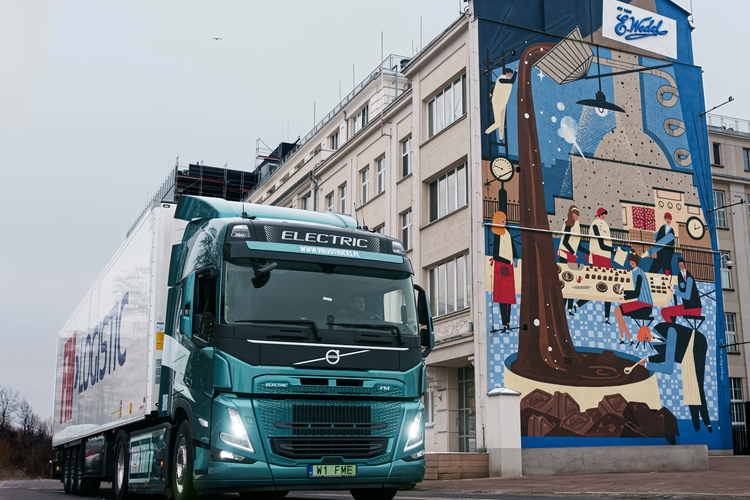
Electromobility was certainly one of the most repeated words in 2023 in the context of the TSL industry. It was also one of the most repeated words at FM Logistic. The logistics operator is moving from words to action, seeking solutions to implement its sustainable development strategy in transport. Over 1.81 tons of CO2 saved after covering nearly 1,900 kilometers. This is one of the results of recently completed electric fleet tests. This time, they were conducted jointly with the companies Makro and Lotte Wedel.
FM Logistic monitors the environmental impact of its clients’ transport to choose the best combination of transport solutions based on reliable data on CO2 emissions and air pollution. It works with partners to propose alternative energy sources in transport. Experience and data collected during previous tests on a smaller vehicle prompted the company to expand the test program to larger vehicles. The truck, along with a modern refrigerated trailer from the FM Logistic fleet, transported goods for FMCG clients – Makro and Lotte Wedel, i.e., fresh products such as vegetables, fruit, and meat, as well as chocolate products.
– We are carefully observing and actively engaging in FM Logistic’s efforts towards creating more sustainable transport solutions, including through the development of electromobility. It is an integral part of Wedel’s value chain, which is why we are pleased that this approach is consistent with ours and fits into the nature of the CO2 reduction initiatives we are planning, as the next stage after calculating our organization’s carbon footprint. – explains Aleksandra Kusz vel Sobczuk, Corporate Communications and ESG Manager at Lotte Wedel.
During the eight days of testing, the vehicle covered nearly 1,900 km and performed 11 transports on the Mszczonów – Warsaw route, carrying goods in controlled temperature conditions, which further increased the analytical value of the tests.
– Temperature-controlled transport is an important part of the services we offer. During the tests, we wanted to check how an electric tractor would perform in this segment. The tests provided us with valuable information on how vehicle range changes depending on various factors, such as road category (expressway, local, or urban), traffic intensity, weather conditions, weight of the transported load, driver’s driving style, and rolling resistance obtained. Furthermore, we examined the impact of recuperation on range, the amount of energy that can be recovered, and identified optimal locations and power requirements for chargers. Analyzing this data will allow us to assess the feasibility of using fully electric heavy-duty vehicles in transport and will help develop the right business strategy and a detailed fleet electrification plan depending on the industry and region of the country – explains Andrzej Wacyk, Transport Administration and Support Director – Central Europe, who oversees the implementation of the electromobility strategy at FM Logistic.
Access to charging infrastructure is one of the key challenges in implementing an electric fleet. According to the latest report “Polish EV Outlook 2023” prepared by the Polish Alternative Fuels Association, to date, only 10 out of 37 obligated local governments have fulfilled their duties regarding the minimum number of charging points provided for in the Act on Electromobility and Alternative Fuels. Meanwhile, the deadline for meeting these requirements expired in March 2021. Data contained in the PSPA report also show that almost 60% of publicly accessible charging stations operate in 37 cities with over 100,000 inhabitants. Warsaw is the leader, followed by Gdańsk, Katowice, Kraków, and Szczecin. Among the voivodeships, the Masovian Voivodeship leads, with its share in the Polish infrastructure network amounting to over 17%. It is followed by the Silesian (13.1%) and Pomeranian (9.8%) voivodeships. The lowest share of points was recorded in the Świętokrzyskie (1.1%), Lublin (1.8%), and Lubusz and Podlaskie (2% each) voivodeships.
Planning long-distance transport using electric vehicles is currently difficult, therefore the use of this type of fleet is concentrated on local distribution. Car manufacturers are still working on increasing battery capacity, but the expansion of the charging point network, especially those located along motorways and expressways, will be crucial for the development of electric transport. Especially since the number of registered cars is constantly growing. According to data provided by the Electromobility Counter, at the end of November 2023, the number of registered electric vehicles in Poland reached 94,000 and increased by 54% compared to the previous year. Moreover, the number of electric delivery and heavy-duty vehicles has already reached 5,600. This is a clear signal that electric solutions are gaining importance in the freight transport sector as well.
The vehicle used for the tests itself, equipped with modern solutions, received positive feedback from drivers. The cabin is quiet, and the driver’s working comfort has been significantly improved. The vehicle’s technical parameters, telematics solutions, and ease of operation were also rated positively. However, convenience is not the key issue. Replacing the internal combustion engine with an electric one allowed for a reduction in CO2 emissions by over 1.81 tons over a distance of 1,900 km.
– Such results are gratifying, as they bring us closer to implementing the Transport 4.0 plan, which is one of the elements of the Powering 2030 strategy adopted by FM Logistic in 2021. – adds Andrzej Wacyk. – The assumption of the strategy is to build sustainable logistics and responsible supply chains that are friendly to the world. The effect is to be a change in consumer habits and conscious and sustainable consumption.
In 2024, FM Logistic plans to continue the transformation project towards zero-emission transport. Tests of vehicles from various segments and different brands intended for urban distribution, local transport, heavy transport, and the transport of medicines and fresh products are already planned. Already at the beginning of the year, FM Logistic will carry out its first long-term project using an electric tractor unit on regular routes. The increasingly wider scope of activities towards electromobility confirms that FM Logistic is focusing on innovative solutions that will positively influence the ecological development of the TSL industry. The first step was last year’s investment in trailers with solar panels. In turn, the Spanish branch is testing hydrogen-powered forklifts. The first results are very promising, and this project will be expanded to other countries.