








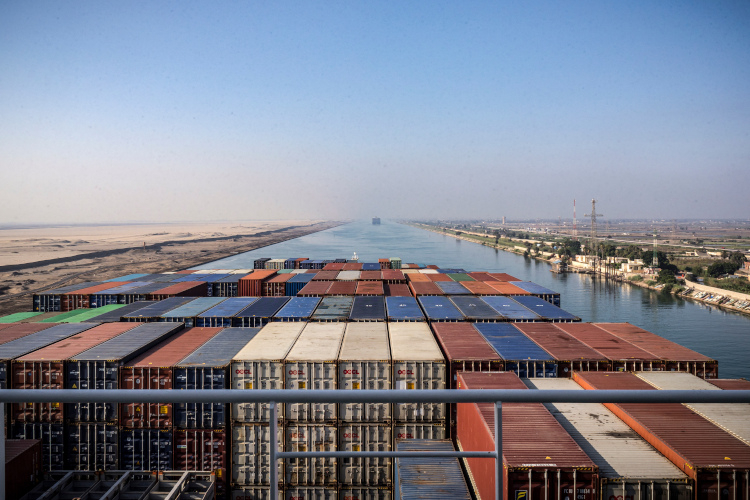
The TSL industry is facing a four-week standstill due to the Chinese New Year. Additional disruptions are linked to the geopolitical situation and carriers abandoning routes through the Red Sea.
“Not only are freight rates projected to rise, which could translate into higher prices for goods, but there is also a growing shortage of shipping containers, which could significantly impact delivery delays, including those to Poland,” says Joanna Porath, owner of the customs agency AC Porath.
Following the Danish transport company Maersk, Germany’s Hapag-Lloyd, France’s CMA CGM, and most recently the Mediterranean Shipping Company group have announced that they are diverting their vessels away from the Red Sea. The reason for these decisions was the attacks by Yemeni rebels on ships sailing to Israel. Disruptions in maritime transport, especially on the route from Asia to Europe, could affect the entire European TSL industry, including the Polish market. Rerouting cargo ships from the Suez Canal via the Cape of Good Hope will not only extend delivery times to our continent. It will also impact costs, as, for example, a container ship journey from Singapore to Rotterdam around the Cape adds an extra 3,500 kilometers.
- The geopolitical situation has led to disruptions in maritime transport;
- Changes in cargo ship routes are causing cost increases and longer delivery times;
- Disruptions in maritime transport could affect the entire TSL industry.
One should also expect higher cargo insurance premiums or goods being excluded from coverage. An importer has no influence over a carrier’s decision to change routing, and consequently, goods may be excluded from insurance due to the route passing through an area affected by war or piracy risks.
Deliveries delayed by several more weeks
The situation is not improved by the approaching Chinese New Year, which begins on February 10. Celebrations last about 2 weeks, but the downtime in manufacturing plants can extend up to 4 weeks due to employee vacations and the time needed to resume production processes. The last freight from China usually departs in early February, but the arrival time at the destination port may now be extended by another 2-3 weeks.
“We must also remember that ships may adopt a ‘cut and run’ policy, meaning they only unload import cargo and do not take on export goods, or they only take high-paying cargo. Furthermore, transshipment may occur, meaning cargo is reloaded at an intermediate port, and the container sits at the terminal waiting for the next ship. Our clients are increasingly expressing concerns that, due to the dynamically changing geopolitical situation, we may face transport disruptions similar to those that occurred during the pandemic,” adds Joanna Porath.
Source: AC Porath