








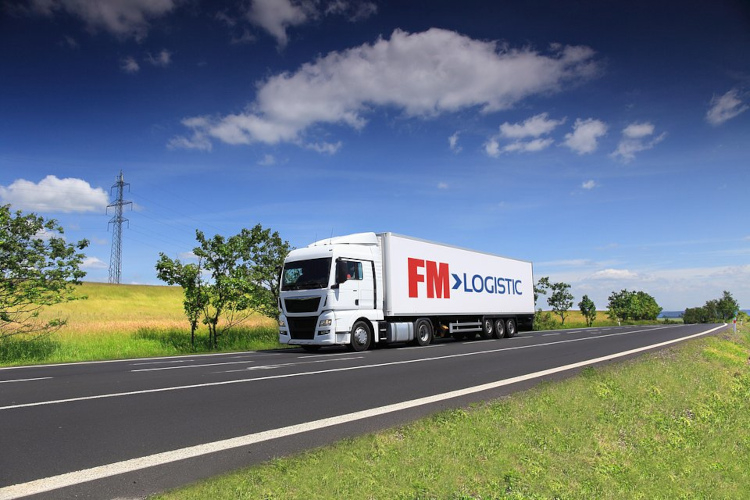
After a difficult period caused by pandemic restrictions, the fashion market in Poland is on the rise again. Analysts estimate that sales of products in the fashion industry will reach a value of nearly PLN 65 billion this year. How is it possible that the market recovered so quickly from the crisis? Experts have no doubt that this was contributed to by, among other things, the shift of shopping from brick-and-mortar stores to the Internet. Those manufacturers and distributors who could count on the support of a proven and experienced partner, taking care of the key element of e-commerce, i.e., transport, quickly gained an advantage. FM Logistic, a leader in the TSL industry in Central Europe, offers such an advantage to its clients.
Recent years have shown how enormous the importance of stable supply chains is for the global economy. In industries such as fashion, which are largely dependent on components and products from Asia, the disruption of supply chains led to a deterioration in the situation of at least half of the companies. Coming to the rescue of clothing companies were consumers who, as stated by the authors of The State of Fashion 2022 report from McKinsey, stormed stores and “bought in retaliation” as soon as it became possible. Although the phenomenon was identified in the USA, we know from other sources that the average Pole also spends quite a lot on clothes, shoes, or accessories, even more than 7% of their income. As a result, in 2023, according to analysts from the Statista platform, the level of clothing sales worldwide will reach a significant level of approx. PLN 7,560 billion. Experts emphasize, however, that only the best, who perfectly handle the new market requirements, will get a piece of this cake.
In fashion, chains (supply) count
One of the elements that must be taken care of, as it undoubtedly has an increasing impact on the profitability of companies in the fashion industry, is the optimization of the supply chain and adapting it to the increasingly higher requirements of recipients. – The fashion segment is very diverse, and consequently, the needs of both individual entrepreneurs and recipients are different. As a large, international company, at FM Logistic we can offer clients from this industry a rich offer, especially in the field of value-added services (VAS). Thanks to the fact that we have a rich fleet and our own warehouse platforms, we are flexible and act in accordance with the changing needs of the client – explains Krystian Koprowski, Senior Business Development Manager, FM Logistic Central Europe. What do these needs look like? – Because we serve key brands on both the Polish and Central European markets, we see that expectations regarding punctuality are growing above all. Even the smallest delays at one stage of the supply chain cause a snowball effect and subsequent problems, and this can translate not only into the company’s financial results but also into its image, which is currently of huge importance – adds Krystian Koprowski.
A way to avoid such situations turns out to be entrusting all or part of the logistics operations to experienced partners. A logistics operator that has extensive know-how and appropriate infrastructure can act as a so-called control tower, which supervises operations and reacts in advance to potential supply chain disruptions. – Our experience and constant observation of what is happening in the broadly understood TSL market allow us to predict some situations and prevent them accordingly. Furthermore, we use the know-how acquired over the years to advise clients on the most optimal actions for their needs. For the fashion industry, we dedicate, for example, inter-warehouse transport or transport within the so-called middle and short mile. This is a response to the specific expectations of clients – says Krystian Koprowski.
Virtual trade requires real solutions
No other industry has changed as much after the explosion of the popularity of online shopping as fashion. According to the fashionbiznes.pl website, in 2022, the number of purchases made as part of e-commerce in the fashion segment in Poland increased by over 12 percent. At the same time, the amount that consumers were willing to spend on clothing purchases increased by as much as 19 percent. According to estimates by the Admitad research agency, the number of orders in the fashion industry in January and February 2023 increased by 27 percent year-on-year. This huge market segment requires appropriate solutions from logistics operators. It is worth noting that the supply chain within online sales is not only the handling of orders and returns from individual customers but the entire system of transport, warehousing, VAS, and comprehensive returns logistics. While the quality of service for individual customers has a huge impact on the company’s image and potential income, the efficient functioning of inter-warehouse and B2B supply chains affects the operation of the entire enterprise. – As part of the multi-channel service of the e-commerce segment that we implement, we can mention, among others, dedicated e-commerce value-added services, i.e., preparing and distributing pallets with packages intended for collection in stores. For one of our clients, we also developed an optimal system of full-truckload transport of returns from individual collection points to the client’s logistics centers, which covers most European countries. Of course, as with other services, here too we are open to developing unique solutions – points out Krystian Koprowski. Tailor-made services will certainly be needed more and more, because with the development of e-commerce, there is a need to compete in an increasingly difficult environment, in which an effective supply chain will be of even greater importance.
Galleries still at the top
Despite the huge development of e-commerce, we still prefer to buy clothes, shoes, and accessories in brick-and-mortar stores. And it is inter-warehouse logistics and logistics between the warehouse and the retail point that constitutes the backbone of the fashion supply chain. Having learned from experience, manufacturers in the fashion industry, not wanting to risk shortages, focus on diversification and nearshoring in their deliveries, which generates further issues to be solved at the stage of planning logistics operations. – FM Logistic’s response to this situation is inter-warehouse projects within the client’s warehouses and the service of consolidating pallet shipments in our cross-docks. In short, it consists of transporting pallets with goods to a cross-dock, parceling them out, and re-assembling the goods onto pallets according to the client’s specification. We distribute the finished pallets to specific stores in Central Europe. Depending on the volume, we offer clients FTL and LTL transport in rigid and soft-sided vehicles, but also local pallet distribution with smaller trucks. The number of transport operations we carry out as part of the middle mile and local inter-warehouse services for the fashion industry exceeds 1,500 transports per month. Thanks to the diversification of means of transport, we can optimize this process and provide services that are as efficient as possible for the client – explains Krystian Koprowski.
Independently or with help?
As in many other industries, in fashion, manufacturers ultimately have to consider whether to carry out logistics operations within their own resources or to entrust them to an external operator and move the resources freed up in this way to other tasks. While in small enterprises, where supply chains are not very complicated and volumes are quite stable, one can still consider independent logistics handling, in the case of multi-channel sales and extensive distribution, cooperation with an experienced partner is a better choice. A credible logistics operator with an established position on the market enables flexible management of supply chains and quick reaction to any changes. The operator’s know-how, on the other hand, often allows avoiding errors and mistakes that can affect the company’s results. It is therefore not worth reinventing the wheel, but rather going through it together with a logistics partner and entering a higher level of business.
Source: FM Logistic Central Europe