








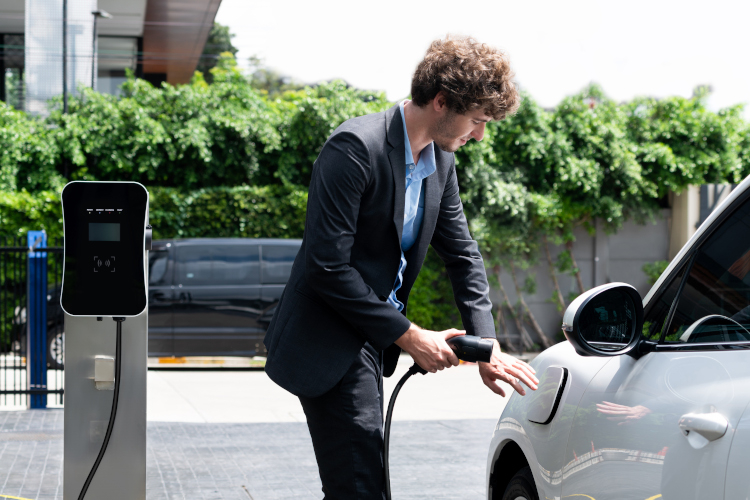
The electric revolution in Poland is gaining momentum, with forecasts predicting the availability of nearly 100,000 charging points by 2030. Although charging away from home is becoming easier, it is still worth considering the installation of a home charging station. What are the facts about electromobility in Poland?
According to data from the Polish Alternative Fuels Association (PSPA), in 2021 there were just over 1,500 publicly accessible electric vehicle charging stations in our country, with a total of 25,400 registered electric vehicles. Today, both indicators have increased significantly. At the end of June this year, there were nearly 2,900 publicly accessible charging stations in Poland, which translates to just over 5,000 electric vehicle charging points. The number of fully electric registered cars reached almost 41,000.
These statistics are the best proof that the development of electromobility in Poland is accelerating. Despite significant progress, the infrastructure for electric vehicle owners is not yet sufficiently developed for the majority of drivers to switch to electric cars. Fortunately, the trend is still growing, and stations are being added at a rapid pace. In May alone, the network grew by 68 new charging stations with 157 charging points.
There is also no indication that this trend will reverse in the coming years. An increasingly wide range of electric vehicles, legislative facilitations, and improved awareness regarding the impact of internal combustion engines on the environment mean that the popularity of such cars will continue to grow. Along with it, the number of points and the capabilities of the charging station network will also increase.
Is it worth choosing an electric car?
Many factors speak in favor of choosing an electric car. Beyond the lower impact on the natural environment, practical considerations are of great importance. Operating an electric vehicle is cheaper than in the case of vehicles with internal combustion engines. This is influenced by lower failure rates and the fact that electricity is cheaper than fuel at gas stations. Driving an electric car is also more comfortable because the drivetrain operates noticeably quieter.
Electric vehicle owners also benefit from national and EU regulations. They can take advantage of several privileges, the most important of which are certainly:
- exemption from excise duty when purchasing an electric vehicle;
- a higher depreciation limit (it is 225,000 PLN for fully electric vehicles); the possibility of using subsidies for the purchase of a new electric car under the “My Electrician” program (up to 18,700 PLN or even up to 27,000 PLN for holders of the Large Family Card);
- free parking in paid parking zones;
- the ability to use bus lanes (at least until January 1, 2026).
Electric vehicle charging network in Poland – 2023
Electric vehicle charging stations are most often found at publicly accessible facilities. More than 40 percent are located in public parking lots. Another 17 percent of charging stations are located at shopping centers.
About 92 percent of public stations in Poland are available for a fee. The infrastructure is concentrated along expressways and motorways as well as in the largest cities (more than half of the stations operate in 37 towns with over 100,000 inhabitants).
Regarding the technical side, fast chargers with a power of over 50 kW are gaining popularity the fastest. In the years 2021-2022, the share of such chargers in the Polish network increased from 8 to 11 percent, which is the best evidence of the dynamic development of this technology. This state of affairs should not be surprising, as they allow for a significant reduction in vehicle charging time compared to traditional chargers.
A general list of available chargers: https://cleanerenergy.pl/mapav2/
Charging electric vehicles. What will change in the coming years?
According to this year’s “Polish EV Outlook 2023” report, the future of electromobility in Poland looks bright. Over the next few years, we can expect dynamic development of infrastructure for electric vehicles.
Forecasts assume that by 2030, the network of publicly accessible charging stations in Poland will approach the impressive number of nearly 100,000 points. The prospect of having convenient and efficient infrastructure available for drivers suggests that the popularity of electric vehicles will grow even further. The development of the network, alongside the factors already mentioned, is key to encouraging more drivers to switch to electric vehicles.
The potential of electromobility is also increasingly recognized by major players from various market sectors. This group includes, for example, Biedronka. The chain has announced that it will install 600 charging stations in its store parking lots over the next two years. Each of them is to offer 131 kW, and the network capacity will be sufficient to serve a thousand vehicles at one time. Lidl also has similar plans – expanding its network by 65 charging stations in 2023. Investments by retail giants could be an important step toward electrifying mobility in smaller towns. Until now, infrastructure development has focused on the largest cities and their surroundings.
Your own charging station?
The growing number of stations is pleasing, but it is also worth considering the installation of your own home charging station. Thanks to it, you gain convenience and independence, which you will appreciate especially when living in a house outside of a large city. Using our proposal, you can order a charger together with an electric car. The package we have prepared includes leasing the selected vehicle, a Home&Check electrical installation audit, and the station itself. As part of it, we also provide installation, commissioning, and maintenance services. Check our offer and see how convenient leasing an electric vehicle with a charger option can be.
Source: Arval/BNP Paribas Group