








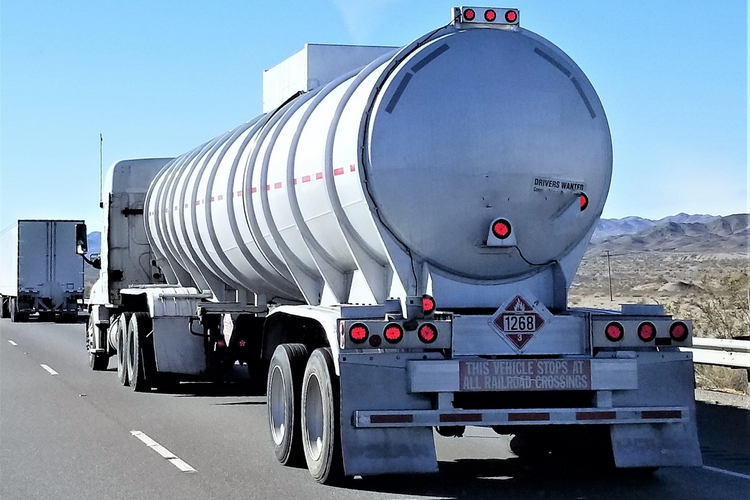
The modern TSL industry must always be prepared to transport even the most challenging loads. Undoubtedly, this includes dangerous goods, which require compliance with many legal regulations just in terms of organization. Irregularities in handling the cargo itself during transport or storage pose a significant risk to property and all living organisms in the world. Therefore, in this post, we will address the topic of ADR transport – we will point out the basic legal regulations and list the most interesting groups of goods covered by these provisions.
What is ADR transport?
It must be noted at the outset that the transport of dangerous goods is prohibited from a legal point of view. This is evidenced by the danger that the environment, people, or animals could face in the event of a mistake by a driver or logistician. In Geneva in 1957, a convention covering the transport of ADR goods was drawn up. Initially, only a few countries used it, although it is currently present in 46 European countries. Poland ratified this agreement in 1975 and to this day can organize such transports on its territory.
All transport activities related to dangerous goods are subject to special prohibitions and requirements. In the event of noticing even the slightest error related to the type of material, its packaging, classification, or the selection of the vehicle and trailer – the execution of such a service will simply become impossible.
Cargo covered by the ADR convention
Every product that could pose any threat during transport is assigned to one of 13 classes. It is equipped with an individual identification number, and then an emblem is placed on the vehicle, which allows for the identification of such goods. By definition, ADR transport covers cargo in solid, liquid, and gaseous states.
They are divided mainly based on their flammable properties – depending on this feature, they can pose a smaller or greater threat on the road. ADR transport includes products such as oil and gasoline, although there is no shortage of corrosive, toxic, and infectious substances.
Methods of transporting ADR cargo
The transport of dangerous goods can be legally carried out in three ways. The first is undoubtedly transport in packages. In this case, proper labeling and ensuring a safe distance between such goods are important. The second method is transport in bulk without packaging – most often carried out in box vehicles and containers. The last and, for many, the most noticeable option is the transport of dangerous goods in tankers. It is not difficult to guess that it mainly covers goods in liquid form. In this case, it is important to ensure the appropriate pressure in the tank by determining the degree of filling.
Regardless of the type of trailer used, every ADR transport must travel on the best possible roads, without heavy traffic. Only in this way can full safety be ensured for the environment and all living organisms.