








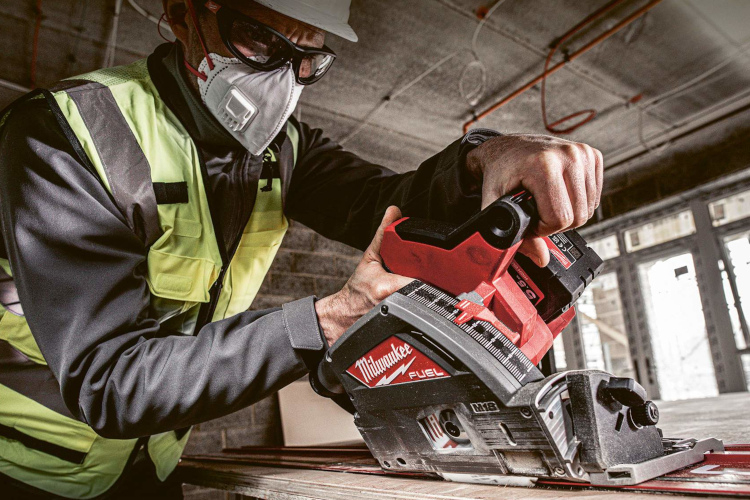
Electronics distributor TTI relies on flexible supply chains to ensure it can supply an increasing number of customers worldwide, at any time. The DACHSER solution: supply chain optimization.
TTI (Techtronic Industries Company Ltd) has many successes to its name and continues to grow. Despite the pandemic, strained supply chains, and rising energy and infrastructure costs, the company has recorded double-digit growth in recent years and is in excellent shape. It has found a way to reliably supply its customers even in such demanding conditions.
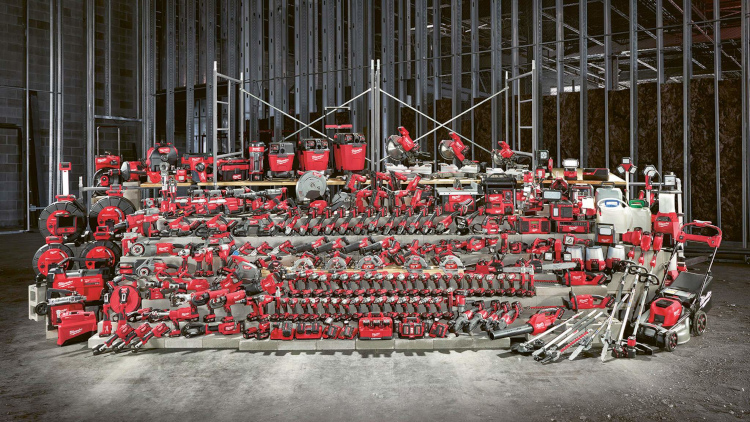
TTI is a Hong Kong-based company and a supplier of power tools, accessories, hand tools, outdoor equipment, and floor care and cleaning devices for consumers, including DIY enthusiasts. It also supplies professional and industrial users in the repair, maintenance, construction, and infrastructure sectors. In the first half of 2022 alone, the company generated over $7 billion in revenue, 10 percent more than the previous year.
Logistical challenge
In Europe, DACHSER and TTI first worked together in 2010, initially only on transport services in the French market. “Step by step, we expanded our cooperation to several other European countries. Today, DACHSER is the second-largest transport service provider in our EMEA network. We expect absolute reliability and consistency in delivery performance from our logistics service providers,” says Paolo Balloni, Vice President Supply Chain Management EMEA at TTI.
In light of the conditions currently shaping global markets, Balloni sees growth as an extremely significant logistical challenge. Particularly volatile markets expect a quick response in the event of problems, as well as support in situations of unexpected business demands.
– This approach requires a competitive and appropriate cost-benefit ratio. We absolutely must make our distribution network as flexible and versatile as possible so that we can meet the changing demands of our customers and markets – adds Paolo Balloni.
Tobias Rasch knows TTI’s requirements inside out. As Department Head Supply Chain Transformation, part of the Corporate Key Account Management department at DACHSER, Rasch and his team look after this client.
– We have been accompanying TTI in its development for many years, together facing and overcoming every new challenge – explains Rasch.
The pandemic years provided a special impetus. During this time, TTI performed well in both the industrial sector and the DIY industry. Demand for electronic devices from the TTI product family increased. However, this generated questions about the structure and resilience of supply chains.
Supply chains under pressure
– Huge revenue growth combined with the constant uncertainty of the last three years placed a huge burden on TTI’s distribution and transport network. In the same period, expectations that deadlines would be met, deliveries would be on time, and their execution would be seamless became increasingly common in our industry. To meet the changing demands of our customers and markets, we had to make our supply chains appropriately flexible and versatile. DACHSER really helped us with this – reports Balloni.
Rasch and his team focus on supply chain optimization. Together with clients, DACHSER experts analyze and optimize all logistics processes and parameters. “DACHSER’s global network, with all its systems and experienced employees and partners, gives us great opportunities to meet individual customer requirements. The key to this is a new, multimodal approach that helps us detect weak points in the supply chain and move away from old structures that no longer serve us,” explains Rasch.
This is based on the realization that logistics structures that were once suitable for providing specific services are now increasingly ill-equipped to deal with the geographical, political, and technical changes that shape today’s world.
– We therefore need new approaches and solutions – says Rasch. This is entirely consistent with DACHSER’s mission of using logistics network services to optimize its customers’ logistics balance sheets.
Transparent process
– DACHSER’s supply chain optimization aims to achieve the best possible scenario for our customers. Therefore, together with our clients, we analyze current challenges and potential solutions as part of a transparent consulting process – just as we do for TTI – explains Rasch. He says that the analysis of locations, transport routes, potential synergy effects, and other factors are crucial to the consulting approach.
– Based on customer data, we visualize the current logistics structure and indicate how we could theoretically optimize it. This approach is known as Greenfield Analysis. We then use the model we have built to develop scenarios for the best implementation of optimization within the DACHSER network – According to Rasch, this is a key step because theoretical models often do not immediately reflect logistical reality – Our approach allows us to take into account all specific business requirements and systematically address identified challenges.
As a result, TTI went from having three logistics centers in 2020 – in Germany, the UK, and France – to five fully functional distribution centers launched at the beginning of 2023. This allowed for a significant increase in overall efficiency and ensured an ideal connection with transport networks in Europe as well as overseas. DACHSER branches in Kornwestheim, Villeparisis, Zevenaar, Northampton, Wrocław, and Hong Kong play a key role in ensuring the reliability of TTI’s supply chains and in achieving the remaining growth goals of both the company and its customers.
Sustainability in the supply chain
– In addition to delivery reliability and cost control, TTI attaches great importance to sustainability. “The problems that the world and the logistics market are currently facing do not exempt companies from the obligation to continue efforts to reduce environmental pollution, waste, and harmful climate emissions – says Balloni – When it comes to sustainability, TTI and DACHSER are working on it together. Together, we have developed concrete and practical solutions aimed at, for example, optimizing supply chain consolidation, increasing capacity utilization for trailers and containers, and reducing packaging consumption.
– Our consulting experience shows us that supply chain optimization is more a matter of evolution than revolution. The road to optimization is often paved with various smaller projects aimed at introducing minor adjustments that exert a large and lasting impact on the entire process and the company’s success. All this so that growth does not turn out to be a burden – says Rasch.
Source: Dachser.