








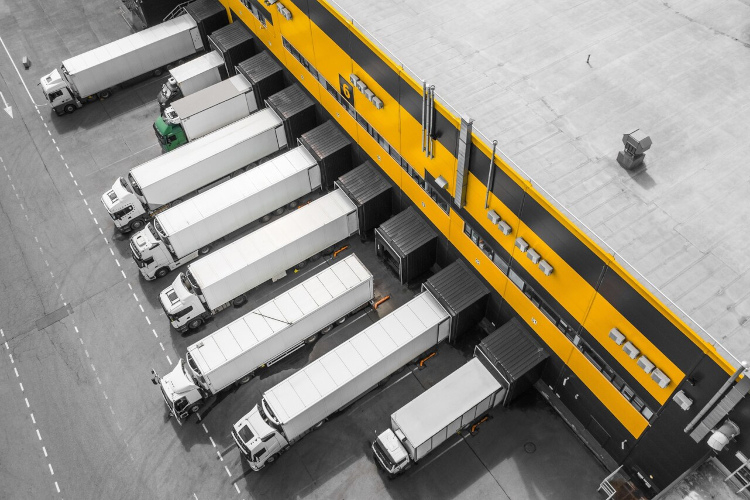
Along with the dynamic development of transport activities, including vehicles, infrastructure, logistics, and management, various forms of pathologies are also emerging. They cause difficulties in the functioning of the transport sector, affecting working conditions, business profitability, safety, the efficiency of goods flow, and the overall performance of the transport system. What problems are we talking about? How to deal with them? These questions are answered by Maciej Maroszyk, Chief Operating Officer at TC Kancelaria Prawna.
Pathologies in transport operations are not limited only to problems related to extended payment terms or even their absence. They also cover a wide spectrum of other issues – including absurd contractual penalty clauses in orders, poor working conditions for drivers, unclear and not always legal methods of settling drivers’ wages, fuel and cargo theft, and still insufficient scale of route monitoring. What keeps the TSL industry awake at night most often?
Late payments under the microscope
One of the main pathologies in transport operations is late payments. Delays in settling receivables or lack of payment for freight lead to serious financial challenges for entrepreneurs. Data on this topic can be alarming – in the first quarter of 2023, corporate insolvency in the transport sector reached as much as 44 percent.
– Although the standard payment deadline for services rendered is between 45 and 60 days, transport companies frequently struggle with delays in receiving payments or even a complete lack of payment. Worryingly, these unplanned time gaps are lengthening year by year. And in the transport industry, time is particularly important in the context of settling various obligations, such as paying leasing installments, paying drivers’ wages on time, or paying for fuel. In the case of the latter, contracts with fuel suppliers set specific deadlines for settling these payments, which must be strictly adhered to – says Maciej Maroszyk, Chief Operating Officer at TC Kancelaria Prawna.
The expert also emphasizes that the mentioned expenses constitute only a part of the carrier’s wide range of financial needs. It should be remembered that they usually receive payment for their services only after several dozen days, while they themselves must settle their obligations in a much shorter time.
Absurdities in the contract
Another problem is “creative” clauses regarding contractual penalties. This is a common threat, as not all of them sound absurd or exceptionally unfavorable, yet they may be inconsistent with transport law and expose the carrier to additional costs.
– Examples include attempts to punish multiple times for the same failure, punishing for a lack of culture and professionalism at loading or unloading sites, unequal treatment of contract parties, or referring to illegible or misleading clauses that have no rational basis and are inconsistent with the principles of social coexistence. Let us remember that in a potential dispute, such inconsistencies must be proven, and there is no obligation to conclude transport contracts in writing – suggests the Chief Operating Officer of TC Kancelaria Prawna.
How to protect yourself against absurd penalties in contracts? Maciej Maroszyk points out that the basic issue is to establish clear and unambiguous requirements regarding transport – including delivery time, type and quantity of transported goods, and general transport conditions. It is also important to remove unfavorable clauses from contracts and limit cooperation with companies that have a dozen or so additional pages of contractual penalties in their orders – this is a clear signal that their intentions are certainly not good.
Unfavorable working conditions and driver settlements
An important aspect in the context of pathologies in transport operations is also the not always convenient working conditions for drivers. They are associated with many challenges and often have a negative impact not only on health but also on the safety of drivers – including financial safety. For this reason, there is still a shortage of new specialists on the market who would be interested in taking over the positions of people retiring. And many of those already working in the industry are thinking about quitting the driver profession.
– Many hours spent behind the wheel are associated not only with reduced concentration and an increased risk of road accidents, but above all, they negatively affect the physical and mental health of drivers. Also significant is the insufficient social infrastructure and the lack of adequate, guarded parking spaces, which exposes drivers, as well as the goods they carry, to robberies and thefts – says Maciej Maroszyk from TC Kancelaria Prawna.
Another problem is the low remuneration of drivers in relation to the requirements and risks associated with their work. Some transport companies use low hourly rates, and sometimes they pay drivers only for kilometers driven.
– In recent years, initiatives have been taken to improve working conditions for drivers – this refers to the regulations introduced by the Mobility Package. These regulations aim to limit working time, increase control over compliance with regulations concerning driving and rest times, and raise social standards for drivers. Especially the recent changes in the Mobility Package have contributed to a significant improvement in the way drivers are paid – this refers to minimum wage rates for posted workers, the amount of which is to correspond at least to the minimum wage applicable in the country where they work. However, despite this, there are still many challenges that need to be solved to ensure better working conditions for drivers in the transport industry – says the Chief Operating Officer of TC Kancelaria Prawna.
Fuel theft
A common problem in the TSL industry is fuel theft. It takes various forms. One of the most common is the so-called “siphoning” of fuel from the vehicle’s tank by manipulating caps, cutting the fuel tank, or using specialized equipment to extort fuel. Another type of theft involves the use of fuel cards and dishonest practices related to their use. Interestingly, fuel thefts are carried out not only by employees but also by outsiders or entire criminal groups specializing in illegal fuel trade.
– The consequences of fuel theft are serious not only for individual carriers but for the entire transport industry. Carriers suffer financial losses related to the loss of fuel, as well as the need to repair damaged tanks or fuel systems. This, in turn, leads to delays in the execution of orders, which has a negative impact on the timeliness and efficiency of delivery flows – explains Maciej Maroszyk from TC Kancelaria Prawna.
To prevent fuel theft, carriers take various precautions. These include alarm systems and monitoring in vehicles, securing fuel locks and caps, controlling access to vehicles, or strict control of fuel card usage. It is also important to train drivers in safety and awareness related to fuel theft.

Robberies and cargo theft
Recently, the growing scale of cargo theft has also become problematic. Most often, thieves target electronics, including consumer electronics and home appliances, as well as high-value alcohol or semiconductors – especially during the period when their shortage was felt in Europe. The phenomenon intensified with the beginning of the pandemic. Organized criminal groups operate especially in Germany, the Netherlands, Scandinavia, or Great Britain.
– Due to potential losses, the lack of guarded parking lots is a huge problem. Many drivers, even when carrying high-value goods, are forced to leave vehicles in unguarded parking lots or gas stations. This is a treat not only for organized criminal groups but also for lone thieves who specialize in cutting tarpaulins and looting even while the driver is in the cabin – says Maciej Maroszyk.
The expert adds, however, that in contrast to these behaviors, the popularity of electronic cargo space surveillance systems is growing. This refers to, among other things, electronic locks that are intended to increase cargo security, and the installation of cameras and GPS systems on trailers. In the event of cargo theft, such a practice is used, among other things, to prove or deny the carrier’s negligence before the insurer. This is particularly important, as the scope of the carrier’s “fault” is difficult to define, hence companies want to protect themselves against such situations in advance. And investment in modern technology pays off, ensuring safety, control over the cargo and the route taken, and protection against potential claims.
Remember about monitoring!
Also noteworthy is the problem of the too small scale of route monitoring. This is important because such actions are crucial for effective fleet management and ensure safety during transport. Insufficient or ineffective route monitoring makes it difficult to track and control vehicle locations in real-time. This, in turn, can result in difficulties in route planning, managing driver working time, and responding to emergency situations – such as road accidents or thefts.
– Insufficient route monitoring contributes to dishonest practices and abuses by drivers. Without the ability to strictly control the route and the way the vehicle is driven, it is more difficult to eliminate irregularities such as driving on unauthorized routes, unjustified stops, or excessive fuel consumption. Lack of monitoring also means a higher risk of cargo theft – explains the expert from TC Kancelaria Prawna.
Advanced solutions such as GPS systems, vehicle monitoring cameras, or data analysis tools can significantly improve the control and efficiency of transport operations, and modern technologies allow for monitoring many parameters, such as location, speed, fuel consumption, or stop time.
Problematic technical condition
Taking care of technologically advanced solutions also includes the vehicle fleet, which unfortunately is not always in good technical condition. It happens that some transport companies do not pay attention to regular inspections and maintenance of their cars, not guaranteeing the appropriate technical condition for performing transport tasks.
– Vehicles in poor technical condition are more prone to breakdowns and accidents. This consequently leads to dangerous situations on the road, difficulties in executing transport orders, and causes financial losses related to repairs and vehicle replacement – says Maciej Maroszyk.
Additionally, cars in poor technical condition are often characterized by higher fuel consumption and lower efficiency, which simultaneously increases the operating costs of the transport fleet.
– In the case of such cars, there may be a problem with compliance with regulations and emission standards. Lack of regular technical inspections and repairs of required defects leads to higher emissions of harmful substances and violation of environmental standards – explains the expert from TC Kancelaria Prawna.
In the TSL industry, one can see many irregularities and negative phenomena that affect the efficiency and safety of transport operations. Therefore, to effectively combat pathologies in transport operations, companies often ask for help from qualified specialists – including law firms.
– Almost 90% of cases for which companies come to us for help are pathologies in the industry. The vast majority are related to the lack of payment on time – delays in settling receivables reaching one or two weeks are standard in the sector, not to mention longer periods of time. Additionally, we also deal with unfavorable clauses in orders, such as extending the payment deadline due to failure to deliver documents on time, lack of contact with the driver, or failure to send a photo from unloading. We help in asserting the rights of drivers in terms of remuneration – including paying amounts “under the table” or negotiating contract terms that are unfavorable to them. However, it is noticeable that the market is changing and entrepreneurs are starting to take great care of carriers and are looking for solutions to improve the situation, which is also often discussed in many debates – concludes Maciej Maroszyk from TC Kancelaria Prawna.
Source: TC Kancelaria Prawna