









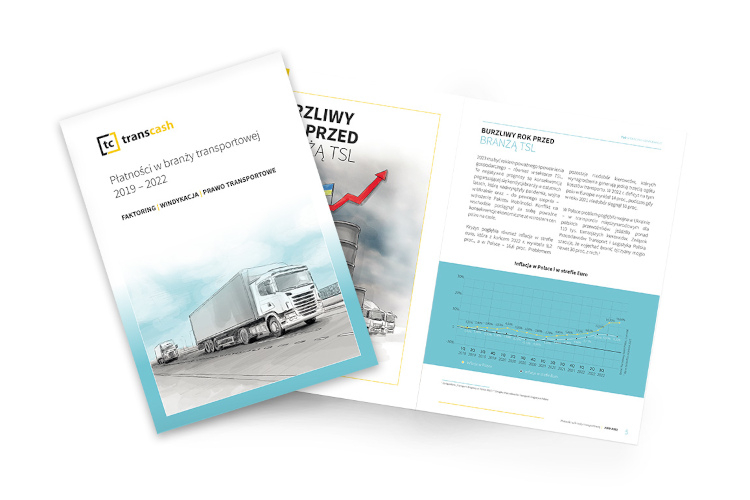
How have the challenges of recent years affected the financial condition of transport companies? Have rising operating costs translated into an increase in freight rates? These and other questions describing the financial reality of the TSL sector are answered in the report “Payments in the transport industry 2019-2022”, prepared by Transcash.eu, a leader in transport financing.
Development under the sign of crisis
The Mobility Package, the Covid-19 pandemic, and the war in Ukraine are the three most important events of recent years that have determined the current condition of the transport industry. The highest fuel prices in history, galloping inflation, and a sharp rise in interest rates are challenges that every entrepreneur has faced, and carriers have incurred additional costs related to the implementation of the Mobility Package. Additionally, the war in Ukraine has deepened a problem the industry has been struggling with for a long time – a shortage of drivers. Some of them, instead of being on European routes, went to the front.
Despite these difficulties, the Polish TSL sector has maintained its position as a European leader. Carriers from our country handle as much as one-fifth of the European international transport market, and their share is systematically growing. According to Transcash data, over the last two years, the average amount of invoices we have financed for carriers as part of our factoring service has been systematically increasing.
The condition of the industry through the eyes of experts
We have drawn conclusions about the financial condition of the industry based on a range of data, relying on Transcash’s many years of experience in the field of factoring and debt collection. Information regarding the value of issued invoices, payment terms, payment habits of TSL industry contractors, and its legal specifics create a picture of a sector that has survived the crisis thanks to its ability to quickly adapt to the new rules of the market game. Its specificity also requires international cooperation and maintaining relationships with foreign contractors, as well as financial tools supporting current operations, as discussed by Transcash.eu experts – Foreign Debt Collection Team Leader Damian Michalecki and Amicable Debt Collection Director Bartłomiej Socha. Efficient financing and effective debt collection were significant support for the TSL sector during times of financial unrest, which is confirmed by one of the industry leaders, Sawa Logistics CEO Artur Sadowski.
The report is available at the link.