








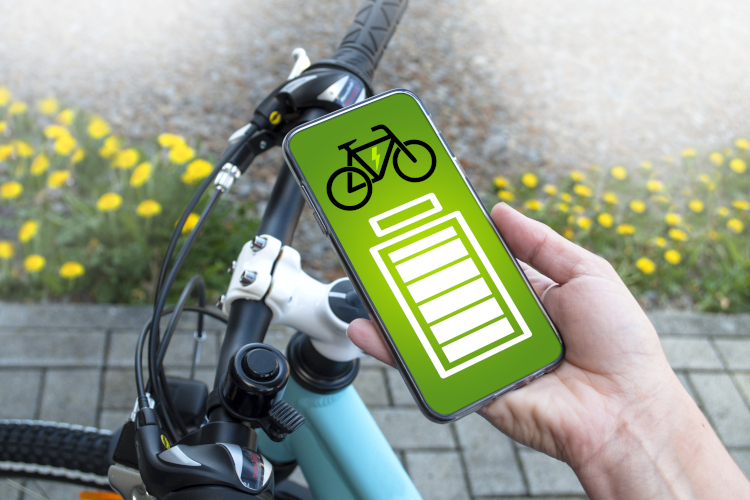
The electric two-wheeler segment will double in size over the next three years, reaching a sales volume of 10 million units in Europe. Some of these e-bikes will come from Polish factories, whose production capacity has already reached a value of PLN 2 billion. This places our country in 4th position on the Old Continent. We take a look at the electric bicycle market.
City bikes for daily commuting, including folding versions, cross and trekking bikes that allow for riding in the city as well as off-road, or mountain bikes that perform great on demanding trails. What, besides popularity, do these two-wheelers have in common? The fact that for several years they have been even more sought after by customers due to electric versions that assist human muscle power.
– Poles want to ride electric bikes. The increase in the popularity of this means of transport is influenced by functional, ecological, and, above all, economic aspects. This trend is noticeable both in the business sector, e.g., the delivery industry, where cargo bikes play a key role in carrying out so-called “last mile” deliveries, and among individual users. The cost of driving 100 km by car, which is the average weekly work-home distance, is PLN 56. While those who choose a bike will pay only 40 groszy – calculate the organizers of the Bicycle Revolution campaign.
Respondents are in favor
Survey research by the Polish Bicycle Association (PSR) shows that for the majority of respondents (70%), an electric bike is more economical than a car. Additionally, rising fuel prices make every second person want to use an e-bike, and 54% of respondents would be willing to purchase an e-bike for the equivalent of 12 vehicle refuels. Economists, unfortunately, leave no illusions – high inflation will persist, and Poles will feel its effects, among other places, in shops and at gas stations. Switching to a bike is a certain alternative for improving the household budget, while simultaneously providing many other benefits, e.g., health or ecological ones – argue representatives of the PSR.
– The role of the electric bike in daily communication is systematically growing. This is shown by both the latest research, the observations of our experts, and trends on Polish streets and bicycle paths. Poles are following trends present in Western European countries. Here too, the increase in the popularity of e-bikes will bring only benefits for cities and society, as well as a chance for the dynamic development of Polish electromobility – says Mateusz Pytko, director of the PSR office.
The popularity of assisted two-wheelers would be even greater if there were a government support system for their purchase in Poland, as is the case with electric cars and the “My Electrician” program launched by the National Fund for Environmental Protection and Water Management (NFOŚiGW).
– Certainly, this type of action would increase interest in electric bikes and would also encourage choosing a bike as a comfortable means of transport, and at the same time would popularize general sports activity – comments Grzegorz Grzyb, Vice President of the Management Board of Romet.
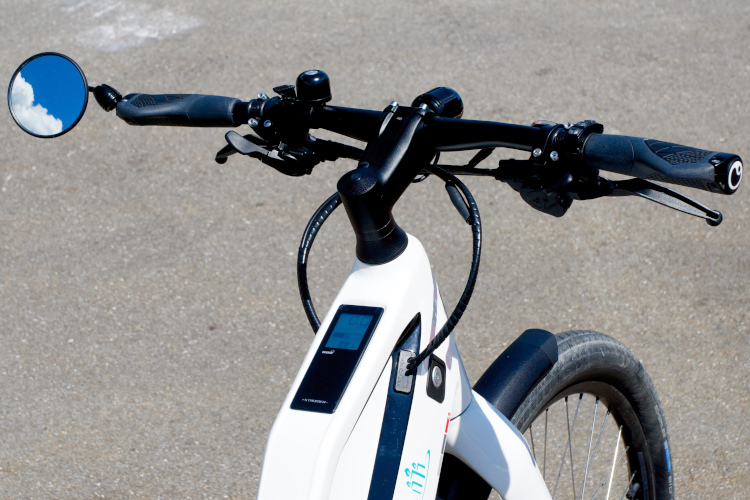
Who buys e-bikes?
The reason why more and more customers are choosing assisted bikes is primarily the pleasure of riding. The second important issue is that basically every group of users can cover significantly more kilometers.
– The first group of recipients are people who ride a bike but do not have enough fitness to cover many kilometers or climb high, steep peaks. These are people who have never undertaken this type of effort but want to try. The second group consists of older people who would still like to cover tens of kilometers, break barriers, but for various reasons do not ride a bike. The third group consists of active people who, after finishing training, marathons, races, are still hungry for emotions. They want to cover more kilometers, whether on mountain trails or in the city, and here electric bikes will work perfectly. Bikes with electric drive are also a good solution for families with children – during joint trips, everyone can cover the route at the same pace – Filip Wojciechowski, President of Kross.
Europe stands on bicycles
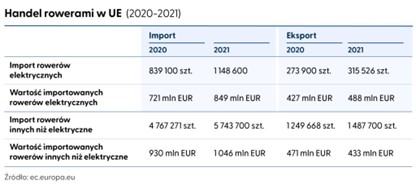
According to Eurostat data, last year the European Union countries exported bicycles (both electric and non-electric) worth EUR 921 million outside the community region, while importing two-wheelers worth EUR 1,896 million.
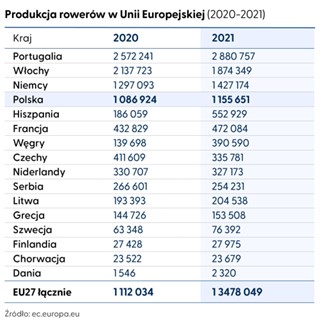
The largest bicycle producer in Europe in 2020 was Portugal
A similar balance applies to assisted bicycles. In 2021, the EU exported 315,526 electric bicycles worth 488 million euros and imported 1,148,600 electric bicycles worth 849 million euros from non-EU countries. Compared to 2020, the number of exported electric bicycles increased by 15% in 2021, while the import of electric bicycles increased by 37%.
Poland is number four
Analyses also include our country. Eurostat calculated that we produce over a million bicycles annually. The trend is upward, with 1,155,651 new two-wheelers hitting the market last year, which accounts for 8.57% of production in Europe. Poland thus took 4th place on the European market, right after Germany (1,427,174 units), Italy (1,874,349 units), and Portugal (2,880,757 units). Throughout last year, nearly 13.5 million bicycles were produced on European markets. According to CONEBI – the Confederation of the European Bicycle Industry working for the industry and the bicycle sector – in 2021, the sale of bicycles and e-bikes reached an all-time record, exceeding 22 million units. This growth was particularly driven by the sustained high demand for e-bikes, which exceeded the number of 5 million units sold. Total sales of bicycles and e-bikes reached a value of 19.7 billion euros, which is 7.5% more than a year ago.
– I am glad that our sector – in terms of creating green jobs, sustainable local production, entrepreneurship and investment, innovation and environmental footprint – contributes in a concrete way to the realization of the European Union’s goals, making the industry one of the largest in the European Union in the so-called Green Economy – said Manuel Marsilio, General Manager of CONEBI.
Made in Poland
Calculations by CONEBI and the Polish Bicycle Association show that the share of electric versions in the bicycle market in Poland in 2026 will reach 28% (currently it is 6%), and its value will amount to PLN 2 billion. Already, the domestic Romet – currently the largest bicycle producer in Poland, responsible for 1/3 of all domestic production – exports about half of all two-wheelers to Western European countries and Baltic countries, and the brand’s bicycles are already sold in 50 global markets.
– In 2022, the share of electric bicycles in the entire production of the Romet company amounted to about 20%. We have over a dozen different models in our offer in basically all categories: from E-MTB, E-Trekking and E-Cross, to E-City. We are currently working on new e-bike proposals: a downhill MTB Enduro XC bike and also an electric gravel version – boasts the Vice President of the Management Board of Romet.
Polish bicycles have a well-established position on the market thanks to an attractive price and high quality of workmanship, which is preceded by painstaking design work, laboratory work, and fatigue and impact tests, additionally expanded by tests in a climate chamber. All this so that the finished bicycle can withstand the hardships of operation in changing weather and road conditions for as long as possible.
– We produce our frames in Poland. The aluminum from which we produce them comes from Polish steelworks. Working on electric bicycles, we established strategic partnerships that allow us to say that currently, due to the mentioned percentage share of components, we can talk about a Polish electric bicycle. We have developed a technology thanks to which they are integrated with a battery, the supplier of which is the company BMZ Poland Sp. z o.o. – adds Grzegorz Grzyb.
2 instead of 4 wheels
The pandemic initially contributed to the increase in the popularity of bicycles in Poland, including those powered by batteries, which caused bicycle traffic in Polish cities to increase by 29% in 2021. Currently, this trend is being intensified by high fuel prices caused by the war in Ukraine and the fuel crisis, as well as an increase in social awareness regarding ecological mobility.
– Our calculations today show that the equivalent of 12 full tanks of fuel is enough to buy a new electric bike. Such a basic model. This is a bike that will serve us for thousands of kilometers, for about 700 charges – said Mateusz Pytko, director of the Polish Bicycle Association office, on RMF FM radio.
Moreover, CONEBI forecasts that by 2025, e-bike sales will more than double, i.e., exceed 10 million. Europeans want to buy ecological two-wheelers because manufacturers perfectly read their needs.
– We carefully observe trends in the bicycle market and follow with great interest how the habits and purchasing preferences of Poles are changing. A bike today is a very attractive form of weekend recreation and an economical way to commute to work. We are well prepared and still have a wide selection of models in many product categories in our offer. Every third Pole considering a purchase wants to buy a KROSS brand bike – says Filip Wojciechowski, president of KROSS.
KROSS sales data clearly show that Poles still want to ride bikes. According to the latest data, sales of models offered by KROSS in September and October increased by 38% and 37% respectively compared to the previous year. Electric models from KROSS are particularly popular. Their sales in the same period increased by 242% and 141% respectively compared to the same period in 2021. Consumer decisions were also influenced by the economic issue, i.e., the need to look for savings in connection with record inflation. An important role is also played by faster travel by bike in increasingly congested cities.
Rich and diverse offer
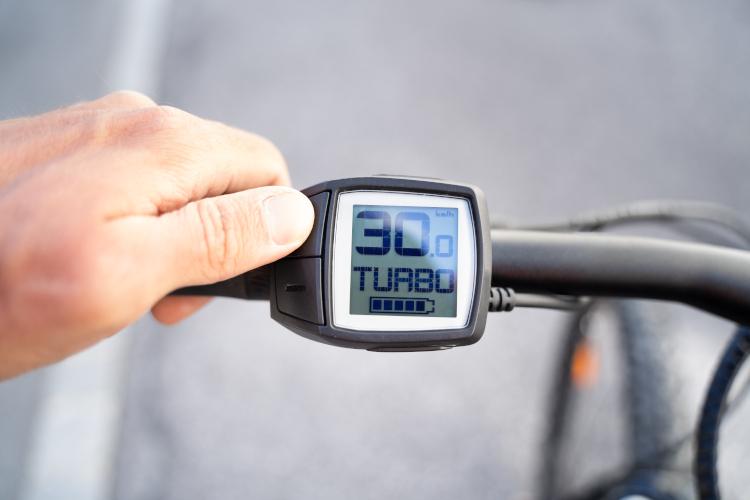
The proverbial litmus test of the popularity of new bicycles is the market. On one of the largest Polish auction portals, there are over 16.5 thousand new electric bicycle models from over 150 manufacturers available. The buyer can choose a frame made of aluminum, steel, magnesium, or carbon in various sizes. The same applies to the wheel span, which ranges from 10 to 29 inches. Just like in a conventional bicycle, there is also a choice of the type of gears, brakes, or potential shock absorbers. In the vast majority of e-bikes, traction batteries in the most popular lithium-ion technology are offered, less often gel ones. The spectrum of e-bike personalization possibilities starts with the type of drive, because the offer of motor power is usually from 100 to 250 Watts, although there are also models with twice as powerful motors or even with those with a power of 2000 or 3000 Watts (the only question is whether these powerful versions are still bicycles?). The motors themselves can be placed in the front or rear hub or in the central drive. Of course, you can also choose a traction battery – the most important element that affects the range of an electric bicycle. It can have, for example, a capacity from 6 to 16 Ah and a voltage of 36V, which translates into a theoretical range of 25-45 km (for the 7.8 Ah version), 50-80 km (in the 10.4 Ah model), 60-100 km (in the case of 13 Ah) and from 80-160 km (for the 16 Ah version).
Prices?
The cheapest Chinese electric bike with 14-inch wheels, 62 cm height, 18 kg weight, and a permissible driver weight of up to 120 kg can already be had for less than PLN 2000. For this amount, we get a “metal folding bike” that can be easily transported and stored. According to the manufacturer’s declaration, the 250-watt motor, placed in the rear axle, allows for a maximum speed of 25 km/h and a range of up to 40 km thanks to a 10Ah battery, the maximum charging of which is to take up to 6 hours.
At the other end of the scale are electric bikes for 20 times the starting sum. Versions for approx. PLN 40,000 and more are usually offered in mountain or trekking versions with frames made of carbon, with cushioned wheels with a diameter of 25 to 29 inches, with powerful, several-hundred-watt motors placed in the crank, and branded batteries with a capacity of at least 625Wh, which allow you to travel – depending on conditions – over 100 km on a single charge and in which replenishing energy does not take longer than 3 hours.
Which one to choose?
When going to the store, we must be aware of what types of bicycles there are or which one we should choose, taking into account that variants such as trekking, mountain, city, folding, speed, with a central motor are available on the market. Currently, e-bikes on the market appear in the form of practically every one of these types. Of course, the most popular ones, such as MTB, trekking, or city, but also in those less frequently encountered (at least for now) cargo, road, etc.
– In the case of electric bikes, the division is further complicated by the electrical systems that have been used in individual bicycles. There are two main types of motors – central and hub. Central motors are installed in the place of the crank mechanism. The drive in their case occurs through the crank. The second type is hub motors, which directly set in motion the wheel in which they are placed – front or rear. Of course, this does not mean that all motors in their groups work the same way. The spectrum of technology and ways of operation is very wide – explained Krzysztof Dobrowolski from Ecobike.
For typical communication applications, a city electric bike is definitely enough. On the market, we will find a mass of both women’s and men’s structures of this type – says Tomasz Tyszko from the bikeworld.pl website and adds that, for example, in the city, trekking or cross-type structures also perform great – these types of two-wheelers, however, have a fundamental advantage, because in most cases you can ride them into light terrain (e.g., a paved road in the forest), so weekend trips outside the city and into the bosom of nature are also in play. Someone who has to carry a bike up stairs because there is no elevator can decide on a so-called folding bike. In less than a minute, it can be folded to the size of a suitcase, comfortably transported, e.g., in public transport or by car, and where needed, just as quickly unfolded and driven to the destination in line with the definition of last-mile transport.
– Folding bikes are also inherently lighter, but they also offer a smaller range. Of course, if you are looking for one bike that will allow you to ride off-road and into the city at the same time, you can also consider buying a cheap mountain electric bike. Off-road tires are no trouble during commuting – a 250W motor will effortlessly assist us up to 25 km/h – just like in any other electric bike – adds the expert from bikeworld.pl
An important element that needs to be paid attention to is the frame geometry. It is what determines the position in which the user will move on the bike. City and some trekking models allow you to maintain an upright posture while riding, which is comfortable for many people, however, it may not have application on longer distances or in more demanding conditions, because the distribution of the user’s body weight and the position behind the handlebars limit full control over the bike.
– Indeed, many people currently decide on a bike with a frame devoid of a top tube, which makes getting on easier. This type of geometry has also become a very popular choice among the male part of electric bike buyers and not only – commented the Ecobike representative. He also added that – you should always remember that when buying a bike, we must define its purpose, and then choose a model whose features will work best in the conditions in which we want to use it, but above all, one on which we feel best. Most sellers make test bikes available to customers, and it is good to use this, try out as many different models as possible, and surely among them, there will be one that will best meet expectations.
As a result, much depends on our preferences. A universal issue, however, is the frame size, which we choose according to the height of the future user. Different types of frames are dedicated in different sizes for a given person – an MTB bike should be chosen slightly smaller than, for example, a trekking one. There are size tables available that can be used as a guide, and every seller should refer to them when advising a customer on a purchase.
In the case of electric bicycles, besides the height and geometry of the frame, one must also take into account the type of assistance. – Not every motor will allow you to climb every type of hill, therefore, when buying an electric bike, you should take into account factors such as the terrain in which we will want to move. On routes with a large elevation gain, central motors work best, due to a significantly higher torque than hub motors. Bikes with central motors are, however, significantly more expensive than those with hub motors, so if we do not intend to cover demanding hills, we do not have to invest in them, and the hub motor is much easier to operate, if it comes to service, for example – stated Krzysztof Dobrowolski from Ecobike.
What parameters?
Cyclists who ride in difficult terrain, of course, must choose a bike with a powerful motor and a sufficiently capacious battery. Someone who moves on a two-wheeler only in the city should choose a weaker motor with a power of approx. 250W, thanks to which they will also not need a battery with a large capacity, which is heavier and more expensive to purchase. It is also worth remembering that versions with a motor placed in the front hub are usually cheaper than those with a motor in the back. Models with an electric unit placed centrally, i.e., in the hub with pedals, are a more expensive option, but such bikes are also better balanced.
– If we are looking for a bike for years or we care about a high, really high standard, then we should start our search from bikes signed with brands such as the domestic Kross or Romet. Further, we can jump into Wheeler, Canyon, Trek, Cube, and so on – advises Przemysław Jankowski from the benchmark.pl portal.
The expert also points out a commonly known fact, namely that a more expensive bike rides better because it is more solidly built and has better components. Nevertheless, not everyone needs a product whose price enters the price range of PLN 5000-10,000.
– Sometimes simpler structures are enough for us, and here it is worth looking at the proposals of various manufacturers who, noticing the market popularity of electric bicycles, have quite attractive proposals in their portfolio – concludes Jankowski.
Is an e-bike still a bike?
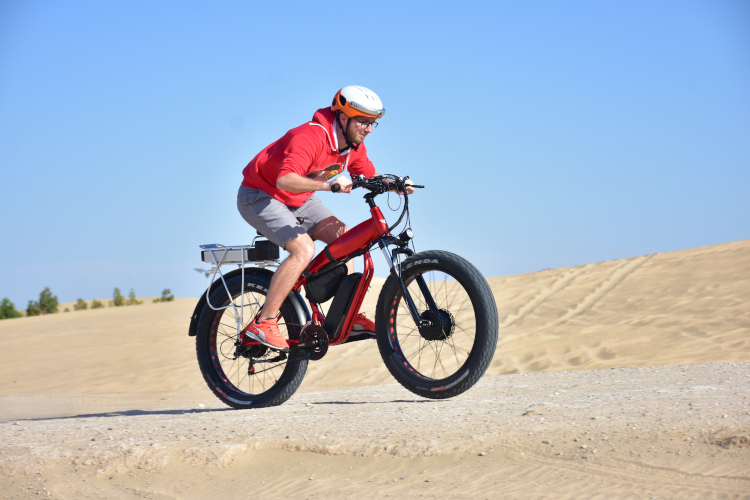
Many people unfamiliar with the topic wonder if an electric bike is still a typical two-wheeler, for the operation of which no additional qualifications or its registration are needed, which would involve additional costs and administrative issues. Fortunately, an electric bike does not have to be registered, and you do not need to have any special qualifications to ride such a vehicle. According to the traffic code, for a vehicle to be classified as an electric bicycle, its assistance can work up to a maximum speed of 25 km/h, and the motor should have a maximum power not exceeding 250W. According to Tomasz Tyszko, an electric bicycle is a two-wheeler possessing a motor that has the task of assisting our pedaling – it is exactly only about assistance, activated at the moment of our pressure on the pedals and turning the cranks. This is the main reason why electric bikes are still bikes, only from the future, which is why they enjoy unflagging popularity.
City support for their purchase?
The increasing popularity of electric bicycles has been noticed by European countries. Subsidies for two-wheelers are an important element of urban transport, e.g., in Lisbon, Barcelona, Berlin, or Oslo. Poles, as mentioned, are also increasingly reaching for electric bicycles. Research by the Polish Bicycle Association shows that 50% of respondents, due to rising fuel prices, would willingly switch to an electric vehicle. 4 out of 10 surveyed residents say they are considering buying an “electric” within the next 5-12 months. Local governments notice the popularity of these products, which is why they decide to support their purchase. An example can be Gdynia, which is so far the only city in Poland that subsidizes electric bicycles. The idea, however, is popular enough that other municipalities also want to test the program in practice.
There are chances that pilot programs will start as early as next year. In 2023, subsidies for “electrics” are planned to be introduced by cities such as Kielce, Wrocław, and Wałbrzych. – Wałbrzych is a mountain city, difficult to ride with a “regular” bike. Moreover, it is dispersed; buses should reach some housing estates, but very few potential passengers live there. In such places, an electric bike would be an interesting solution. That is why we planned to allocate several hundred thousand zlotys next year for a subsidy program for electric bicycles – says Roman Szełemej, mayor of Wałbrzych.
In turn, Kielce will soon launch a city bike system, part of which will be electric vehicles. – This is important due to the specificity of the terrain in our city – says Agata Wojda, deputy mayor of Kielce. It should also be emphasized that Kielce local government officials believe that subsidizing the purchase of electric bicycles is a sensible supplement to the city bike system. – If the financial situation allows, we would like to launch a pilot of such a program in Kielce next year, modeled on Gdynia. The money for subsidies would come from the local government’s own budget funds, but we look with hope at initiatives to expand the “My Electrician” program precisely with funds for the purchase of an electric bicycle – adds Wojda.
Bydgoszcz is also considering a subsidy for the purchase of electric bicycles. Before a support system is introduced, however, the city is focusing on expanding infrastructure for bicycles: building bicycle paths or new parking lots. The example of Gdynia also inspired local government officials in, among others, Świnoujście, Łódź, and Bielsko-Biała, although Łódź has so far decided on subsidies for electric cargo bikes for entrepreneurs.
Wrocław, on the other hand, postponed the support program for “electrics” until next year. As the reason for this decision, it cites additional financial burdens resulting, for example, from electricity price increases proposed by state-owned companies. As Tomasz Sikora from the press office of the Wrocław City Hall explains, the program is to be implemented in “better times”.
Source: Elektromobilni.pl