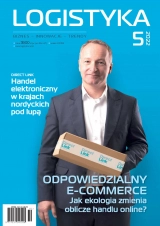
MIRCEA STAN, CEO & founder of Postis, answers questions regarding the development of e-commerce, trends in consumer behavior, and the use of artificial intelligence in e-retail.
Michał Koralewski: What is your opinion on the rapid development of e-commerce in recent years? What are the prospects for its further growth?
Mircea Stan: Since technology began to influence many areas of our lives, the reason for the rapid growth of e-commerce has been easy access to it, as well as the convenience of shopping from anywhere, at any time – via online channels. The last two years have accelerated the growth of e-commerce, as it turned out that buyers’ needs and shopping habits changed drastically due to external factors prevailing in the market. For example, due to movement restrictions that affected us in the first year of the pandemic, customers began buying new categories of products online that were traditionally offered in brick-and-mortar stores: food, fast-moving consumer goods (FMCG), medicines, or DIY products. In the second year of the pandemic, customers who discovered the benefits of online shopping remained loyal to them. The main reason was easy access to a wide range of products they were looking for, a simple and effective way to compare different shopping options, check prices, read user reviews, and the convenience of shopping without leaving home.
At the same time – as a result of the pandemic, retailers, logistics, and transport companies had to face increasing demand, an increasingly diverse product portfolio, and customer expectations. This situation put pressure on supply chains, logistics, and delivery fulfillment processes. New ways of engaging customers and customization became critical factors for retailers to stay in the market. As a result, omnichannel sales or online sales became the norm. Implementing an approach based on offering customers an “integrated” shopping experience, i.e., shopping in traditional stores, online stores, marketplaces, and using mobile applications, will be a key element of conducting trade in the future.
M.K.: What are the trends in the behavior of customers using e-commerce today? What do consumers expect?
M.S.: Customers expect simple, intuitive solutions tailored to their lifestyle. More specifically, these expectations are: Flexibility and speed – easy access to products, product descriptions, and tools that allow matching needs with product features, as well as the ability to order them quickly and choose from multiple delivery options. Transparency and predictability – no hidden costs, simple and intuitive processes, and most importantly – knowledge about the status and delivery of the ordered goods. Proper quality in terms of saving time and money – customers expect good quality personalized services – from the moment of the first click on the store’s website to home delivery. In addition to the mentioned factors, it is also important for the seller to be solution-oriented and responsive to unexpected events.
In the case of online shopping, borders and territorial reach have long ceased to be factors of influence. This situation leads to increased competition among sellers, regardless of where they are located in the world. For this reason, buyers are aware of their “power” and influence on the relationships they have with brands. This means that the service standards they expect will rise – both in terms of service quality and process complexity.
The mentioned trends in e-commerce development and cooperation between sellers can – in the short term – be influenced by factors such as economic and geopolitical uncertainty. In 2022, the war in Ukraine, inflation, and rising prices caused a shift towards saving and reducing spending, especially regarding luxury goods. However, these phenomena will be temporary, while e-commerce itself will continue to develop, covering more and more product categories.
M.K.: Do online stores meet the mentioned customer requirements? If not, what must they do to ensure an appropriate level of customer service?
M.S.: It is necessary to implement customer-centric strategies. This means that every business decision requires prioritizing the needs, preferences, and special requests of customers. This obviously requires effort, but it is achievable through the use of appropriate systems, tools, and processes. Online stores and retailers must therefore modernize their logistics ecosystems and IT infrastructure to be able to promote, sell, and deliver products in accordance with a customization-oriented approach. At the same time, they must quickly create new shopping experiences to meet the increasingly high requirements of customers and distinguish themselves from the competition, which is also becoming stronger due to the growth of cross-border trade and the expansion of marketplaces.

M.K.: According to global reports, artificial intelligence and logistics process automation can optimize last-mile costs and increase productivity. Is Polish e-commerce willing to invest in artificial intelligence?
M.S.: Looking at the Polish market, we see a certain specificity. As far as e-commerce is concerned, a significant part of it is consolidated in marketplaces, creating closed “silo” ecosystems. In the case of the last mile, the network of parcel lockers plays a key role, which facilitates various delivery options. In terms of the shopping experience, much attention is paid to standardization, through which cost efficiency can be achieved. There are many well-established forms of operation, although going beyond the existing business environment, integrating new sales channels, or building a new shopping experience can be a challenge. As for the development of the logistics and e-commerce market, Poland benefits from its geographical location and central position between East and West. Added to this is a stable logistics system. In this way, the Polish market is opening up to neighboring markets and can play a central role in cross-border trade. We see that many Polish enterprises are becoming significant international brands operating throughout Europe. Expansion involves the need to adapt to local markets.
Due to the current level of process complexity, it is no longer possible to replicate customer behaviors and standard processes today, regardless of the size of the resources involved. Artificial intelligence is necessary for developing real-time data analysis, forecasting, and decision-making. Fortunately, advanced AI does not necessarily require significant investments; it is already available as a component of open platforms, such as Postis, in a pay-per-use model.
Based on reliable data collected over more than 6 years in various market environments and different assortments, our algorithms are constantly being trained and optimized to increase process efficiency, achieve the best quality, lowest costs, and a positive shopping experience. This is an opportunity to stay ahead of the curve and implement change without incurring high costs. If sellers do not redefine their business operations, wanting to succeed on the international stage, they will fall out of their markets. They will therefore have to do so to stay in the market, because international competition will take their customers away.
M.K.: The Postis platform integrates IT with logistics, retail, and transport. How does it all work? What are the advantages of such a solution?
M.S.: For over 5 years, our mission has been to simplify transport and logistics processes in companies operating in retail, e-commerce, as well as their contractors. We have over 200 clients from the industry, brick-and-mortar retail, e-commerce, and logistics sectors. Together with Postis, they operate in over 25 countries, including Romania, Greece, Cyprus, Hungary, Poland, the Czech Republic, Slovakia, Germany, and France.
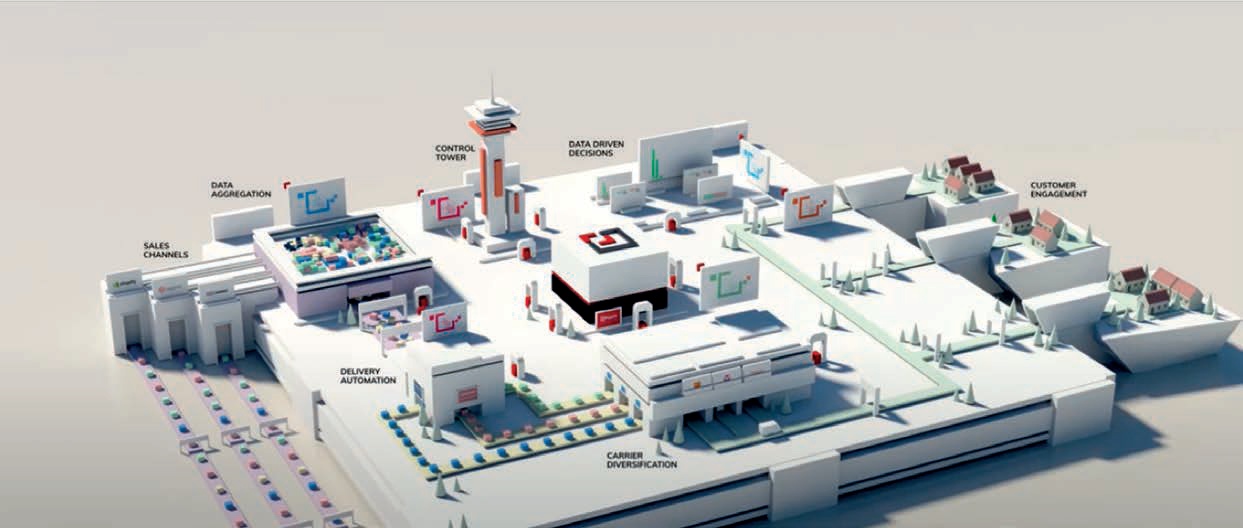
Our platform integrates all sales channels: online store, marketplace, brick-and-mortar store, etc., at the system level, along with all transport solutions used by sellers. Thanks to process automation, data aggregation, and machine learning algorithms, the benefit for the end customer is that they have the ability to choose the best delivery option for each assortment, delivery location, or the aforementioned preferences. In turn, thanks to using the platform, sellers have quick access to all transport delivery options from the internal Postis Carrier Catalogue, which does not involve additional fees. Data related to costs and information regarding the shopping experience are aggregated on one platform, regardless of the number of carriers or suppliers with whom the sellers cooperate. Additionally, the Postis platform provides advanced tools that strengthen the shopping experience before, during, and after the delivery is completed. These include, for example, shipment tracking applications, real-time shipment status notifications, and customer satisfaction survey forms.
Observing the way solutions are implemented, we see that through machine learning, companies that use our platform for automation and delivery management optimization can save between 15 and 25 percent of their delivery service budgets, increase end-user satisfaction by 30 percent, and shorten delivery time by 25 percent.
M.K.: In March of this year, you entered the Polish market. What decided the choice of our country? What are the development plans for the Postis brand in Poland?
M.S.: Poland is the largest market in Central Europe, as well as a well-positioned logistics hub, with developed e-commerce and an internal market. Our company, originating from Romania, which is the second-largest market in Central and Eastern Europe, has always shared experience and best practices with Polish partners. We saw not only the potential of the market but also what domestic sellers care about. We assume that the level of process complexity will increase in Poland – both in domestic and cross-border trade. This gives us the conviction that solutions in the area of system integration, process automation, data science, and AI-based technologies will enable Polish enterprises to undergo faster digital transformation, preparing them to reach a higher level of last-mile delivery service.
This year, we opened an office in Warsaw, and since then we have been constantly expanding cooperation with Polish entities operating in e-commerce and IT service providers, in order to build synergy for Polish sellers present on the domestic market and abroad, but also for international companies that want to conduct sales in Poland. Our solutions have already been appreciated in the country. Last year, we were honored with an award in the AWS AI Challenge competition in three categories: “Solutions dedicated to e-commerce”, “Telematics and TMS”, and “Innovation of the Year”. Our goal for the next two years is to rank among the top five e-commerce platforms in Poland, and thus support Polish sellers in carrying out deliveries at the last-mile stage.
The article comes from the magazine LOGISTYKA 5/2022.
The issue is available in both paper and electronic versions: on the e-bit.edu.pl platform and in the mobile application.