









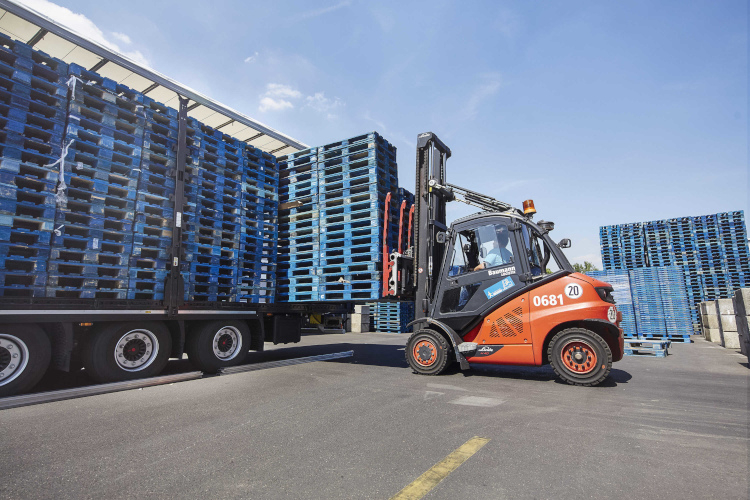
Eurocash, a distributor of FMCG goods, and CHEP, a provider of pallets in a pooling model, are collaborating to secure supply chains with adequate stocks of load carriers.
The pallet pooling model has been enjoying growing popularity in Poland for years. Transporting products on carriers rented from a shared pool brings many manufacturers business-side savings and is sustainable by nature, among other things, by avoiding unnecessary overproduction of new platforms. However, there is a catch: rented pallets must eventually return to their owner so they can circulate in the loop. And in Poland, unfortunately, this varies.
– The problem is most often a lack of knowledge – says Jacek Sałaciński, Retail Key Account Manager at CHEP – Although, unfortunately, there are cases of intentional delay in returns, “stockpiling” pallets, as well as illegal trade in rented carriers at collection points and on the internet.
Current market conditions also favor these types of activities. Massive shortages and, consequently, galloping prices of raw materials such as wood are strongly felt in the market and make every available pallet worth its weight in gold. For example: the price of a new Euro-pallet has increased by almost 40% year-on-year.
– Starting our cooperation with our partner EUROCASH, we kept in mind the rank and scale of the network’s influence, which can help in fully conveying the message about the need to return blue pallets – explains Jacek Sałaciński, Retail Key Account Manager at CHEP.
The framework of this cooperation seems simple: as a wholesale distributor of FMCG products in Poland, Eurocash delivers products on blue pallets to popular stores across the country, such as Lewiatan, Groszek, Gama, or Delikatesy Centrum. The driver bringing a new batch of goods to customers is able to simultaneously collect empty CHEP pallets from the store, both those released from goods after previous deliveries and those that reached a given location through a channel other than the Eurocash network. Everything happens within a single trip, which means rational resource optimization: fewer kilometers traveled, less fuel consumption, fewer empty runs, lower CO2 emissions, fewer trees cut down to produce new pallets, and less additional plastic produced. In short, it is simply a much smaller impact on the natural environment.
– We are well aware that supply chains, shaken by the pandemic, the war in Ukraine, and difficulties with carriers, need constant access to load carriers – says Piotr Krzyżanowski, Logistics Support Manager at the Eurocash Group.
Pallets returning to circulation contribute to ensuring that the supply chains of manufacturers and distributors operate without disruption.