









The battle for transport is ongoing: shipowners are changing their operating methods, establishing direct relationships with importers and exporters, and offering container booking on their internal platforms. Customers will decide who wins: what should companies pay attention to when choosing a partner in times of crisis? The weight of this decision is increased by the oligopolistic practices used by shipowners. The lack of market regulations may soon leave customers with no choice, according to the latest report by the Polish Institute of Road Transport.
The traditional balance of power at sea in the transport sector has been clearly defined for years. Freight forwarders were responsible for organizing the entire transport process, from picking up the cargo to delivering it to the port and coordinating all issues related to cooperation with the shipowner. The latter was only responsible for delivering the cargo to the right place, and freight forwarders acted as a link between them and the client, taking on all activities related to efficient handling. It was an arrangement from which both parties, both freight forwarders and shipowners, benefited.
– The situation no longer looks like this. The last few years have been a time of significant upheaval in the operations of shipowners, who, thanks to digitalization and process automation, are making their resources available to a wide range of clients, thereby excluding freight forwarders from the transport chain. This is happening not only at sea, from which container shipowners are reaping record profits – over 190 billion dollars in 2021 – but also on land, where they are taking over subsequent logistics companies. The desire to dominate transport has also reached the skies, as shipowners are enabling the transport of goods with their own aircraft fleet – says Bartosz Wilga.
In total, the 10 largest shipowners have over 20 million TEU. It might seem that this situation should only worry logistics companies that are losing clients and market share. However, this is also bad news for clients. The takeover of all transport by literally a few giant companies means less competition, less choice, and as a result – drastically less favorable conditions for those purchasing transport services.
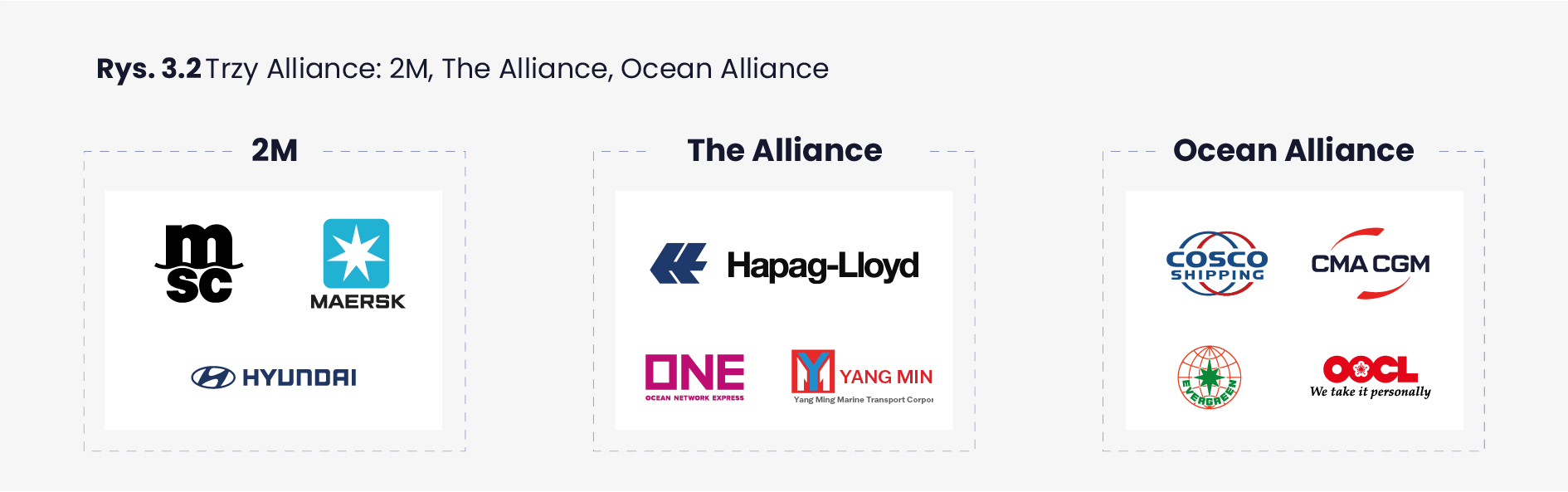
As part of their operations, shipowners enter into so-called alliances to optimize operational and financial activities. Alliances are nothing more than formal strategic partnerships aimed at both optimizing the costs of shipping operations and optimizing the utilization of space on ships that, in fact, serve the same ports as part of their operations – with the same tonnage or vessel. Currently, there are three alliances operating on the market: 2M, The Alliance, and Ocean Alliance.
Direct means cheaper?
The first harbinger of the coming revolution in the transport market was SPOT-type purchasing platforms, where a user can check the freight rate and book a container or containers on a specific route. In this way, the client can organize the transport of their goods independently, completely bypassing the freight forwarder.
– There are factors that encourage entrepreneurs to use a shipowner’s offer without involving an experienced transport organizer who could efficiently manage this process. These factors are primarily the difference in the freight rate offered to direct clients compared to the rate levels available to freight forwarding companies. Depending on different groups of clients, as shown in the “Monthly Container Shipping Barometer, March 2021” report, it can range from 2,300 USD to approx. 8,500 USD – says Bartosz Wilga.
So the choice between direct contact with a shipowner and handling a shipment with the support of a freight forwarder seems clear: direct, because it pays off more. But is it really?
– Having the opportunity to obtain a real difference in freight rates, one could argue that transport should be organized in-house to achieve economic efficiency of the process. It is hard to disagree with this, and everything seems logical and feasible. Should decision-makers, who often invest hundreds of thousands of dollars in goods, take the risk of carrying out transport using a “Do it Yourself!” concept? It seems very risky. However, as long as they only receive one-dimensional information regarding the ease of arranging the transport process, without knowledge of possible complications, rules, principles, procedures, or regulations and potential costs that may arise in the absence of sufficient information, they will not be able to make a decision by considering all factors – points out Wilga.
 O for Organization
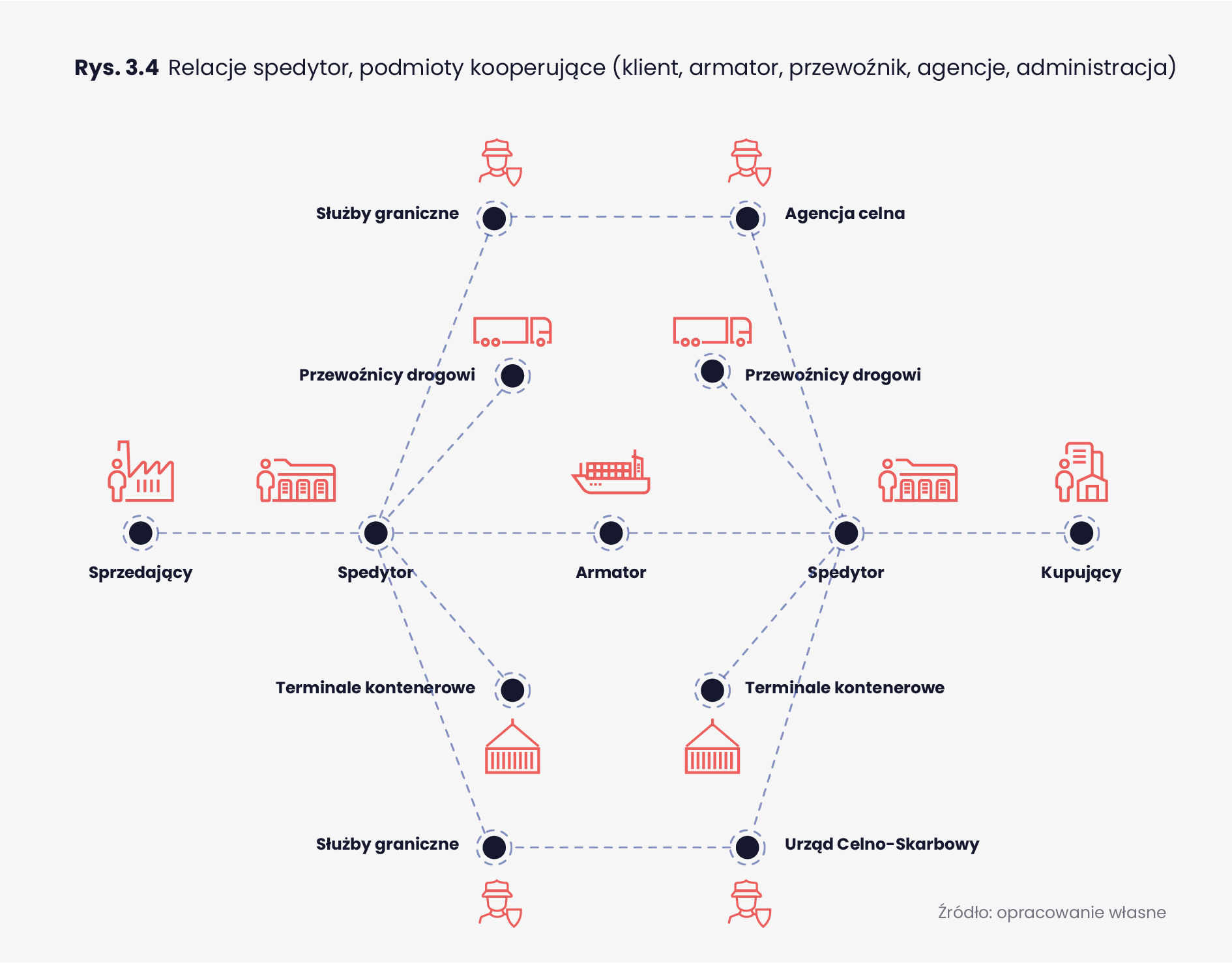
A freight forwarder, in addition to acting as a link between the client and the carrier, handles a number of activities in every transaction: from planning the transport itself, cost estimation, through the implementation process, preparation of the necessary transport and customs documentation, and ending with assisting the client in resolving unexpected complications or non-standard situations. It is the freight forwarder who communicates and negotiates on behalf of their client with the shipowner, setting freight terms or other specific details regarding the transport implementation itself. Their tasks include ensuring timeliness, process continuity, communication, and the safety of each party. In the event that a client enters into a direct contract, e.g., through a SPOT-type platform, they must remember that the responsibility for ensuring the above aspects rests solely with them.
Knowledge worth millions
Exporters and importers, i.e., the groups that most often use sea transport, despite their knowledge of their industry or business, do not have and do not need to have knowledge, e.g., about market regulations or rules, necessary to properly take care of organizing the entire transport process.
– Platforms offered by shipowners treat importers/exporters on an equal footing with freight forwarders. “Spot” clients have no choice – to use the sea route fully safely, they should acquire at least partial knowledge of the market that freight forwarders possess. Sea transport is characterized by a great variety of situations that complicate the entire process, as well as a relatively high volatility of legal regulations. In the event of any complications, knowledge and experience may prove essential to avoid additional costs or problems – explains Bartosz Wilga.
Crisis?
If an unexpected situation occurs during transport, contact with the people responsible for organizing and coordinating transport in freight forwarding companies is very simple. Most of them dedicate specific people to handle a given process or individual stages, and they are in constant, direct contact with the client. In shipowner service, it looks different, as individual shipowners organize customer service departments differently. Shipowners with the most comprehensive offer for direct clients have entire centers serving specific stages of transport. However, quick contact with the person responsible for our cargo may be difficult due to the multitude of clients served by a given operator or the location of a given customer service department in another country.
An additional lure – foul play
Often, for the duration of the sea freight, the shipowner provides the shipper with a container, the rental price of which is included in the sea freight. After the sea transport is completed, the recipient has a specified time during which they can keep the container at the port or outside it free of charge. Ultimately, the offers that shipowners present to direct clients differ significantly (to the benefit of the clients) from the offers presented to freight forwarding companies. – Changing the target client to a client identical to the client for freight forwarding companies means unequal competition between entities that have previously provided complementary services – comments Bartosz Wilga.
Without control, without regulation
Despite evidence of unfair market practices and numerous complaints about the activities of shipowners, for example in the United States, the activities of shipowners have not been defined as anti-competitive. Moreover, in Europe, there is no one to decide on this, due to the exclusion of shipowners’ activities from market regulators until 2024. Optimistically, one can expect that at some point we will find stabilization and a market niche for each party. Then, both logistics companies and shipowners will return to a state of symbiotic coexistence. If this does not happen, however, actions on such a large scale, applied without maintaining any principle of equality and competitiveness, should be controlled by market regulatory bodies.
Link to download chapter 3 of the report:
International-transport-challenges-and-the-role-of-the-freight-forwarder-in-a-changing-world-Chapter_3.pdf