









For Poland, 2020 turned out to be a record-breaking year in terms of the number of parcels sent. 2021 followed a similar trend in the statistics, despite the pandemic and ongoing restrictions. However, what the first months of the current year have brought to the industry is not what analysts expected – as the fog of the coronavirus battles almost lifted, the world saw the ruins of war and skyrocketing raw material prices. How will this situation affect the courier industry and the closely related e-commerce sector?
The Polish courier market is a sector consisting of many diverse entities – both branches of international companies and smaller players. Increasing costs are a blow to both. Profit margins are falling drastically, and customers are feeling this in rising prices.
Years of growth and… a freeze in the industry?
Growth in the courier parcel segment has been recorded since 2019, and the following year proved to be a record-breaker – reports indicate an increase in parcel volume of up to 200 million units compared to the previous year. While 2021 did not keep pace with previous growth, its result also proved to be impressive. At the beginning of this year, experts predicted further growth, but subsequent months dampened analysts’ optimism somewhat. Initial peaks in the industry also caused increased interest in courier services, which resulted in the emergence of new entities looking for success and quick earnings. How will these small and larger entities cope with the galloping prices on the market?
One parcel – millions invested
When we receive a parcel from a courier, we do not see what happens behind the scenes: thousands of employees, halls, warehouses, transport, operational and logistical processes. We also do not see the multi-million investments that are necessary to expand the range of services and keep up with the customer who expects express and convenient delivery. Will companies manage to implement their development strategy to the extent expected, given the increasingly higher costs they have to bear?
– The development of the e-commerce industry is a kind of driving force for courier services. Poles have significantly changed their purchasing preferences, as it is estimated that as many as 77% of internet users make purchases online. For us, representatives of the courier industry, this means further investments to improve the last-mile delivery process. This involves, among other things, the expansion of the network of sending and receiving devices, which not only shortens the delivery time of the parcel but also aims to implement a pro-ecological policy for the logistics sector. It is also an economically justified investment; thanks to delivery to PUDO points, operational costs are reduced, and we reduce exhaust emissions – says Piotr Kocoń from Świat Przesyłek.
The investments in question are budgeted by companies in many ways, and this often involves increasing the price of services. It is also worth paying attention to the structure of the logistics chain itself, in which many entities participate – each of them is directly affected by raw material prices and increased labor costs.
A rusting supply chain
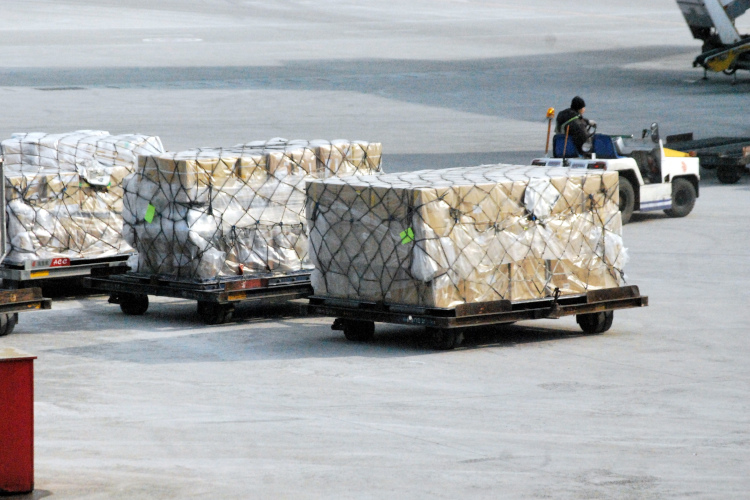
Investments that are of strategic importance to companies are hanging by a thread. In theory, they are supposed to push companies toward something new, but in practice, most actions resemble balancing on a tightrope suspended over a precipice. The supply chain, strained by the pandemic and the current geopolitical situation, resembles an old, rural chain provisionally repaired in several places. When basic raw materials, such as steel, are missing at the very beginning of the process, further steps are impossible to execute.
– Missing materials are one of the problems. Another is the lack of employees, and therefore also drivers, and the inability to organize transport. Managing projects is more of an attempt to save them than strategic management, and this process resembles a hurdle race, which for some are insurmountable obstacles. Investors are saving themselves by looking for alternative solutions, establishing contacts with manufacturers or distributors from other countries. However, launching such a process is inextricably linked to costs. Importing raw materials from distant markets causes operational and transport costs to multiply. The situation we are talking about is affecting the economy, wreaking havoc in various industries. Speculating on rising financial results in the courier industry is a pipe dream. – summarizes Piotr Kocoń.
Status as of today – optimism in reports
Many reports available on the market indicate consistently growing volume values and courier company revenues. This trend has been maintained since 2019, as indicated by the latest UKE report: 2019, 2020, and 2021 saw 440, 635, and 776 million parcels respectively. Revenues in the industry are also growing – from 5,181.1 million in 2019 to 8,197.7 million in 2021. How then will 2022 rank in next year’s reports?
– Maintaining this type of growth is possible only with an appropriate pricing policy, and this means price increases for the end customer. Those entities that decided to cooperate with only one subcontractor are in a difficult situation, as they are price-dependent on one operator – notes Piotr Kocoń – Will the optimism that accompanied experts at the beginning of this year persist for the coming months? While the courier industry, as a whole, is able to cope with the challenges it faces, it is worth noting that the effects will be felt by both senders and recipients. Is there a solution to this?
Not one, but many – there is strength in diversification
Rising prices for domestic and, above all, international shipments are a tough nut to crack for companies operating in the e-commerce area. The end customer, increasingly analyzing the profitability of their transactions, will start looking for savings, which may include purchasing at a brick-and-mortar store. What then about companies that have started operations on international marketplaces and have their own online stores?
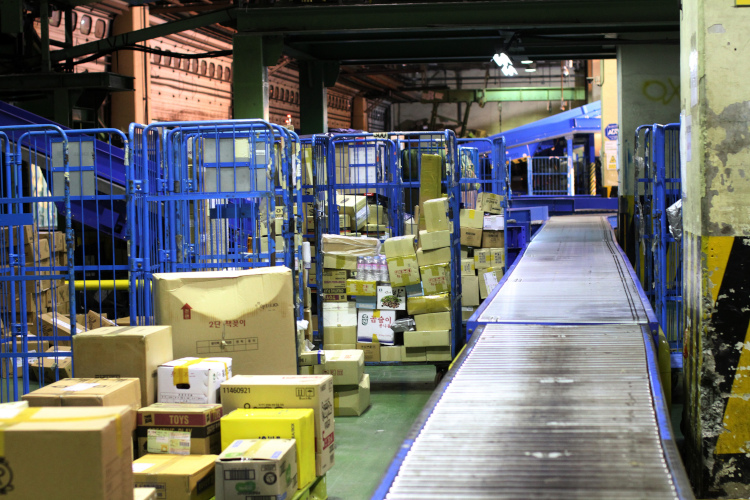
– With the rise in courier and postal service prices, we are noticing an increased practice of splitting volumes among customers. Wanting to limit costs, companies have started to appreciate diversification. The plus of courier brokers is that we are able to take over the entire volume, but at the same time split it with the client so as to select an offer tailored to the specifics of their shipments, while saving from 20 to 30%. Customers have also started to activate new markets that have been overlooked by them until now due to, for example, high profitability in the main and most popular directions. Entrepreneurs are looking with hope at growth in the e-commerce area in Romania or Hungary – adds the expert.
How will the courier and postal industry be summarized in next year’s reports? We have to wait until 2023 for hard data. Galloping inflation, the geopolitical situation, supply chain shortages, and rising raw material prices may stop the fast-paced market and halt many investments.