








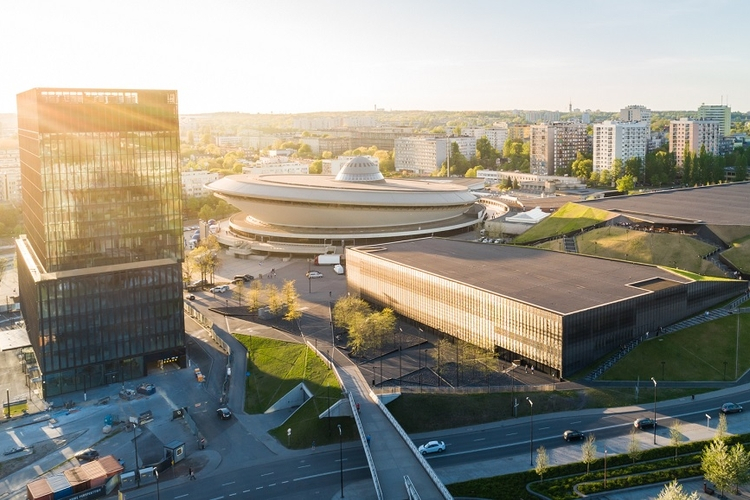
An interview with Ph.D. Eng. Marcin Krupa, Mayor of Katowice.
Janusz Mincewicz: Are Katowice already a smart city, a fully intelligent city that you are proud of?
Marcin Krupa: Katowice certainly aspires to implement more and more smart city solutions in the urban space. We are carrying out many pioneering projects – at the moment, the Katowice Intelligent Monitoring and Analysis System is already operational, as well as an air quality sensor system, primarily for the presence of PM10 and PM2.5 suspended dust, which functions as part of the AWAIR project. We are also cooperating with the Upper Silesian-Zagłębie Metropolis on transport solutions. Katowice is also implementing an Intelligent Transport System that will help optimize traffic in the city. I am therefore proud to see the transformation of Katowice, where the city is now compared to where it was a dozen or so years ago. Transformation is grassroots work in many areas; it is not just about implementing newer and newer technologies, but also about changing social thinking and transforming spaces that are useful to residents and businesses. I am primarily proud of the synergy that is being created in Katowice so that the city becomes increasingly smart.
J. M.: Is there still a lot missing for Katowice to be a 100% resident-friendly smart city?
M. K.: I am not convinced that one can say that such a coefficient is measurable. There is also no single, universal recipe for a smart city, because every city has its own specificity, social or economic conditions – in the case of Katowice, its industrial heritage and history of heavy industry, primarily mining and metallurgy. This means that, as I have already mentioned, we must ensure that Katowice becomes an intelligent city on many levels. In addition to the projects already implemented or being prepared for implementation, we must constantly think about further solutions that will improve the quality of life. We must analyze the flow of people, which the ITS will help us with, how they use public transport, and people’s access to green areas or leisure industries, because a smart city consists of many elements, not just modern technologies.
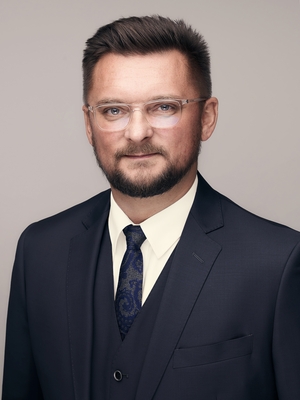 J. M.: The current association with Katowice is: once a coal capital, and today the heart of a two-million-strong Metropolis, the center of the largest population cluster in Poland. Why is the capital of Upper Silesia focusing on smart city solutions? Is an intelligent city a trend or a necessity?
M. K.: I think the answer to this question is obvious. For a city to develop, it must strive to introduce solutions that improve the quality of life. Our societies are depopulating and aging, so we are competing both for residents and for investors who want to locate their businesses in urban centers well-prepared to receive them. The process of deciding whether someone wants to live in Katowice, or where a large corporation wants to locate one of its offices, has many common factors, such as connectivity, a good public transport offer, access to green areas, access to recreation and leisure, and a sense of security in the city. In this dimension, further smart city implementations are a necessity, because the city must be competitive in all these aspects. Katowice is indeed part of the Metropolis, its heart and center, to which many people come to work every day; roughly twice as many people pass through the city as there are residents. In this dimension, we must also think broadly about smart city solutions.
J. M.: Is electromobility already a major asset for Katowice?
M. K.: Katowice was the first city in Poland to fulfill the provisions of the Act on Electromobility and Alternative Fuels. Of course, we did not do this for the sake of art, because electromobility is an important element of energy transformation and emission reduction in the city center. As part of activities related to electromobility, we are trying to supplement the fleet of the city hall, municipal units, and PKM – the Municipal Transport Company. At the moment, we have 20 electric buses, and we plan to buy more. Supplementing the fleet in an era of problems with broken supply chains for electric vehicle manufacturers is a huge challenge, which is why we are creating a purchasing group within the GZM, which is to help us and other cities supplement their fleets with more such vehicles.
J. M.: And how is the infrastructure for charging passenger cars and buses prepared?
M. K.: In Katowice, we currently have 144 charging points, which are operated by 68 chargers located throughout the city. This is an unprecedented amount. We managed to do this thanks to an action prepared a few years ago. The city offered land for installing chargers and announced a procedure in which entrepreneurs could declare their willingness to locate charging points. In 2021, Katowice took 2nd place in the ranking of electromobile cities prepared by Rzeczpospolita. This is the result of grassroots work on improving the quality of life, and electromobility is one of its aspects.
J. M.: You are a graduate and doctoral student of the Faculty of Transport at the Silesian University of Technology. From this perspective, how do you look at public transport in Katowice?
M. K.: Public transport is a complex topic because the city is not its organizer. The Metropolitan Transport Association is an inter-municipal association, and within its framework, PKM carries out only part of the routes. By the way, the topic of connectivity in the entire metropolis has many aspects and variables. On the one hand, Katowice ranks high in rankings regarding connectivity, and this is something that is pleasing. On the other hand, we must constantly work on optimizing public transport. I mentioned earlier that quite a lot of people flow through Katowice daily; I think only to Warsaw from surrounding towns do more people come to work every day on a national scale. This means that transport must have a certain capacity. Now there is a lot of talk about using open data for this purpose. Representatives of the Metropolis emphasize that using such data to ensure that the timetable is adapted to the resident, instead of the other way around. However, this requires a lot of work and analysis. We must also remember that the pandemic significantly affected the flow of employees; we will see how this will change in post-pandemic times. Certainly, the goal in itself is to ensure the comfort of movement; the ways to achieve the aforementioned optimization remain a matter for the future.
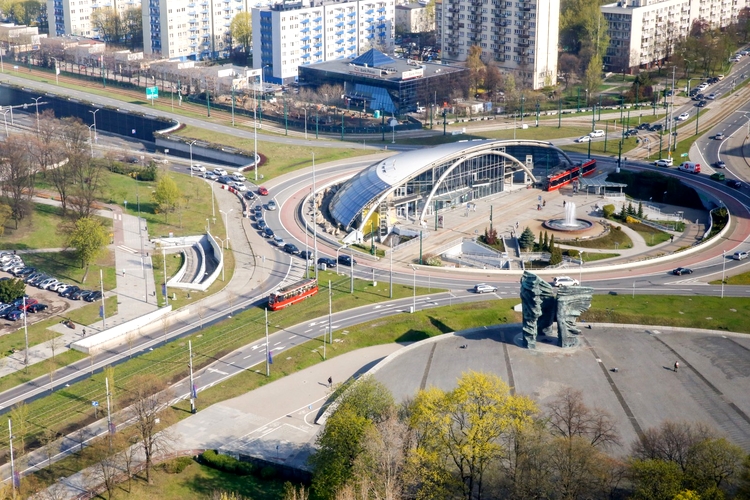
J. M.: An element of transforming Katowice into a smart city is the Katowice Intelligent Monitoring and Analysis System (KISMiA), the first of its kind in the country.
M. K.: KISMiA is certainly a modern system and one of the assets in our smart city policy. Simply put, it is monitoring that is supported by analytics that are able to detect unusual events in the urban space, such as a person lying down, a gathering, incorrect driving, etc. They help in directing the attention of dispatchers at the Municipal Crisis Management Center to truly important events. Please remember that each of the dispatchers has several monitors and camera views that they must, colloquially speaking, “handle.” Analytics helps the dispatcher in detecting dangerous events. I do not want to reach for very detailed statistics here, but the system helps direct services to places of threats and react faster, which translates into a real improvement in safety in the city. It also allows for better distribution of municipal police patrols and more effective cooperation with other services.
J. M.: Several transport hubs have been built in the city, which are intended to encourage the use of public transport. To what extent do they fulfill their tasks?
M. K.: Reducing car traffic in the city center is one of the challenges we face. It is also an element of the policy of reducing low emissions in the city. Transport hubs are intended to help relieve traffic in the center, and the attractor is free parking when you have a public transport ticket. However, we must constantly work on educating in this regard and accustom everyone who comes to Katowice to such solutions. At the moment, we are monitoring the situation and encouraging the use of transport hubs, and due to the coronavirus pandemic, the parking lots located next to them are free of charge.
J. M.: Are you and the residents already satisfied with bicycle traffic in the city, the “City by bike” city bike system?
M. K.: You would have to ask the residents if they are satisfied. However, the signals I receive are very positive. At the end of the 2021 season, we had 82,000 registered users in the city bike rental system, who had 866 bicycles at their disposal located at 107 stations. The bicycle system is also integrated with the systems of neighboring cities, which allows you to pick up a bike in, for example, Chorzów and leave it in Katowice. At the moment, the network of bicycle paths is almost 184 km long, and more connectors will be built in the near future. In the autumn, we plan to finish the construction of a path connecting the Giszowiec district with Nikiszowiec, 2.4 km long, and soon we will finish the investment in a path connecting Gospodarcza Street with Paderewski Street, 1.5 km long. Every year, we plan to expand the bicycle infrastructure by further kilometers of paths. By 2023, we also want to successively increase the number of bicycle stations to about 150. There are also indeed several other entities in the city that offer shared transport. These are cars, scooters, or mopeds. These solutions are provided, of course, in agreement with the city, but by private entities. We try to coordinate this, among other things, through the work of the Department of Transport Systems and Sustainable Urban Mobility in the Transport Department. We certainly want residents to be satisfied with the sustainable development of infrastructure and the possibility of choice within urban mobility. I think we have already shown that Katowice is doing it well.
J. M.: In June of this year, Katowice will host the World Urban Forum (WUF), an international conference organized every 2 years by the UN Agenda for Urbanization and Human Settlements, UN-Habitat. Katowice will be only the third European city, after Barcelona and Naples, to host the WUF. Is this a big distinction?
M. K.: Yes, it is a very big distinction and undoubtedly a success for Katowice, which gives the city huge opportunities. I keep emphasizing that Katowice is an example of a spectacular transformation – from a center of heavy industry to a city of greenery, modern technologies, attractive to investors, both small, medium, and large from the modern business services sector. As a host city, we will certainly want to show good practices and how the city has changed, but the WUF also has another, more important goal. It will be a space for debate on how to change our cities, how to adapt individual policies to civilizational, climatic, economic, and social challenges related to broadly understood transformation, not just energy. During the WUF, we will not close ourselves only within the Culture Zone; we will invite participants to go out into the city. Thematic zones will be created in the city space, which will address various issues in the field of urban policies and city activities – from innovation, through science, to culture and the youth zone. We will not boast, but we will allow all guests of the World Urban Forum to experience the city and touch the urban fabric. And what the effects of this will be, time will tell.
J. M.: Katowice residents have at their disposal the largest air quality sensor system in Poland – AWAIR, and recently you appointed your plenipotentiary for climate. When will Katowice become a smog-free city?
M. K.: According to the law adopted at the European level, by 2050 Katowice, like the entire European Union, should become climate neutral. Even though this date seems distant, we actually have very little time left. We have been carrying out large-scale activities in the city for a long time. The Municipal Energy Center operates at Młyńska Street. We have strategic documents, such as the Climate Action Plan adopted in 2019, and this is one of the tasks of the Climate Plenipotentiary, who will oversee the verification and implementation of climate policies. In addition, another document will be published soon, namely SECAP (Sustainable Energy and Action Plan). It is intended to indicate directions for action to limit mitigation, or to clean the air in general. Let us remember that suspended dust PM10 and PM2.5 are also a problem. Data on air quality, and thus also the concentration of suspended dust, is collected by the air quality sensor system. Among other things, this data is used to prepare further policies in the field of climate protection, adaptation, and mitigation. I think we are able to carry out these activities consistently enough that we will manage both with “Fit For 55”, i.e., reducing emissions by 55% by 2035, and then with achieving climate neutrality.