








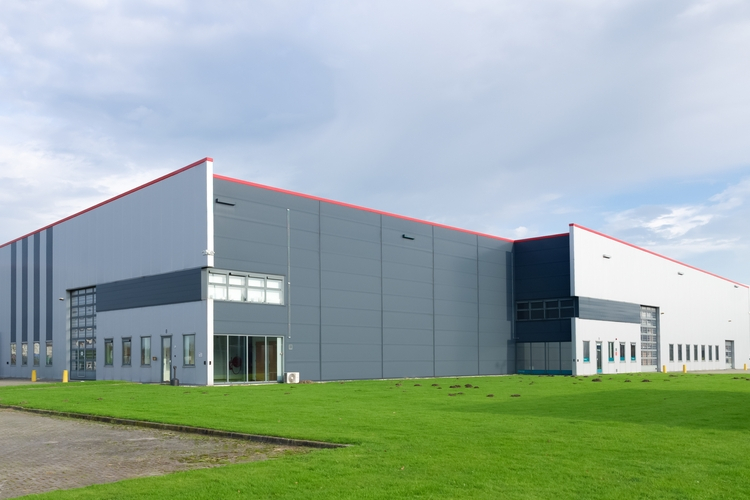
The Polish warehouse market is one of the fastest-growing in Europe. Despite its maturity, it is still characterized by relatively young assets and world-class standards for newly constructed facilities.
Poland is currently one of the fastest-growing markets in Europe in terms of warehouse space growth dynamics – at the end of 2021, a record 4.3 million sqm remained under construction. The commercial warehouse market in the country is still relatively young, especially compared to Western European markets. Nevertheless, in recent years, developers have begun to introduce additional elements that have resulted in a change in the standard of some newly built warehouse facilities. In the eyes of tenants and developers, modern technologies, automation, and renewable energy sources (RES) are gaining importance. We are also increasingly encountering the concept of ESG. How does this affect the attractiveness of warehouses that are over 10 years old?
The warehouse market in Poland is young
The first modern facilities built in Poland by leading developers appeared after 2000. However, 2004, when Poland joined the EU, can be considered a milestone in the development of this sector. The oldest commercial warehouses are therefore just over 15 years old, but due to the dynamics of the sector, they account for only 11% of the market. Moreover, as much as 54% of existing stock, which reached 23.8 million sqm at the end of 2021, consists of facilities built within the last 5 years. However, despite the dominant role of new investments, even those older logistics parks built between 2000 and 2010, provided they are professionally managed and constantly modernized, have a chance to match the standard of new development projects. They also provide additional benefits.
– Older facilities in most cases have an undeniable advantage in the form of an excellent location. Additionally, they often win in the assessment of potential tenants due to lower rent rates and the availability of space immediately – explains Maciej Kotowski, Senior Market Analyst at JLL.
There are, of course, still facilities on the market that are even several decades old, which can be used for storage, but they represent a completely different category. Theoretically, they could be treated as the equivalent of Class B or C warehouses in mature markets, but in many cases, they significantly deviate from them in terms of technical standards. These are properties located most often in industrial and post-industrial areas, e.g., former production halls. They are of interest to small local tenants for whom technical standards, infrastructure for external operations, or logistics potential are of much less importance than rent, which remains well below the market average.
Green, sustainable logistics
Significant differences in standards are visible only in the case of selected facilities built in Poland after 2020. Developers are increasingly deciding to raise parameters regarding storage height, floor load capacity, fire resistance, or roof load capacity. Some of these factors are related to the ongoing automation and robotization of logistics processes. Others result from the changing policies of the largest players regarding sustainable development and ESG (Environmental, Social, and Corporate Governance). In Western Europe, but primarily in the United States, logistics parks are also becoming a kind of photovoltaic farm.
As the JLL expert notes, in Poland it is currently difficult to imagine – mainly due to legislation – that linking operations with the energy sector could significantly diversify the revenue stream of logistics developers. He adds, however, that the largest players are clearly preparing the ground for a green transformation in this real estate sector as well.
– The logistics market is a global market, which is why new investments in Poland do not deviate from European standards. Depending on the specifics of a given location, they may differ in format or scale. Modern warehouse projects in Poland and Europe are characterized primarily by sustainable construction and ecological certification standards – comments Maciej Kotowski.
This is confirmed by the conclusions of the first edition of the global JLL study, The Future of Global Logistics Real Estate, which shows that sustainable development is now a key decision-making factor for leading corporations, developers, and investors.
Popular eco-friendly solutions in Poland include energy-efficient LED lighting, which is now an absolute standard. This is evidenced by the need to replace lighting with LED in warehouse facilities older than 10 years. Systems improving energy efficiency are also often used, such as thermal insulation of the building or photovoltaic panels. Furthermore, water purification solutions such as greywater recovery are gaining importance. Consequently, the certification of new facilities under the BREEAM or LEED systems is becoming standard. The focus of tenants and developers on investing in sustainable facilities is undoubtedly a trend that will dominate in the coming years.
It is also worth looking at the cost side, as ecological solutions can generate measurable benefits for tenants, which takes on additional significance in an era of rising energy prices and other operating costs. An example is G.Park Blue Planet in the UK, where, according to the developer’s assurances, ecological solutions allow for financial savings of as much as 49% in energy and heat and 70% in water consumption.
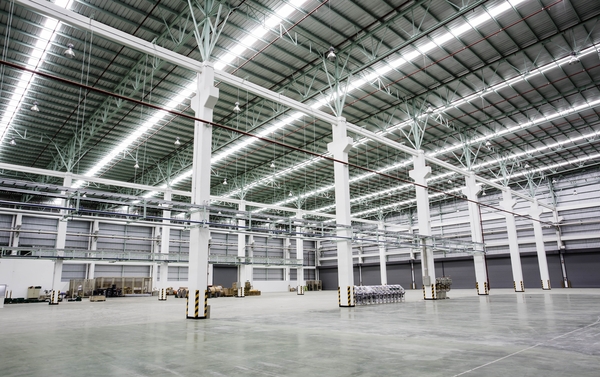 Automation, robotics, and new technologies on tenants’ radars
According to the JLL study[1], over the next five years, smart technologies (62%) and automation and robotization (54%) will have the greatest impact on the design of standard “big box” logistics buildings. It can be predicted that the most advanced technological solutions will be implemented in BTS (Build-to-Suit) projects, which are chosen primarily by tenants planning long-term development, such as the largest representatives of the e-commerce sector or demanding users of specialized refrigerated spaces, who are growing along with the development of the e-groceries branch.
Automation is becoming more accessible and used to a greater extent than it was 5 years ago, but still, both in Poland and across Europe, it is difficult to talk about fully automated logistics, which requires time for return on investment, especially in the context of contract operators.
– In addition to the most popular systems supporting human work today, partially automated solutions, or the automation of selected logistics processes (e.g., sorting), there are also fully automatic high-bay warehouses operating in Poland and Europe. These facilities provide, among other things, high storage density and optimal space utilization, as well as increasing the speed and safety of processes. However, these are individual investments that the largest players decide on, mainly by building their own logistics centers – explains Maciej Kotowski.
The multitude and integration of technologies, some with an established position, others just emerging or pioneering, are driving the fourth industrial revolution. Data from the JLL report, Logistics Buildings of Tomorrow[2], indicate that the most important include artificial intelligence (AI) and the Internet of Things (IoT), which form the basis for the functioning of “smart” warehouses and logistics. Also mentioned is 3D printing, which is one of the fastest-growing technologies. So far, it has found wide application mainly in niche sectors such as aerospace, automotive, and medical instruments, as well as in the production of prototypes and specialized components. From the perspective of industrial facilities, the greatest potential for 3D printers concerns the improvement of production processes.
In this context, it is worth recalling that the introduction of Automated Storage and Retrieval Systems (AS/RS) contributed to the creation of high-bay warehouses, which, along with the increasing availability of technology, will be chosen by more companies. Solutions aimed at improving the execution of logistics operations dedicated to e-commerce or light production are being introduced most intensively.
The warehouse market is undergoing significant changes under the influence of strong market trends regarding, among other things, new technologies, automation, and sustainable development, which play a significant role not only in the evolution of warehouse building designs but also in supply chains. The observed changes are permanent and are related to, among other things, progressing digitalization, adapting the logistics network to growth in e-commerce, complex returns logistics, or the need to implement sustainable strategies related to environmental protection and focused on the needs of tenants. All this will translate in the coming years into an increasingly higher standard of new warehouse space available on the Polish market.
[1] JLL, The Future of Global Logistics Real Estate, 2021
[2] https://www.jll.co.uk/en/trends-and-insights/research/logistics-buildings-of-tomorrow