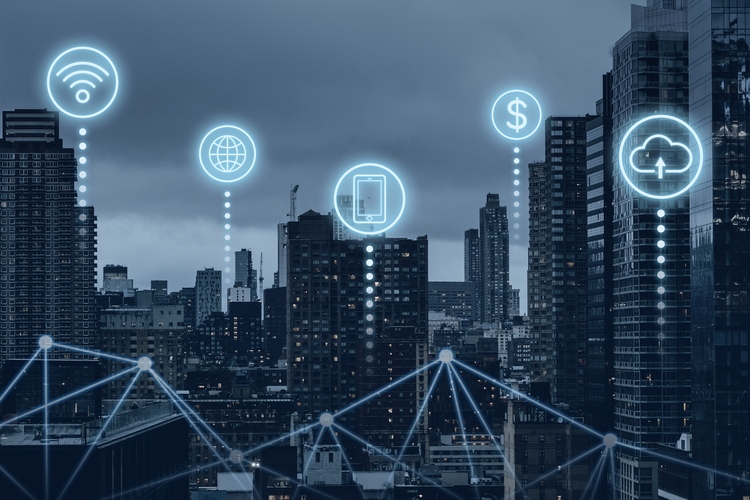
Soon, our country will face a significant shift in how we think about planning and building our cities. Its direction will be set by the smart city concept. Intelligent cities will operate more efficiently, optimizing the quality of services for both residents and the businesses located within them. Manually managed urban resources are no longer meeting requirements – each of us can observe this in the form of traffic jams, overcrowded and often delayed public transport, or even the inefficient use of electricity, which is often wasted today on lighting streets where no one is walking.
With the development of artificial intelligence and the Internet of Things, information processing services within cloud computing have become widespread. However, the computing power of data clouds is not sufficient to analyze all materials from the network in real time. A new solution will come to the rescue – edge computing.
Smart city – what does it mean?
According to United Nations estimates, by 2030, more than 60 percent, and by 2050, as many as two-thirds of humanity will live in cities. Already today, life in large agglomerations can be difficult. Traffic jams, pollution, and noise are only a small part of the daily problems of their residents. An alternative is a quiet life in the suburbs, which, however, can be burdensome due to long daily commutes to work and a lack of sufficient infrastructure, such as nurseries, clinics, or public transport. There are many indications that for several years now we have been witnessing slowly introduced changes in the approach to planning to improve the quality of life in the city. The solution is meant to be smart cities. Intelligent cities are an urban concept that assumes the development of urban areas based on information and communication technologies. Thanks to the introduction of modern digital solutions, urban space may soon become friendly to residents, entrepreneurs, and tourists.
Smart solutions – where can they be found?
Cities are constantly undergoing transformations. Urban planners have been wondering for years how new technologies can improve the lives of residents of increasingly large, crowded, and polluted cities – the smart city concept has emerged. Thanks to the use of information and communication solutions, intelligent cities use resources more effectively and improve the quality of life for residents. Already today, residents of many cities can use smart solutions. A significant number of people have become so accustomed to them that they consider them a part of everyday life – e.g., information boards at bus stops that update the timetable in real time. Another such example is intelligent pedestrian crossings that improve safety, as well as applications that allow tracking traffic in the city and planning a route. For years, there have been cities around the world that use smart technologies to a large extent to facilitate and modernize the lives of residents, as well as the daily operations of businesses and authorities. In Vienna, traditional buses have been replaced by electric ones that use energy mainly from renewable sources, and an application has been created for passengers to track traffic in real time. In London, the SCOOT system controls traffic lights at intersections, and in Madrid, a platform has been created to facilitate the management of municipal services, such as waste collection, recycling, or the organization of green areas. These are just a few examples of the implementation of the smart city concept in the world. But more and more such solutions are also appearing in Poland. These include the ITS system used in Wrocław, which uses cameras, sensors, and information boards to support traffic control in the city, or the intelligent street lighting system in Lublin. Streetlights reduce lighting power when they do not detect movement and increase the light beam when a pedestrian, cyclist, or car approaches.
– As population density increases, cities face difficult infrastructure challenges, such as security threats or crowd and traffic management. Most problems can be solved using smart city technologies and increased automation. A smart city depends on key technologies – 5G and edge computing architecture. By moving computing power closer to the source, “edge” processing and 5G enable Internet of Things (IoT) sensors to analyze data faster and react immediately – says Adam Wojtkowski, General Manager CEE at Red Hat.
 Edge computing
 is slowly taking the helm in the IT environment. According to a report published by Gartner, by 2025, as much as 75% of data generated by enterprises will be created and analyzed outside of a centralized data processing location, including outside the cloud. What exactly is this rapidly gaining popularity Internet of Things technique? Edge computing helps solve problems related to latency and inefficiency when transferring data between millions of connected devices and the cloud. Its main idea is to manage resources at the moment they are generated instead of sending them to a centralized point where they have been processed in a traditional way until now. One of the key reasons for developing this infrastructure model is analyzing and transmitting data, but increasingly also analysis and autonomous transfer of decision-making processes based on machine learning algorithms. Additionally, a solution based on edge computing allows for effective work on resources with poorer connectivity, while simultaneously providing better opportunities for protecting privacy and managing information sets. An example of such a solution could be a city bus equipped with appropriate IT systems. Thanks to this, traffic lights detect an approaching vehicle and can prepare the required light accordingly. It does not have to refer to the city data processing center at the same time, and all necessary operations will be performed locally. The signaling can therefore take into account whether the bus is on time or delayed, it can analyze the traffic situation on neighboring streets and traffic intensity, and on this basis decide whether it is necessary to grant this specific vehicle priority at the intersection.
Why is edge computing becoming so popular?
The main impulse for implementing Edge computing is the huge amounts of data generated, among others, in the IoT environment, where analytics are used to optimize performance. It is estimated that in 2020, there were as many as 31 billion IoT devices installed worldwide, and an additional 1,271 are connected to the network every second. All this information flowing into the cloud slows down the speed at which we are able to collect and process it. Cloud technology is one of the most optimal solutions of today, but it will not work in a situation where real-time data is needed.
Currently, edge computing is used in almost every industry in the world to rely much less on the cloud and speed analysis. Some of the more popular examples of using the above infrastructure model are telecommunications systems that improve data transmission quality, the financial services industry in the area of improving the operation of algorithms informing about consumer decisions, and finally city administrations. The future of smart cities is a chance to reduce crime, avoid weather threats, or improve road conditions.
– Such systems can also measurably contribute to reducing the operating costs of cities. Here, an example could be the previously mentioned city lighting systems. In places where car and pedestrian traffic gradually decreases and even disappears at certain hours, streetlights can communicate with each other. On empty roads and sidewalks, they can be turned off or shine at minimum power, but the detection of a pedestrian or information sent from a nearby intersection about an approaching vehicle will immediately change their operating mode. Waste management can look similar. Today, trash is collected on specific days of the week regardless of whether there is one bag in the container or it is filled to the brim. Open Source technologies such as Red Hat Open Shift are able to create a system in which the daily route of cleaning vehicles is planned and optimized so that the vehicle covers the shortest possible route, visiting only those places that really require it – adds Adam Wojtkowski, General Manager CEE at Red Hat.
An equally interesting possibility for the cities of the future is improving their safety. Already today, algorithms are able to recognize behaviors that bear the hallmarks of a crime and easily – based on images from cameras – distinguish, for example, a vandal destroying a building facade with spray paint from a person cleaning the windows of that facade. Similarly, systems will easily catch car accidents or failures, e.g., of the water supply network, directing appropriate services to such places before they receive an official report from residents.
 Legitimate concerns about privacy
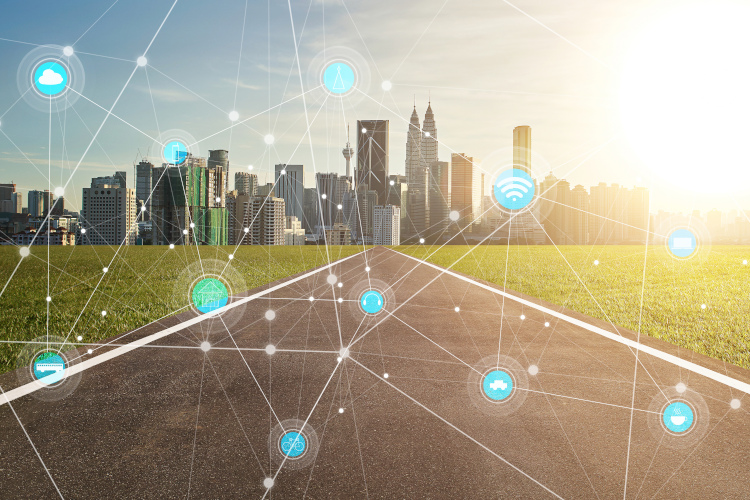
Many elements of smart cities are based on autonomous Internet of Things (IoT) sensors, but it is impossible to build an efficient system without an extensive city monitoring system. This can raise legitimate concerns about the privacy of residents and their constant tracking. Cities must be very careful not to cross the line between ensuring convenience and safety and surveilling their citizens. The feeling of being controlled will generate resistance and aversion to even the best solutions. This requires a two-pronged approach. First, appropriate software that is able to meet high privacy requirements, appropriate access levels for employees operating it, and finally compliance with legal requirements. The software used by cities must also be very well protected against unauthorized access from the outside, i.e., attempts to both take over data and control the operation of the entire system. Second, it will become necessary to more strongly regulate the provisions of the law that concern our image or activity in urban space. Without such an approach, residents may oppose changes that, in their opinion, take away their freedom and privacy.
Smart city technology – the future for cities
Intelligent cities are a concept that assumes the sustainable development of urbanized areas using modern information and communication technologies. Artificial intelligence and edge computing will allow for the analysis of huge amounts of data to a large extent. A key issue is the significant automation of decision-making processes. Thanks to “edge” processing and the dynamic development of IoT, we are able to collect and analyze information in real time. However, as with any environmental change, society plays the main role – whether it will trust smart city projects and whether in 10-15 years we will function in fully intelligent cities that will improve our quality of life.
We wrote more about digitization in the magazine LOGISTYKA 6/2021.
The e-edition of the magazine is available in our offer!

Stay up to date, order a subscription to the LOGISTYKA magazine!