We talk to Richard Cawston, President of GXO in Europe, about modern technologies that make logistics safer, faster, and more sustainable.
 Michał Koralewski: For whom and for what purpose was the digital logistics center of the future built in Leicestershire, UK? What were the main goals related to its design and launch?
Richard Cawston: As part of GXO’s long-term partnership with Nestlé, the world’s largest food and beverage company, we began collaborating in 2018 on the design and construction of a digital logistics center of the future located in the East Midlands, UK. Our technology partner was Swisslog Logistics Automation. The most important factor considered during design and site selection was sustainability.
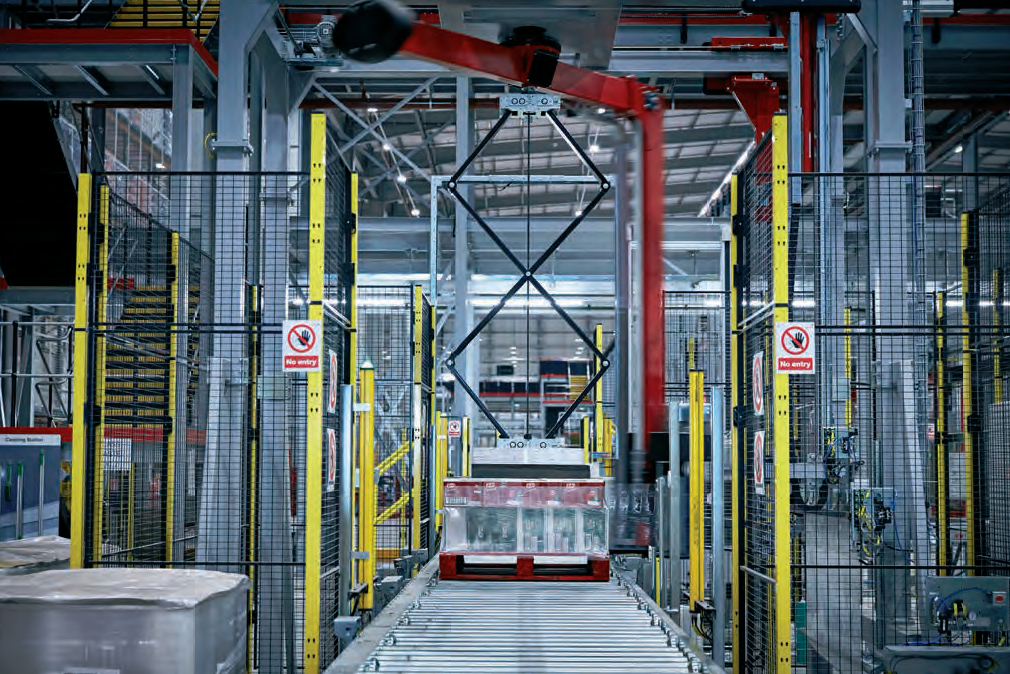
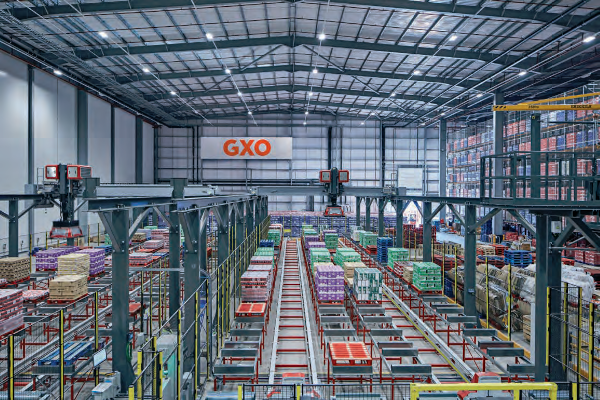
The digital logistics center of the future is Nestlé’s flagship distribution center in the UK, where the picking and shipping of goods take place. The main goal was to ensure fast and efficient distribution of Nestlé products, including brands such as KitKat, Maggi, and Nescafé. This location also handles e-commerce orders for Nespresso, retail distribution to Nespresso Boutiques, and value-added services such as co-packing for a wide range of Nestlé food products. The 60,000 sqm facility uses advanced logistics solutions designed by Swisslog and integrated into the digital logistics center of the future ecosystem. Operations utilize advanced robotics, automated sorting systems, and GXO’s intelligent analytics, which ensure fast and effective distribution of Nestlé products.
M.K.: What is the innovation and uniqueness of the solutions applied? And how was the flow of goods in the warehouse designed?
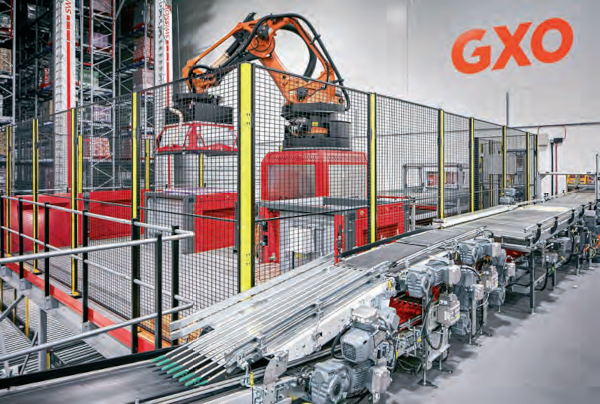
R.C.: GXO creates increasingly faster, agile, and intelligent supply chains, focusing on data-driven processes, intelligent automation, and machine learning. Such technologies provide the ability to create increasingly effective logistics solutions, helping our clients achieve their goals. This was also the case for the Nestlé digital logistics center of the future. For example, in the logistics process, we used two intelligent robots capable of picking 175 layers per hour from pallet racks and automatically creating multi-layer mixed pallets, which are then automatically shipped to Nestlé’s customers.
We designed an optimal flow of goods by combining the Rowpaq unit’s work with two picking robots equipped with pneumatic heads. The Rowpaq unit was designed to pick boxes of various sizes and place them in pre-defined locations on a pallet at a speed of over 900 boxes per hour, which is 33% faster than manual picking. The two picking robots can pick empty pallets and place products on them layer by layer. The system has a wide range of vacuum settings that automatically adjust to the unique characteristics of each product to ensure the layer is lifted without damaging the packaging.
M.K.: Such a solution certainly contributes to increasing the efficiency of the digital logistics center…
R.C.: The technology we applied in this logistics center increases efficiency by about 5 to 7 times. For example, the layer picking system can handle over 80,000 cartons per day with the help of only two people. Moreover, its flexible solution allows for handling the majority of the Nestlé assortment. This impressive efficiency helped GXO achieve one of the most successful results during Nestlé’s 2021 Easter peak period.
 M.K.: The last two years have been full of events that turned logistics upside down. The e-commerce boom, the pandemic, changing consumer behavior, and Brexit have all influenced the functioning of logistics centers around the world, including, among other things, faster automation of logistics processes.
R.C.: That is correct. All these factors have influenced the development of outsourcing in logistics and automation. As a result, clients are de-risking their supply chains by relying on large, thriving logistics operators who can reliably support their growth. Automation of logistics centers translates into efficiency, speed, and safety, and thanks to the use of robots, cobots, “goods-to-person” systems, or mobile devices, logistics adapts to customer needs. The growth of e-commerce happened faster than anyone could have expected, and in our opinion, this is still just the beginning. One of the significant changes in consumer behavior that poses a challenge to the supply chain is returns logistics. Our observations show that about 1 in 3 goods purchased online is returned, which means that companies must quickly and efficiently reintroduce returned goods back into the supply chain to protect their margins.
In all our key markets around the world, we are seeing an accelerating growth of e-commerce, outsourcing, and automation. At the same time, companies are becoming more aware that supply chains are critical to their success. Supply chains are the backbone of global economies. Consequently, companies are increasingly relying on logistics operators who, through the use of technology, help them solve increasingly complex challenges. Such a partnership allows them to gain a competitive advantage. Therefore, we expect that in 2022, companies will continue to develop their cooperation with leading logistics service providers to gain efficiency, agility, and cost-effectiveness. This, in turn, translates into greater interest in artificial intelligence and intelligent robots that support employees and provide an opportunity to seize new opportunities.
M.K.: Digital logistics centers of the future are also used as research facilities. What are the results of this research?
R.C.: Advanced automation solutions offered to clients by GXO are a key market differentiator, helping to increase safety, efficiency, and productivity. In the third quarter of 2021, when GXO first operated as a fully independent company, over 1,000 new technology units were deployed, while the level of automation in logistics centers increased by 139% year-on-year, and the use of “goods-to-person” systems by 135% year-on-year. GXO was also included in the 2021 FreightTech 100 list, which recognizes the most innovative companies. One example highlighting our innovation is the industry-first introduction of 6 River Systems (6RS) cobots, working on a multi-level mezzanine at the logistics center in Milton Keynes, England. In another GXO logistics center in Stoke-on-Trent, cobots called “Chucks” have increased picking accuracy by 40% and reduced new employee training time by 80% since their implementation. In response to the Covid-19 pandemic, we developed “Social Distancing Wearable Technology” using Bluetooth-enabled wearable devices. These devices light up and vibrate when social distancing is not maintained, both in terms of time and distance, and they also monitor the number of contacts between employees and daily trends, which provides precise analysis of the work environment.
 M.K.: Looking globally at the market, customers, and industries, what impact can automation and robotization, developed in, among other places, digital logistics centers of the future, have on the future of logistics?
R.C.: GXO wants to drive positive change around the world, and our observations show that we can achieve a significant impact on the future of logistics in three areas: first, cobots, or mobile collaborative robots, which support our employees in logistics centers handling large volumes of goods for e-commerce, making the picking process faster, safer, and more accurate. We expect cobots to take over heavier work, and their capabilities will continue to evolve. Second, autonomous “goods-to-person” systems, which allow for the optimization of work for people picking goods at packing stations, to which robots will deliver loose products. And finally, third, industrial robot arms. Because they perform repetitive tasks with high precision, they will become a more effective way of customizing e-commerce order fulfillment. These arms can be used for everything from engraving products and programming electronic devices to creating pallets with packed goods in preparation for distribution.
We believe that robotic systems will continue to evolve, leveraging data-driven technologies, organizing and optimizing logistics operations, and using artificial intelligence and machine learning to streamline processes. Increased use of robotics in logistics will create an environment where employees are safer, up to six times more efficient in their work, and more satisfied with it. We are convinced that this is a glimpse of the future. The logistics industry is open to innovative thinking, and we are the best at it. GXO uses new technologies to transform our industry, making logistics safer, faster, and more sustainable.
The article comes from the magazine LOGISTYKA 1/2022.
The e-edition of the magazine is available in our offer!
Stay up to date, subscribe to the LOGISTYKA magazine!