








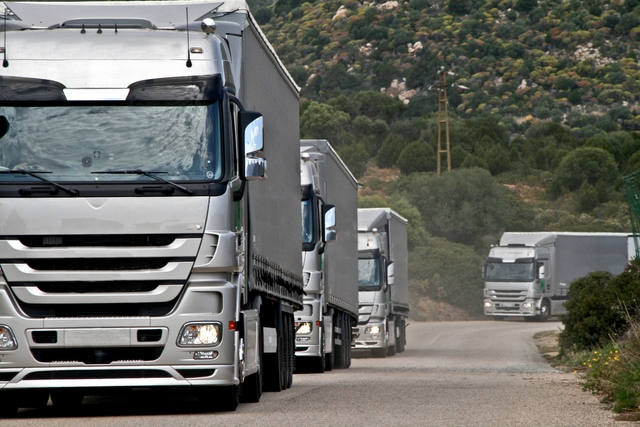
Is Poland facing a British-style scenario? There are too few professional drivers – soon this will be felt in both passenger transport and in the case of logistics or e-commerce. The problem is currently most strongly felt in Great Britain, but shortages in this profession are also being discussed in Germany, Belgium, and France.
– A professional driver is a profession that has been undervalued for years, and in times of the progressive explosion of the e-commerce sector, they will be essential for the supply chain to function efficiently. We only realize how important drivers are when shipments do not reach us and when we see empty store shelves. In Poland, the situation is not yet dramatic, but if the number of young drivers on the market does not increase, problems are only a matter of time – says Laura Hołowacz, President of the CSL Group.
Experts: the problem has been growing for years
The British crisis has realistically shown what an important professional group drivers are. They have been missing across Europe for a long time, but such an outflow as took place on the islands is definitely an economic phenomenon. A lack of drivers means a lack of goods deliveries to stores, but also the paralysis of the e-commerce sector and trade in general, not just in the retail sector. Germany, France, Belgium, and the Netherlands are also complaining about a lack of drivers. Poland also has serious shortages in this area, which in the coming years may pose a threat to our economic security.
– This problem has been growing for years, only, as a topic perhaps not very attractive, it did not arouse wider interest. Societies, and with them political elites, are not interested in the behind-the-scenes of transport – or more broadly logistics, as long as this machine, described as the bloodstream of the economy, functions without major disruptions – assesses Jerzy Gębski from Enterprise Logistics.
– Industry organizations estimate the shortage of drivers in Poland at 120,000. Two years ago, these estimates were at 100,000. We are therefore dealing with an deepening of this situation. And – analogously to the example given above – not much will happen as long as goods continue to be found on store shelves. I am afraid that nothing can be done quickly, because the problem has been growing for years, and, for example, in our own backyard, the liquidation of vocational education at one time also contributed to this. The fastest possible solution seems to be the use of incentives for drivers from Asia, who could potentially fill the industry’s shortages. This is already happening, but the scale of the phenomenon is not yet massive. In Europe – and Poland is no exception – the trend is that many drivers are already almost pensioners, or even working pensioners, while young people – apart from enthusiasts – are clearly not eager to enter the profession – says Jerzy Gębski.
E-commerce is accelerating, so even more drivers are needed
CSL Group President Laura Hołowacz admits that the problem with the lack of drivers was made even more visible by the coronavirus pandemic and Brexit. If it were not for the situation on the Islands, many countries would have lived for a long time in the belief that “it is not that bad”. The pandemic, on the other hand, fueled the boom in the e-commerce sector. Its development is not possible without an efficient supply chain, which is based largely on road transport.
– It is time for intermodal transport. Road transport is reaching its limits. The problem is both the lack of drivers and road capacity. We cannot clog up Europe with more trucks, because there will be no one to drive them, and there is no chance that it will continue to be safe and ecological if there are more and more heavy vehicles – says President Laura Hołowacz. – The situation in Europe will be increasingly difficult, we also lack drivers, but our situation is still better than our neighbors’. However, we must act quickly and encourage young people to take up work in this profession – adds Laura Hołowacz.
Prof. Piotr Niedzielski: the situation in Poland is being saved by drivers from Ukraine
Scientists also have no doubt that the lack of professional drivers in Europe results from the crisis in education in this area and from the fact that for years the profession of a driver was not financially attractive. Prof. Piotr Niedzielski from the University of Szczecin, a member of the Chief Technical Organization, admits that it is hard work that must be highly rewarded. Otherwise, we face a global crisis that will affect the retail sectors of the economy.
– Drivers are now eagerly hired by all European countries, we can even observe a fight for drivers and bidding on who is able to offer more money and better working conditions – says Prof. Niedzielski. – The issue of problems, e.g., with supplying stores, is a matter of time, although we have one plus as a country. We have a good base in the form of our Ukrainian brothers, who are happy to take up life and work in Poland. This is an element of this economic transport puzzle that helps us a lot. People from Ukraine take up work in both passenger and freight transport – adds Prof. Niedzielski.
Source: Northern Chamber of Commerce