










Pallets – although simple in their construction – are an inseparable part of global transport and logistics. Today, it is difficult to imagine the transport of various goods or their storage without the use of pallets. However, these (usually) wooden structures also pose a challenge for logistics specialists – especially when considering the economics of their transport in trucks.
There is no denying that the optimal use of pallets in the logistics process – considering every link in the chain (the goods manufacturer, the carrier, or wholesalers) – brings many benefits that are reflected in both safety and the economics of the entire transport and logistics chain. These benefits include:
– enabling the transport of goods in bulk quantities – especially when talking about general cargo,
– minimizing the risk of damage to transported goods – among other things, through stabilization,
– optimizing the time required for loading and unloading delivery vehicles,
– saving time and money for clients – thanks to the use of pallets, a larger quantity of goods is transported at one time, and costs for empty spaces in trucks are easier to eliminate.
However, for the use of pallets in transport to make sense, and for the above advantages to turn from theory into fact, the arrangement of pallets in the vehicle must be properly planned. But how do you do that in the case of a truck?
1. The type of pallet matters!
At the outset, it is worth focusing on the pallets themselves, their type, and dimensions. Currently, the most popular type of pallets used in Poland are so-called Euro pallets. Their dimensions are 1200 x 800 x 1000 mm. However, there are more types of pallets available on the market. These include, among others:
– industrial pallets (ISO) with dimensions: 1200 x 1000 x 1000 mm,
– IBC containers with dimensions: 1200 x 1000 x 1180 mm,
– oversized Euro pallets with dimensions: 1200 x 1200 x 1000 mm,
– pallet boxes (known as Gitterboxes) with dimensions: 1200 x 800 x 900 mm,
– and other types of pallet structures made of various materials – e.g., aluminum or plastic.
2. Vehicle dimensions are another factor
Once we know which pallets our cargo will be transported on, we should compare the dimensions with the space we have available in the truck. Importantly – and logisticians certainly know this – parts protruding beyond the pallets must be added to these dimensions (it is assumed that the cargo can protrude a maximum of 50 mm on each side).
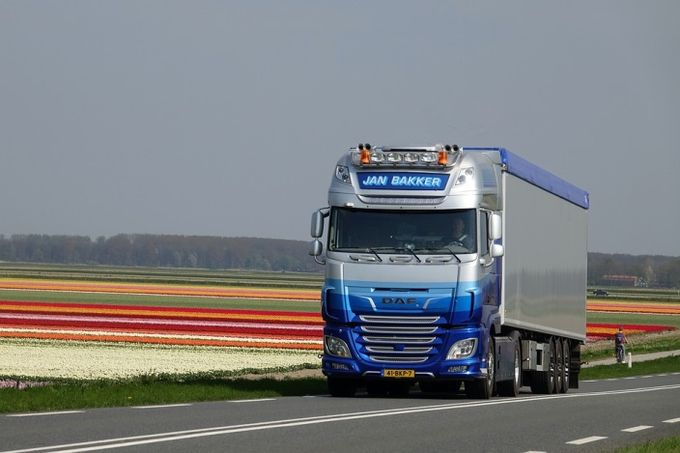
It is estimated that a standard semi-trailer truck, with a trailer measuring approx. 13.5 x 2.5 x 2.7 m, will hold no more than 26 industrial pallets (their dimensions are: 1200 x 1000 mm). Weight issues are also not insignificant. 24 tons is the maximum payload of a standard truck, so when planning the transport of goods, we should also take their weight into account.

3. SmartLoad means time savings, money, and logistics economics in its purest form
Planning the transport of palletized cargo by truck without the use of specialized tools is extremely time-consuming and, above all, fraught with the risk of so-called human error. Even the most experienced logisticians make mistakes – especially with such complex operations as optimizing the space available on a semi-trailer, adjusting the appropriate dimensions and weight of the cargo, and minimizing empty spaces, which in practice mean financial losses.
For such tasks, it is worth relying on specialized tools, among which SmartLoad proves to be an ideal choice. With its help, carriers will be able to properly calculate the number of pallets that can be loaded onto a truck, plan their best arrangement (while maintaining safety measures related to the maximum payload of vehicles, weight distribution on axles, or proper determination of the center of gravity), and also eliminate empty spaces and manage them economically.
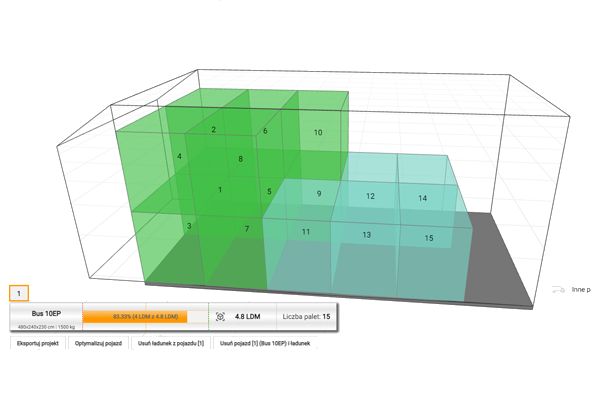
An undeniable advantage of SmartLoad is also its clarity and intuitiveness. And the graphical representation of logistics plans will certainly appeal to and facilitate the work of both specialists and clients of transport companies. If you want to perform these types of logistics calculations professionally and without errors, it is worth considering this practical tool.