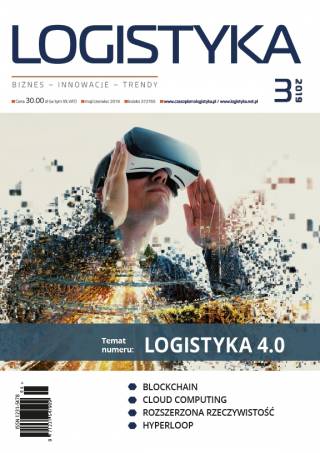
New cloud computing technologies enable breakthrough innovations in Supply Chain Management (SCM) applications. Most supply chain strategies originate from earlier periods when the business environment was more stable. With predictable business cycles, competent management teams could navigate current challenges and ultimately focus their supply chain strategies on cost reduction.
This was achieved in part by lowering production costs in locations remote from major markets, rationalizing the supplier base, reducing inventory by integrating partners into an “ecosystem,” and applying Lean principles to their processes. Rising transport costs and the requirement for timely deliveries have made the interoperability of the logistics industry a critical factor. High transaction costs are a bottleneck in cooperation between both small and global economic entities. The best solution that simultaneously affects costs and information exchange can be cloud computing. Cloud architecture, through its flexibility and accessibility, allows for the optimization of business operating costs related to IT and increases the speed of information transfers between various entities in logistics networks. The cloud automates and provides a complete computing solution for the logistics industry, and also increases the efficiency of data processing.
Cloud giants
Information exchange in logistics determines the effectiveness of cooperation throughout the entire chain, which is why managers involved in logistics operations understand the key role of innovative IT infrastructure. Hence the growing popularity of cloud logistics solutions. The market for IT systems supporting and automating business processes, for which “cloud” solutions are offered, includes, alongside hardware infrastructure, many classes of IT systems dedicated to supporting specific areas of an enterprise, for example, warehousing, transport processes, or enterprise management as a whole. Systems available “in the cloud” are offered today by both global IT market giants, such as SAP, Oracle, Microsoft, as well as smaller entities that are looking for sources of competitive advantage in this way. On the Polish market, solutions from local providers, such as Comarch Cloud ERP or Netia Compute, are gaining popularity.
The cloud computing concept includes three main service delivery models in the cloud:
– Infrastructure as a Service (IaaS) is the delivery of basic computing resources (e.g., processing, storage, and networking) as a service.
– Platform as a Service (PaaS) provides a computing platform and a range of solutions on which applications and services can be created and shared using programming concepts and tools supported by the provider.
– Software as a Service (SaaS) is a software deployment model that delivers applications as online services, on-demand.
Manufacturers are increasingly delivering their applications as online services. This enables their customers to use these software services on-demand. Customers are thus freed from managing middleware and infrastructure. In this way, resources can be used more efficiently, and maintenance activities can be centralized. These benefits, if well achieved by the SaaS provider, can add value to the offering and reduce the operating costs of providing software-related services.
Cloud computing is maturing rapidly to support collaborative transport management solutions (in TMS-class systems) along with other aspects of transport management, such as network capacity sourcing, robust visibility and event management, and auxiliary functions, including freight payment and audit. These capabilities allow companies to “close the loop” of procure-to-pay processes and verify whether improved performance can be delivered in terms of carrier selection, tracking/paying/auditing, and spend analysis. Furthermore, cloud solutions provide a central repository of global trade content that can be accessed on-demand.
The full article is available below in PDF format.