








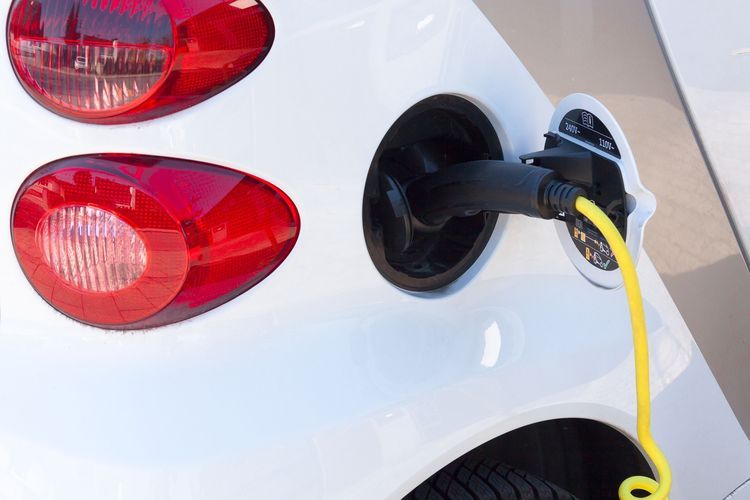
Electric vehicle charging points are becoming increasingly common in many cities and at gas stations along highways. The need to promote zero-emission means of transport has been recognized by, among others, the National Fund for Environmental Protection and Water Management (NFOŚiGW), which launched the “My Electrician” program in mid-July this year.
The goal of the program is to minimize air pollution emissions by supporting the purchase or leasing of zero-emission vehicles, including electric or hydrogen ones. Its budget is PLN 500 million and is planned for the years 2021-2026. Beneficiaries can be individuals as well as entrepreneurs, local governments, or other institutions. The subsidy can be used for purchase or leasing (including long-term rental) and will amount to PLN 18,750 for individuals, and PLN 27,000 for holders of the Large Family Card. The subsidy for the above group of beneficiaries will be granted on the basis of a refund of part of the incurred vehicle purchase costs. On the other hand, entrepreneurs, for whom the call for applications will be launched at a later date, will be able to count on a subsidy depending on the projected annual mileage or vehicle category. The entire grant application process will be conducted online, with a minimum of formalities.
Programs such as “My Electrician” are ways to familiarize people with the “new trend” in Poland, which is visible in Europe through, among other things, a 57% increase in electric vehicle sales in the first quarter of 2020. However, it must be remembered that in the context of electromobility, it is crucial not only to own an electric car but also to have access to its fast-charging infrastructure. According to the recently published European Fit for 55 package, which includes provisions requiring a 55% reduction in carbon dioxide emissions in the European Union by 2030 (relative to 1990), electric vehicle charging points should be located every 60 km on highways. Therefore, the expansion of charging infrastructure is key. In the EU, 3 million charging points will be needed to adequately support the pace of electromobility development.
The second approach to the topic of electric car range is improving their efficiency, among other things, through modern power modules, which are being developed and implemented by companies such as Danfoss Silicon Power, Research & Development. Currently, this manufacturer’s systems are found in over 40 million cars. Danfoss is not only responsible for products used in electric cars but also sets its own sustainability goals in this area. By 2030, CO2 emissions from the company’s vehicle fleet are to be reduced to 0. This will be possible thanks to the electrification of approximately 2,500 company cars. The process has already begun in Sweden, where the first hybrid cars have been ordered and charging points have been installed at employees’ homes.
E-mobility has been included in the package of European reforms aimed at curbing climate change. It is worth realizing that transport emissions account for 24% of global CO2 emissions. Meanwhile, according to the Green Restart report prepared by Danfoss, the development of electromobility in private and public transport in urban areas in Europe, the USA, and China will enable the realization of a 28% reduction in greenhouse gas emissions, which is the goal of the Paris Agreement. Electric cars contribute not only to achieving climate goals but also to improving air quality and reducing noise levels in cities. The development of e-mobility will also bring a significant increase in employment, estimated at one million additional jobs by 2030 on a European scale, which will not be insignificant in the post-pandemic years. It is therefore worth thinking about your own “electrician,” not only because electric car owners have the opportunity to use bus lanes or are exempt from parking fees in paid parking zones.
Source: Newseria